
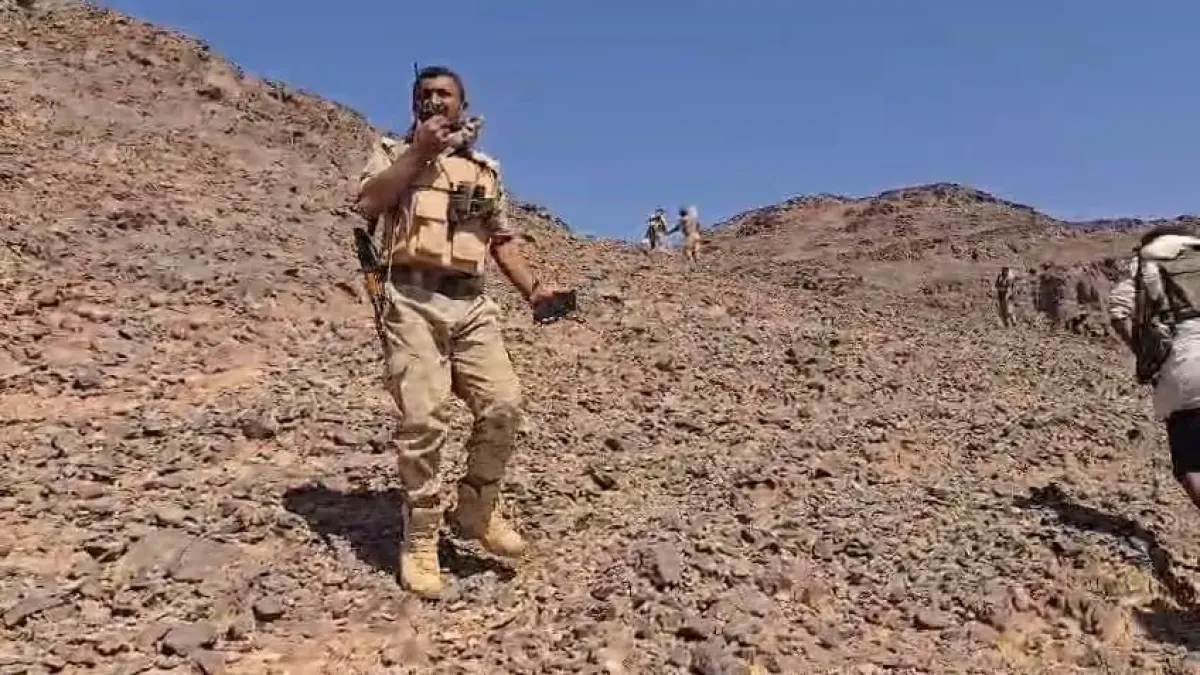
al-Jawf mountain range: Yemeni government forces claim strategic gains
Yemeni government forces have claimed control of the al-Dahida heights within the strategic al-Jawf mountain range in eastern al-Jawf province. The military advance, part of the ongoing Operation Dawn of Yemen, follows intensive strikes using fighter jets and drones against Houthi fortifications. This development occurs alongside escalating violence in al-Dhalea, Lahij, and Taiz provinces. This article examines the military significance of the al-Jawf gains, the scope of Operation Dawn of Yemen, and the broader regional implications of the intensifying conflict.
November 8, 2026
6 min read
Source: ASHENVOW
What is the significance of the al-Jawf mountain range advance?
The capture of the al-Dahida heights represents a critical shift in the tactical landscape of eastern al-Jawf province. By securing these highlands, the internationally recognised Yemeni government forces have gained a dominant vantage point over the surrounding terrain, which is essential for controlling movement in the region. According to statements released by the armed forces on November 4, 2026, the operation involved storming Houthi-held fortifications and barracks, resulting in the seizure of significant military equipment and weaponry.
The strategic value of the al-Jawf mountain range lies in its ability to act as a natural defensive barrier and a launchpad for further operations. The recent push follows weeks of concentrated attacks on Houthi positions. Government troops have successfully recaptured several overlooks located east of al-Hazm, the provincial capital, which strengthens their grip on the eastern corridor. The integration of air power, specifically fighter jets and drones, was instrumental in breaking through Houthi defensive lines and targeting depots and gatherings.
Tactical implementation of air and drone support
The Yemeni government's military strategy in al-Jawf has relied heavily on coordinated aerial strikes to supplement ground advances. By utilizing drones to identify and strike Houthi gatherings and supply depots, the government forces have sought to degrade the Houthi group's operational capacity before ground troops move in. This combination of high-altitude reconnaissance and direct kinetic strikes has allowed the government to claim heavy losses for the Houthi militia in the eastern sector.
How is Operation Dawn of Yemen impacting the conflict?
Operation Dawn of Yemen is currently in its second month of active combat, marking a significant intensification of the struggle between the internationally recognised government and the Houthi rebels. The operation aims to expand government-held territory and dismantle Houthi control over key strategic zones. Rashad al-Alimi, head of the Presidential Leadership Council, has stated that the military campaign will continue until the government restores its authority and state institutions across the entire country.
The operation has moved beyond localized skirmishes into a broader offensive that is testing the resilience of Houthi defensive structures. While the successes in al-Jawf are notable, the operation has also triggered a wider escalation of hostilities across multiple Yemeni provinces. The government's focus on recapturing strategic overlooks and provincial hubs suggests a long-term strategy to reclaim administrative control, though the Houthi group remains a formidable opponent with significant defensive capabilities.
What is the impact of escalating fighting in other provinces?
The military momentum in al-Jawf is mirrored by a surge in violence in al-Dhalea, Lahij, and Taiz, creating a multi-front conflict that complicates the security situation for civilians. In the southern province of al-Dhalea, a Houthi ballistic missile strike on the al-Jumaima military training camp reportedly killed eight people and wounded more than 15 others. While official government figures are pending, local media reports suggest the casualty count may be higher.
In the western and northern sectors, the fighting has reached critical defensive lines:
- Taiz: Government forces have conducted air strikes against Houthi positions in the western part of the province, while Houthi-affiliated media reported strikes on a health centre in the al-Silw district.
- Lahij: Troops have successfully recaptured positions in the al-Maqatira district. This area is vital because it serves as a key defensive link between Taiz and Aden, the government's capital.
- Al-Bayda: Houthi-affiliated reports indicated that four air strikes targeted a Central Security Forces camp within the city.
This widespread escalation suggests that as the government pushes forward in the east, the Houthis are responding with increased kinetic activity in the south and west to prevent the collapse of their defensive perimeters.
What are the allegations regarding foreign involvement?
The conflict has seen renewed accusations of foreign interference, specifically regarding the support provided to the Houthi movement. Yemen’s Interior Minister, Ibrahim Ali Haidan, has alleged that 21 foreign experts are currently directing Houthi military operations. According to Haidan, this group consists of 14 experts from Iran’s Islamic Revolutionary Guard Corps (IRGC) and seven from Lebanon’s Hezbollah.
These allegations suggest a sophisticated level of command and control within the Houthi forces, potentially explaining their ability to maintain defensive lines despite the government's recent advances. However, Hezbollah has officially rejected these claims, describing the accusations as "baseless." The presence of such expertise, if verified, would indicate that the Yemeni civil war continues to be a focal point for regional proxy tensions involving Iranian and Lebanese interests.
How has the conflict spilled over into Saudi Arabia?
The instability in Yemen has direct consequences for the security of Saudi Arabia, particularly in its southern and central regions. On November 4, 2026, civil defence authorities in Saudi Arabia activated early-warning sirens in the Najran region, following a similar alert in the Riyadh region the previous night. These alerts often precede or accompany potential drone or missile threats from Houthi-controlled territory.
The Saudi-led coalition, which provides support to the internationally recognised Yemeni government, reported the interception and destruction of a drone over Mecca on Tuesday. While Houthi military spokesman Yahya Saree has denied launching any attacks on Saudi soil, the United States embassy in Riyadh has issued warnings regarding the potential for rapid escalation in Houthi attacks against the Kingdom. This regional tension highlights the interconnected nature of the Yemeni conflict and the security of the Arabian Peninsula.
FAQ: Yemen Conflict and al-Jawf Advances
What was the result of the recent fighting in al-Jawf?
Yemeni government forces claimed to have seized control of the al-Dahida heights in the al-Jawf mountain range. This advance included the capture of Houthi fortifications, barracks, and various pieces of military equipment, supported by drone and fighter jet strikes.
What is Operation Dawn of Yemen?
Operation Dawn of Yemen is a large-scale military offensive by the internationally recognised Yemeni government that entered its second month in November 2026. The goal is to restore state authority and government control across all Yemeni territories.
Are there casualties reported in al-Dhalea?
Yes, a Houthi ballistic missile strike hit the al-Jumaima military training camp in northern al-Dhalea. A military source reported eight deaths and over 15 injuries, though some local media outlets have suggested the death toll could be higher.
Who does the Yemeni government accuse of supporting the Houthis?
The Yemeni Interior Minister has accused 21 foreign experts from Iran's IRGC and Lebanon's Hezbollah of directing Houthi operations. Hezbollah has denied these allegations, calling them baseless.
Has Saudi Arabia been affected by the Yemeni conflict?
Yes, Saudi Arabia has experienced early-warning siren activations in Najran and Riyadh. Additionally, the Saudi-led coalition intercepted a drone over Mecca, and the US embassy has warned of potential escalations in Houthi attacks.
Key takeaways
- Government forces seized the al-Dahida heights in the al-Jawf mountain range during a recent offensive.
- Operation Dawn of Yemen has entered its second month of active military operations.
- A missile strike in al-Dhalea killed at least eight people at a military training camp.
- The Yemeni government alleges 21 IRGC and Hezbollah experts are directing Houthi operations.
- Saudi Arabia activated early-warning sirens in Najran and Riyadh due to regional tensions.
The evolving landscape of the Yemeni war
The recent gains in the al-Jawf mountain range signal a period of renewed momentum for the internationally recognised Yemeni government, yet the conflict remains deeply volatile. The expansion of fighting into al-Dhalea, Lahij, and Taiz demonstrates that the government's offensive is triggering a broader, multi-front response from Houthi forces. With allegations of foreign expert involvement and the spillover of threats into Saudi Arabia, the conflict continues to be a complex intersection of local territorial struggles and regional geopolitical tensions. The outcome of Operation Dawn of Yemen remains uncertain as both sides escalate their military capabilities.



