
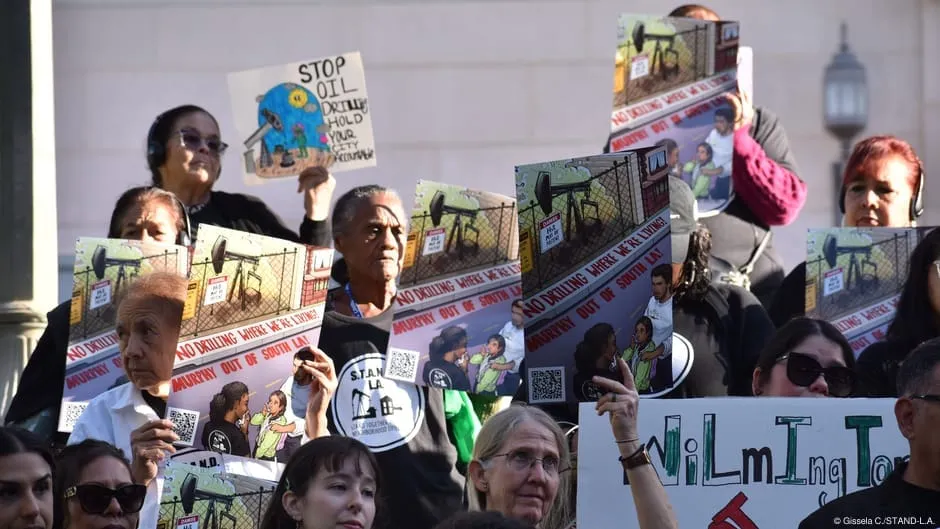
LA oil drilling ban: Los Angeles votes to phase out extraction
The LA oil drilling ban approved by the Los Angeles City Council on October 28, 2026, marks the first time a major U.S. city has moved to end local oil production. The ordinance mandates an immediate halt to new oil extraction and prohibits the redrilling or deepening of existing wells. All current operations within city limits must be phased out over a 20-year period. This decision follows years of community advocacy and legal challenges regarding the health and environmental impacts of urban drilling near residential neighborhoods.
November 22, 2026
4 min read
Source: ASHENVOW
The scope of the Los Angeles oil phase-out ordinance
The new ordinance provides a legal framework to eliminate fossil fuel extraction within the city's boundaries by ending all existing operations over the next two decades. While the measure applies specifically to the City of Los Angeles, its reach is significant, affecting hundreds of active wells and thousands of inactive ones. Many of these sites are situated in working-class communities of color where residential areas sit in close proximity to industrial infrastructure.
Council President Marqueece Harris-Dawson stated that no one should be required to live near an oil drilling site, noting that in South LA, families have lived with corporations drilling across the street from their homes. The ban is not an isolated event in California; it follows a similar move by the smaller city of Culver City, signaling a broader regional shift toward ending the complex relationship between urban centers and fossil fuels.
Regulatory shifts and legal history
The path to this ban has been marked by significant legal hurdles. In 2022, the LA City Council initially approved a similar phase-out ordinance, but oil companies successfully challenged the measure in court. Industry groups argued at the time that the city lacked the necessary legal authority to impose such a restriction. However, subsequent California legislation granted local governments expanded powers to regulate and restrict oil and gas operations, providing the legal foundation necessary for the current 2026 ordinance.
Health concerns and environmental impacts of urban drilling
Residents living near active or idle wells have reported a range of physical ailments, including headaches, nausea, and breathing difficulties. The proximity of oil infrastructure to homes, schools, and playgrounds has raised alarms regarding air quality and long-term public health. Research has established links between proximity to oil extraction sites and increased rates of respiratory illness, as well as reduced lung function in nearby populations.
Beyond direct health impacts, the presence of these wells introduces several environmental risks:
- Toxic Pollutants: Wells can release hazardous substances such as benzene and hydrogen sulfide into the air.
- Methane Leaks: Both active and idle wells can leak methane, a potent greenhouse gas that accelerates climate change.
- Surface Contamination: Residents have reported occasional accidents or equipment breakages that result in oil flowing onto city streets.
Wendy Miranda, a policy director with the nonprofit Esperanza Community Housing and a long-time campaigner with the STAND-LA coalition, noted that frontline communities have paid for decades of proximity to these toxic sites with their health. Miranda, who suffers from asthma, described the council vote as a source of hope for future generations to breathe cleaner air.
Industry response and economic arguments
The California Independent Petroleum Association (CIPA) has expressed strong opposition to the new regulations. Rock Zierman, CEO of CIPA, told DW that the association believes the ordinance constitutes an unlawful taking of private property. The industry group has indicated that energy companies are prepared to challenge the new ordinance in court.
Zierman also argued that the phase-out would have negative economic consequences for residents, suggesting it would increase dependency on foreign oil from countries with lower environmental standards. He claimed the move would drive jobs, investment, and revenue away from California, leaving residents to bear the costs. However, the direct link between local production and consumer prices is complex. According to the California Energy Commission, pump prices are influenced by a variety of global and local factors, including:
| Price Driver | Description |
|---|---|
| Crude Oil Costs | Global market fluctuations for raw oil. |
| Refining & Distribution | Costs associated with processing and transporting fuel. |
| Logistics | Transportation and distribution expenses. |
| Taxes | Local and state tax requirements. |
Because oil is a globally traded commodity, US residents remain exposed to international price volatility regardless of domestic production levels. Furthermore, California's oil output has been in a steady decline since the 1980s; in the LA Basin, output has fallen by 43% compared to eight years ago.
The financial challenge of well decommissioning
A critical component of the transition is the responsibility for plugging and abandoning wells. While operators are legally required to remove equipment and seal wells once production ceases, the scale of the task presents a massive financial liability. The state agency CalGEM and the Los Angeles Fire Department oversee these operations, including sealing wells when owners fail to take responsibility.
The current state of inactive wells in Los Angeles highlights the urgency of the issue. Approximately 80% of idle wells in the city have been inactive for more than eight years, and about one-third have been idle for over a century. The costs associated with decommissioning vary significantly, with individual wells requiring investments ranging from hundreds of thousands to millions of dollars.
The gap in enforcement and funding
There is a significant discrepancy between the fines levied for idle wells and the revenue actually collected. According to CalGEM data, the agency collected only $1 million out of $36 million in fines during 2025. This lack of enforcement contributes to a growing financial shortfall that may ultimately fall on the public. A report by Carbon Tracker suggests that even if all future profits from California-based oil companies were redirected toward decommissioning, the state would still face a $7 billion deficit. Consequently, community activists are now shifting their focus toward shortening the 20-year phase-out timeline and ensuring the oil sector bears the full cost of the environmental cleanup.



