
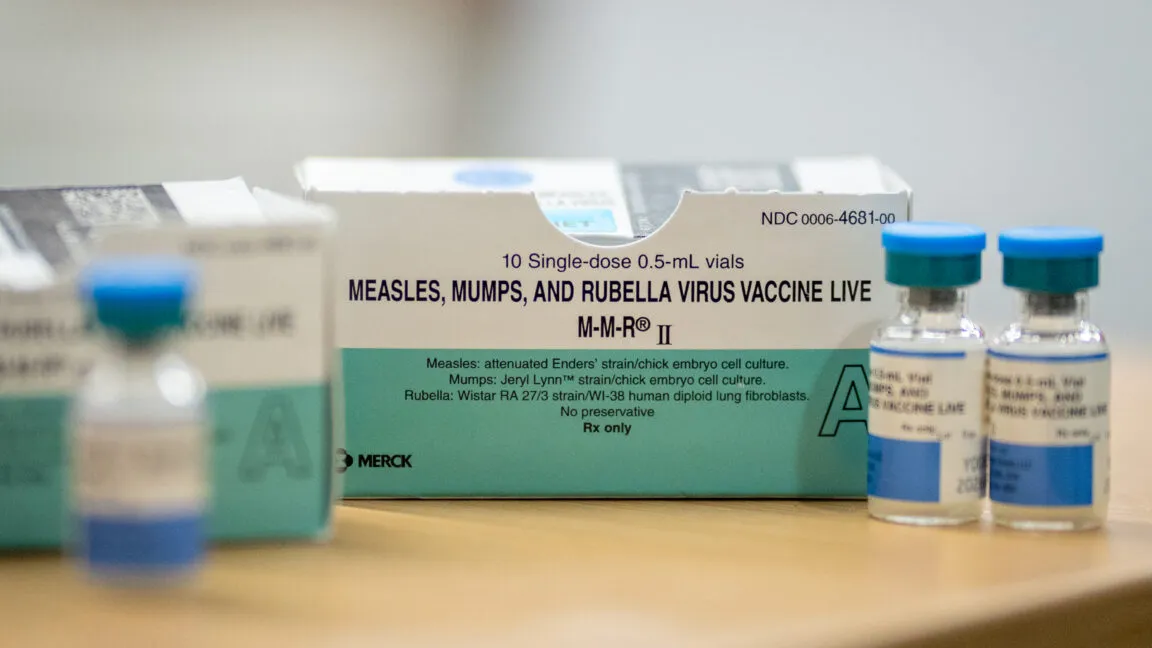
Measles death in Wisconsin: First infant fatality in 35 years
A measles death of an infant in Wisconsin has been reported, marking the first such fatality in the state since 1990. This death occurs as the United States faces a significant surge in infections, with the CDC reporting 5,182 measles cases across 47 states and jurisdictions as of November 5, 2026. The infant's passing is one of nine reported measles deaths in the US this year, contributing to national tallies that are the highest recorded since 1991. Health officials warn that actual case numbers may be significantly higher due to underreporting.
November 11, 2026
4 min read
Source: ASHENVOW
Wisconsin reports first measles fatality since 1990
The death of an infant in Wisconsin represents the first measles-related fatality in the state in over three and a half decades. This tragedy follows a significant outbreak within the state, which has seen more than 430 people infected across 13 different counties throughout 2026. Wisconsin Health Secretary Kirsten Johnson characterized the event as a tragedy, specifically noting the preventable nature of the disease.
According to Johnson, measles is capable of causing severe illness and death, necessitating that residents evaluate their personal risks and implement protective measures for their families. The outbreak in Wisconsin highlights a broader trend of increasing viral transmission in areas where vaccination coverage has fluctuated.
National surge in measles cases and fatalities
The infant in Wisconsin is the third measles death reported in the United States during this week alone. This follows a reported death of a child in New York on Monday and another death in Pennsylvania on Wednesday. While the Pennsylvania fatality involved an unvaccinated individual in Jefferson County, specific details regarding the victim's age were not released by the state health department.
The current epidemiological situation in the United States shows a sharp increase in both infections and deaths compared to recent decades. The following table summarizes the reported measles mortality data for 2026 as provided by state and federal sources:
| Location/Category | Reported Deaths (2026) | Notes |
|---|---|---|
| United States (Total) | 9 | 8 confirmed by state officials |
| Pennsylvania | 7 | Includes two babies, a teen, and several adults |
| New York | 1 | Child fatality reported November 3 |
| Wisconsin | 1 | Infant; first in state since 1990 |
The impact of underreporting in outbreaks
Health experts caution that the official figures of 5,182 cases and nine deaths likely represent a significant undercount of the true burden of the disease. This discrepancy is often attributed to the fact that individuals who become ill may not seek medical attention or undergo formal testing. This phenomenon is particularly prevalent in tight-knit religious communities, such as those currently experiencing large-scale outbreaks in Pennsylvania, where members may be less likely to engage with conventional medical systems.
Review of US measles elimination status
A committee of infectious disease experts is scheduled to meet between November 10 and November 13 to determine if the United States has lost its official measles elimination status. The committee, assembled by the Pan American Health Organization—a regional office of the World Health Organization—will analyze data from 2025 and the first part of 2026 to assess whether the virus has reestablished continuous domestic transmission.
The United States had been declared measles-free in 2000 after achieving a year without continuous domestic transmission, a milestone driven by high vaccination rates. Before the widespread implementation of vaccines, the virus posed a massive public health challenge, causing several million infections annually. Historical data shows the scale of the threat prior to vaccination:
- Annual infections: 3 to 4 million people
- Hospitalizations: Nearly 50,000 people
- Neurological complications: 1,000 cases of brain swelling
- Annual fatalities: 400 to 500 people
Controversies regarding data reporting and public health policy
The management of measles data has become a point of intense political contention under Health Secretary Robert F. Kennedy Jr. Discrepancies have emerged regarding the definition and confirmation of measles-associated deaths, leading to friction between federal and state authorities. Specifically, following the reports of fatalities in Pennsylvania, Kennedy suggested that state officials had fabricated the deaths and reportedly directed the CDC to remove them from national datasets.
In response to these developments, the CDC has altered its methodology for counting measles deaths. The agency has moved away from the long-standing practice of reporting state-confirmed deaths in favor of relying on federal death records. However, because federal records are not designed for real-time monitoring, this change may impact the speed and accuracy of data available during active outbreaks.
The dispute over Pennsylvania mortality data
A specific point of conflict involves a reported death in Franklin County, Pennsylvania, involving a 39-year-old woman. The Franklin County Coroner, Jordan Conner, stated that the death was a "probable acute cardiac event due to possible complications of the measles," noting the woman had been recently treated for the virus. Under Pennsylvania state criteria, a death is considered measles-associated if the individual dies within 30 days of a positive test and shows clinical signs of infection without other significant causes, such as trauma.
Despite the coroner's assessment, the Pennsylvania state health department has stated it has not found any cases in Franklin County that meet the official state criteria for a measles-associated death, though the investigation remains open. The Philadelphia Inquirer has initiated legal action to uncover more details about this case, as the identity of the deceased remains sealed by a county judge.



