
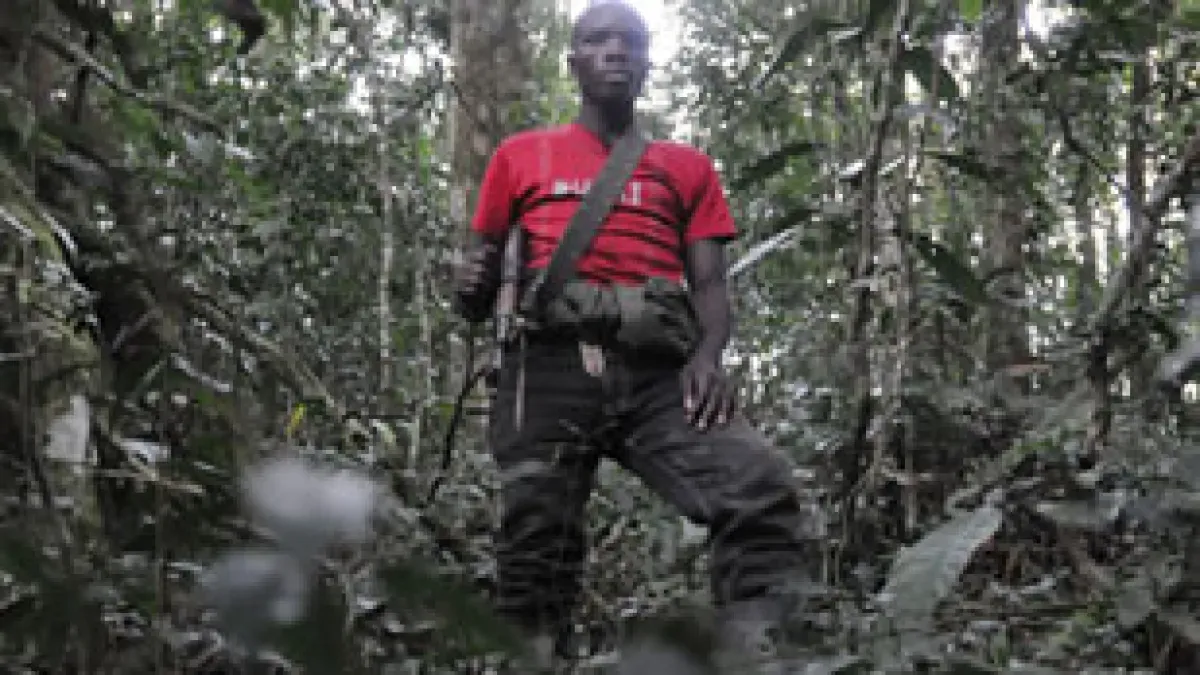
What is the FDLR? Understanding its origins and anti-Tutsi ideology
The Democratic Forces for the Liberation of Rwanda (FDLR) is a rebel group operating in the eastern Democratic Republic of the Congo (DRC) that seeks to overthrow the Rwandan government. The FDLR is built upon an enduring anti-Tutsi ideology that was institutionalised within Rwanda long before the 1994 genocide. According to former senior officers, this ideology uses dehumanising metaphors to justify violence against the Tutsi population. This article examines the historical roots of this ideology, the group's evolution in exile, and its ongoing role in regional instability between Kigali and Kinshasa.
October 27, 2026
5 min read
Source: ASHENVOW
Where did the FDLR's anti-Tutsi ideology originate?
The ideological foundations of the FDLR stem from the deep-seated politicisation of ethnic identities in Rwanda, which reached a critical point during the colonial era and the post-independence period. While Hutu and Tutsi identities were historically shaped by social and economic relationships, the Belgian colonial administration formalised these distinctions in the early 1930s through compulsory identity cards. This institutionalised division created a rigid hierarchy that would later be exploited by political leaders.
Following the 1959 Hutu uprising that overthrew the Rwandan monarchy, violence against Tutsis increased, leading to significant displacement. According to the United Nations, by the end of the 1980s, approximately 480,000 Rwandans were living as refugees. This mass displacement created a cycle of instability, as attempts by exiles to return to Rwanda often resulted in retaliatory killings of Tutsi civilians, further entrenching ethnic animosity.
The role of education and military indoctrination
The hatred was not merely a social phenomenon but was actively taught within Rwanda's state institutions. Former FDLR officers, including Lieutenant Colonel Idrissa Bizimana, state that students were taught that Tutsis were outsiders from Ethiopia who had ruled through hatred for centuries. In the military, this indoctrination was even more severe. Soldiers were taught to view Tutsis as the ultimate enemy, a sentiment reinforced by strict social controls. For instance, soldiers often required official permission to marry, and such requests were routinely denied if the partner was Tutsi, under the pretext that Tutsi in-laws might act as spies for the enemy.
How did the 1994 genocide shape the group's foundations?
The 1994 genocide against the Tutsi provided the practical application for the dehumanising ideology that the FDLR would later carry into exile. The genocide was triggered on April 6, 1994, following the assassination of President Juvenal Habyarimana. In the 100 days of systematic mass killings that followed, the Rwandan military and the Interahamwe militia worked in tandem to eliminate the Tutsi population. According to the UN tribunal for Rwanda, the Interahamwe—a youth militia of the ruling MRND party—played a central role in these massacres alongside the Presidential Guard.
Dehumanising language was a critical tool in mobilizing the population during this period. Media outlets like Radio Television Libre des Mille Collines (RTLM) broadcasted incitements to violence, frequently referring to Tutsis as "cockroaches." This specific terminology, alongside metaphors comparing Tutsis to "snakes" that must be killed before they can bite, created a psychological environment where mass murder was framed as a necessary act of self-defence. Former FDLR Major-General Anastase Munyaneza noted that these metaphors were central to the military training of the era.
How did the FDLR establish itself in the Democratic Republic of the Congo?
The FDLR emerged from the remnants of the Rwandan military and militia forces that fled into Zaire (now the DRC) after the Rwandan Patriotic Front (RPF) took control of Rwanda in July 1994. In the refugee camps around Goma, former members of the Rwandan Armed Forces (ex-FAR) maintained military structures and continued to organise. This period of exile allowed the former combatants to transition from a defeated national army into a mobile, insurgent force operating from foreign territory.
A significant turning point for the movement occurred in 1998 during a shift in regional alliances. When Congolese President Laurent-Desire Kabila broke his alliance with Rwanda, he sought assistance from the Rwandan exiles to combat Tutsi-led forces. According to Munyaneza, Kabila promised to help the exiles defeat the government in Rwanda in exchange for their military support. This alliance provided the group with the political and territorial breathing room necessary to formalise their existence. While they previously operated under names such as the Army for the Liberation of Rwanda (ALiR), they officially adopted the name Democratic Forces for the Liberation of Rwanda (FDLR) in May 2000.
What is the current status and purpose of the FDLR?
The primary objective of the FDLR remains the overthrow of the current Tutsi-led government in Rwanda. Despite the group's official formation in 2000, its leadership has frequently attempted to distance the organisation from the specific crimes of the 1994 genocide. In a 2005 interview with the news agency IRIN, then-president Ignace Murwanashyaka argued that the FDLR was a new movement distinct from the genocidal forces of the early 1990s, although he did not deny that individual members might have been involved in such crimes.
Today, the presence of the FDLR in eastern DRC continues to be a major driver of regional tension. The group's activities create a persistent security threat that fuels friction between the governments of Rwanda and the Democratic Republic of the Congo. The group's ability to survive for over three decades is attributed to its deeply embedded ideological networks and its ability to navigate the complex political landscapes of the Great Lakes region of Africa.
FAQ: FDLR and the Rwandan Conflict
What does FDLR stand for?
FDLR stands for the Democratic Forces for the Liberation of Rwanda. It is an armed rebel group composed of former Rwandan military and militia members who fled to the Democratic Republic of the Congo following the RPF victory in 1994.
What is the core ideology of the FDLR?
The core ideology is centered on anti-Tutsi sentiment. The group views the current Rwandan government as illegitimate and uses dehumanising narratives, such as comparing Tutsis to snakes or cockroaches, to justify their struggle for power.
Why is the FDLR a problem for the DRC?
The FDLR's presence in eastern DRC causes significant instability. Their operations often lead to regional conflict, affect local civilian populations, and serve as a major point of diplomatic contention between the DRC and Rwanda.
Is the FDLR the same as the forces that committed the 1994 genocide?
The FDLR is composed of many individuals who were part of the military and militias during the 1994 genocide. While the group's leadership claims it is a distinct political movement formed later, its roots are directly linked to those forces.
How did the group form in Congo?
The group formed from ex-FAR soldiers and Interahamwe militia members who organised in refugee camps in Zaire after 1994. They eventually formalised as the FDLR in 2000 after forming alliances with Congolese political actors.
Key takeaways
- The FDLR is a rebel group in eastern DRC seeking to overthrow the Rwandan government.
- The group's ideology is rooted in the institutionalised ethnic divisions formalised during Belgian colonial rule.
- Dehumanising language, such as referring to Tutsis as "snakes," was central to the group's indoctrination.
- The FDLR officially adopted its current name in May 2000 following shifts in Congolese political alliances.
Conclusion
The FDLR represents a persistent legacy of the ethnic tensions and genocidal violence that shaped Rwanda in the late 20th century. By evolving from a defeated national military into a structured insurgent movement in the DRC, the group has maintained its influence for over thirty years. Its survival is not merely a matter of military presence but is sustained by a deeply ingrained ideology that continues to fuel regional instability. As long as the underlying ethnic and political grievances remain unresolved, the FDLR remains a critical factor in the security dynamics of the Great Lakes region.



