
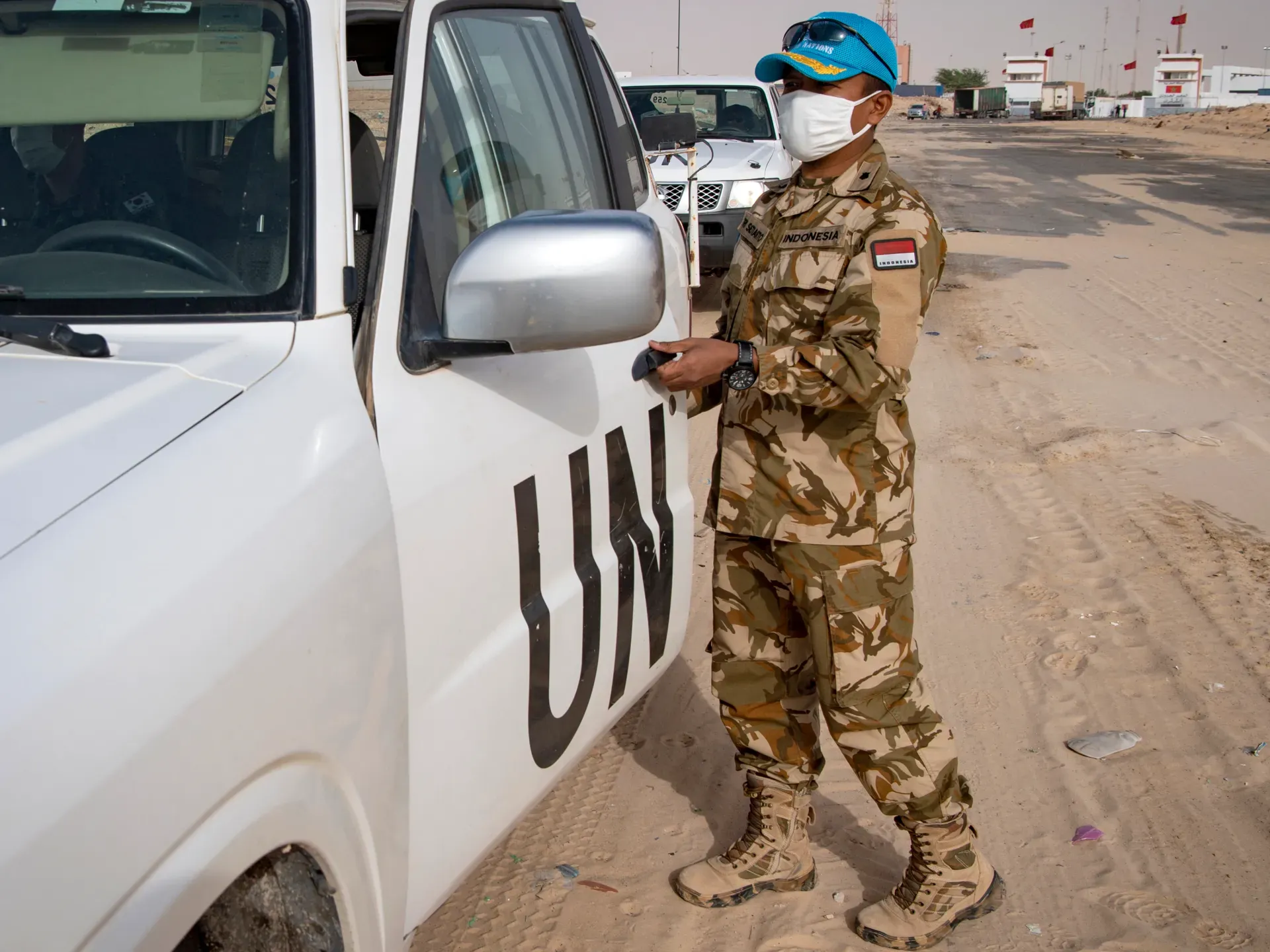
Western Sahara security risks: UN warns as MINURSO ends in 2026
Western Sahara security risks are expected to escalate following the expiration of the United Nations peacekeeping mission, MINURSO. UN Secretary-General Antonio Guterres warned on November 1, 2026, of potential hostilities in the disputed territory after the Security Council failed to renew the mission's mandate. The decision follows a diplomatic deadlock where a US-led resolution was vetoed by Russia. This article examines the termination of the 35-year mission, the geopolitical divide in the Security Council, and the reactions from Morocco, Algeria, and the Polisario Front.
November 8, 2026
6 min read
Source: ASHENVOW
Why is the expiration of MINURSO causing security concerns?
The expiration of the Mission for the Referendum in Western Sahara (MINURSO) has triggered immediate warnings from the highest levels of the United Nations regarding regional stability. UN Secretary-General Antonio Guterres expressed significant concern over the potential for hostilities to escalate throughout the territory now that the peacekeeping framework has lapsed.
According to a statement from spokesperson Stephane Dujarric on November 1, 2026, the Secretary-General remains deeply worried about the security situation. The end of the mandate marks the beginning of a "liquidation phase," during which UN assets are being transported back to their respective troop-contributing countries. This withdrawal removes a decades-old buffer that has existed since the 1991 ceasefire.
The absence of a peacekeeping presence creates a vacuum in a region roughly the size of Britain, where tensions between competing claims have remained high for decades. Guterres has urged all involved parties to exercise maximum restraint to prevent actions that could undermine regional stability or lead to direct conflict.
How did the UN Security Council fail to renew the mandate?
The failure to renew the MINURSO mandate resulted from a direct clash of geopolitical interests within the UN Security Council (UNSC) on Friday, October 31, 2026. While a majority of the council members supported a path forward, a single veto prevented the continuation of the peacekeeping mission.
The United States had proposed a specific resolution aimed at advancing the conflict toward a resolution. The US draft included several key components:
- The extension of the mission for an additional year.
- The removal of the word "referendum" from the mission's official name.
- The designation of Morocco’s autonomy proposal as the sole basis for future negotiations.
Despite receiving support from 11 of the 15 UNSC members—including permanent members France and the United Kingdom—the resolution was vetoed by Russia. Following this, a competing resolution proposed by Russia was also defeated by the council. This sequence of votes left the mission without a renewed mandate, effectively ending the UN's formal peacekeeping presence in the territory.
The role of the permanent members in the deadlock
The voting pattern highlighted a significant rift among the world's most powerful nations. The US position sought to pivot the diplomatic framework away from a referendum and toward Morocco's autonomy plan, a move US Ambassador Mike Waltz described as a way to move the 50-year conflict forward. Conversely, Russia maintained that the US draft was biased toward one side. Russian Ambassador Vassily Nebenzia argued that the Security Council should not automatically predetermine matters of sovereignty, a stance that ultimately blocked the US-led continuity of the mission.
What are the conflicting claims in the Western Sahara?
The conflict in Western Sahara is rooted in a long-standing dispute over sovereignty that dates back to the Spanish withdrawal from the region in 1975. The territory is currently the subject of competing claims between Morocco and the Polisario Front, representing the indigenous Sahrawi people.
Morocco has maintained that Western Sahara is an integral part of its sovereign territory since 1975. The Moroccan royal palace viewed the non-renewal of the MINURSO mission as a "significant development," interpreting the move as a way to withdraw the Western Sahara issue from the formal scrutiny of the UN Security Council. This perspective aligns with Morocco's preference for bilateral or autonomy-based negotiations rather than UN-mandated referendums.
On the other side, the Polisario Front, which is backed by Algeria, seeks the establishment of an independent state known as the Sahrawi Republic. The movement expressed deep concern regarding the deadlock in the Security Council, viewing the lack of a renewed mandate as a setback for the principle of self-determination. The geopolitical tension is further complicated by the involvement of Algeria, which has been a consistent supporter of the Polisario Front's quest for independence.
How have regional actors reacted to the UN decision?
Reactions to the termination of the MINURSO mandate have been sharply divided along geopolitical lines, reflecting the deep-seated tensions in North Africa. While Morocco sees the end of the mission as a strategic shift, neighboring Algeria and the Polisario Front have expressed significant alarm.
The Algerian Foreign Ministry issued a statement expressing "deep regret" over the Security Council's decision. Algeria specifically attributed the failure to renew the mission to what it termed the "excessive bias" of the United States toward the Moroccan position. This highlights the ongoing friction between Algiers and Rabat, which extends beyond the Western Sahara dispute itself.
The Polisario Front also released a statement voicing its concern over the Security Council deadlock. For these actors, the removal of the UN peacekeeping presence is not merely a logistical change but a fundamental shift in the legal and security landscape of the region. The end of MINURSO removes the international oversight that has monitored the 1991 ceasefire, potentially emboldening claimants to seek resolutions through non-diplomatic means.
What is the future outlook for the region?
The future of Western Sahara remains highly uncertain as the international community enters a period of diplomatic vacuum. While the peacekeeping operations have officially concluded, the United Nations has stated its willingness to continue supporting dialogue to find a peaceful resolution.
However, the practical tools for maintaining peace have been significantly diminished. The "liquidation phase" of MINURSO means that the physical presence of UN observers and the formal monitoring of the ceasefire are being dismantled. Without the UN's mediating role, the risk of localized skirmishes escalating into a broader regional conflict increases, particularly given the historical involvement of Algeria and Morocco.
The shift in the Security Council dynamics suggests that the Western Sahara issue may become more bilateral and less subject to international consensus. Whether this leads to a breakthrough via Morocco's autonomy plan or a renewed period of armed confrontation remains the central question for the stability of Northwest Africa.
Frequently asked questions
What was the purpose of the MINURSO mission?
MINURSO, or the Mission for the Referendum in Western Sahara, was established by the United Nations in 1991. Its primary objectives were to monitor the ceasefire between Morocco and the Polisario Front and to organize a referendum that would allow the inhabitants of the territory to decide its political future.
Why did the UN Security Council fail to renew the mandate?
The failure was caused by a geopolitical deadlock. A US-proposed resolution that would have extended the mission and focused on Morocco's autonomy plan was vetoed by Russia. A subsequent Russian resolution was also defeated, leaving the mission without a legal mandate to continue operations.
How does Morocco view the end of the UN mission?
Morocco views the end of the MINURSO mandate as a significant development that effectively removes the Western Sahara dispute from the formal agenda of the UN Security Council. This aligns with Morocco's long-standing position of sovereignty over the territory.
What is the Polisario Front's position on the conflict?
The Polisario Front, representing the indigenous Sahrawi people and supported by Algeria, seeks the establishment of an independent state called the Sahrawi Republic. They advocate for the principle of self-determination through a referendum, a goal they feel is being undermined by recent UN developments.
What happens to the UN assets now?
Following the expiration of the mandate, the mission has entered a "liquidation phase." This process involves the systematic dismantling of operations and the transportation of all UN assets and equipment back to the various countries that contributed troops and resources to the mission.
Key takeaways
- The MINURSO peacekeeping mission in Western Sahara has officially ended following a UN Security Council deadlock.
- Russia vetoed a US-led resolution that sought to extend the mission for one year.
- UN Secretary-General Antonio Guterres warned that the end of the mission increases the risk of hostilities.
- Morocco views the non-renewal as a way to move the issue away from UN Security Council oversight.
- Algeria and the Polisario Front have expressed deep concern and regret over the decision.
Conclusion
The termination of the MINURSO mission marks a definitive end to a 35-year era of UN peacekeeping in Western Sahara. The geopolitical division within the Security Council, characterized by the Russian veto of the US proposal, has left the region without a formal international monitoring mechanism. While the United Nations maintains its commitment to supporting dialogue, the immediate reality is one of heightened security risks and increased uncertainty. As the liquidation phase progresses, the balance of power in Northwest Africa faces a critical test, with the potential for renewed instability between Morocco, the Polisario Front, and Algeria.



