
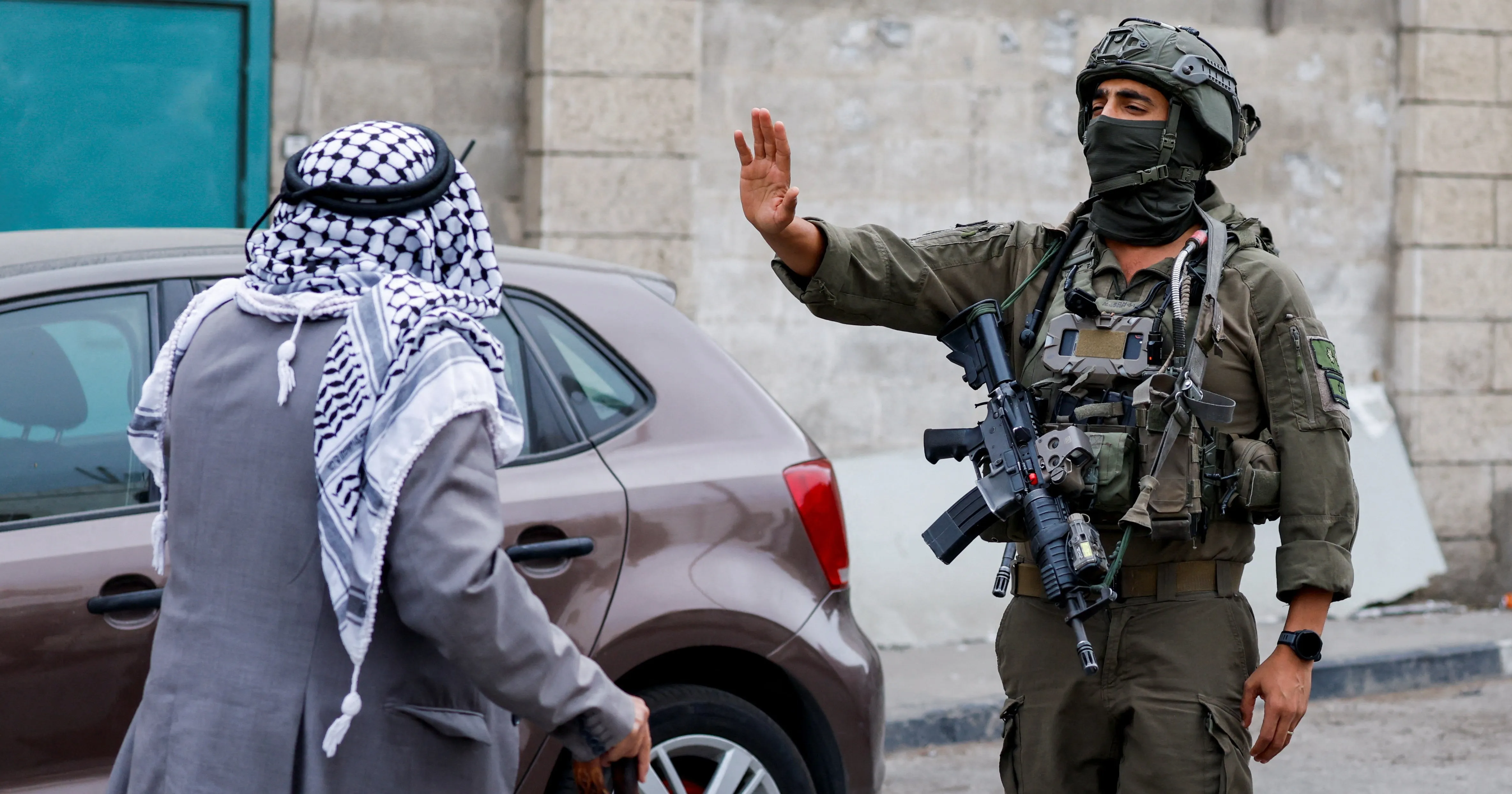
West Bank raids: Israeli military offensive in Hebron 2026
West Bank raids and settler-led violence have escalated across the occupied territories, resulting in significant civilian casualties and mass displacement. In the Hebron governorate, a military offensive entering its seventh day has forced more than 3,300 Palestinians from their homes, according to Hebron Governor Khaled Dudin. The operation has also disrupted the education of approximately 262,000 students and caused daily economic losses estimated between 10 million and 12 million shekels. This article examines the humanitarian impact of the Hebron siege, the scale of recent arrests, and the increasing pattern of settler aggression.
November 8, 2026
5 min read
Source: ASHENVOW
What is the scale of the current military offensive in Hebron?
The military offensive and siege in the Hebron governorate has entered its seventh consecutive day, creating a massive humanitarian crisis for local residents. According to Hebron Governor Khaled Dudin, the operation has resulted in the forced displacement of 3,361 people, representing 537 families. This displaced population includes highly vulnerable groups, such as 232 infants, 326 elderly individuals, 147 pregnant or breastfeeding women, and 213 people suffering from chronic illnesses.
While official figures from the governorate highlight the immediate displacement, municipal data suggests the impact may be even broader. Local municipal figures estimate that approximately 5,000 people from 780 families have been affected by the ongoing military operations, including those currently living under active siege. The United Nations Office for the Coordination of Humanitarian Affairs (OCHA) has noted that Israeli forces continue to impose tight restrictions on movement, which prevents families from accessing basic necessities and forces many to seek refuge with relatives.
Economic and Educational Disruption
Beyond the immediate physical displacement, the offensive has crippled the social and economic infrastructure of the Hebron governorate. The educational system has faced a significant halt, with roughly 262,000 students across 589 schools unable to attend physical classes. This disruption has forced educational authorities to pivot to remote learning models to maintain some level of continuity.
The financial consequences are equally severe. Local officials estimate that the ongoing military operations and closures are causing daily economic losses ranging from 10 million to 12 million shekels ($3.2 million to $3.9 million). These losses stem from restricted movement, the closure of businesses, and the inability of workers to access their livelihoods due to military checkpoints and ongoing raids.
How have West Bank raids affected civilian safety and arrests?
Recent West Bank raids have led to numerous injuries among civilians, including children, and a high volume of arrests across several governorates. In the Qalandiya refugee camp, located north of occupied East Jerusalem, a raid on Thursday resulted in the wounding of two children. The Palestine Red Crescent Society reported that a 15-year-old boy was shot in both legs with live ammunition, while a 12-year-old child was injured by fragments from live bullets.
The pattern of detention and physical assault has been reported across multiple regions:
- Nablus Governorate: Pre-dawn raids on Thursday resulted in the detention of 13 Palestinians, including three brothers, during house searches.
- Bethlehem Area: In the village of al-Maniya, Palestinian news agency Wafa reported that Israeli soldiers and settlers beat Mohammad Ahmad Ayesh Thawabta, a disabled Palestinian man.
- Hebron Governorate: The Palestinian Prisoner’s Society reported that 110 Palestinians were detained between the previous Friday and Wednesday. This included the arrest of two brothers while they were working their land near Yatta.
These incidents reflect a broader trend of increased military presence and detention activity that has intensified since the escalation of the conflict in October 2023.
What role do Israeli settlers play in the recent escalations?
Israeli settlers have been increasingly involved in direct confrontations with Palestinian residents and international observers throughout the West Bank. Reports indicate that settler activity often coincides with or follows military operations, adding another layer of volatility to the region. In the village of Umm al-Khair in Masafer Yatta, armed settlers attacked US journalist Jasper Nathaniel and two activists on Wednesday. According to activist Adele Shoko, the group was beaten, threatened, and had their equipment stolen; Nathaniel was also pepper-sprayed and subsequently arrested.
Settler violence is not limited to physical assaults on individuals but also extends to property and transit. In the Hebron governorate, settlers have been reported attacking vehicles at the northern entrance of the city, which has been closed to Palestinian movement. These actions contribute to the overall atmosphere of insecurity and the restriction of movement that OCHA has identified as a primary driver of humanitarian distress in the occupied territories.
Why are memorials being targeted in the West Bank?
A concerning new trend has emerged involving the systematic demolition of Palestinian memorials by Israeli forces. On Thursday, soldiers in Dura, south of Hebron, used a heavy barrage of tear gas before employing bulldozers to destroy a mural that commemorated several deceased Palestinians, including Bajis Abu Atwan, who died in the 1970s. This practice appears to be part of a wider pattern of targeting cultural and commemorative sites.
According to reporting by Al Jazeera’s Muntasir Nassar, the destruction of these memorials is not an isolated occurrence but a recently adopted pattern being implemented across all West Bank governorates. However, the frequency of these demolitions is notably higher in the Hebron governorate. The destruction of these sites serves to erase local historical narratives and complicates the efforts of communities to maintain their collective memory during periods of intense conflict.
Key takeaways
- Over 3,300 Palestinians in Hebron have been displaced due to a week-long military offensive.
- The Hebron military operations cause daily economic losses of up to 12 million shekels.
- Approximately 262,000 students in Hebron have been forced into remote learning.
- Israeli forces and settlers have targeted memorials and cultural murals in the West Bank.
- Settler-led violence has included attacks on journalists and the theft of equipment.
FAQ: West Bank raids
What is the current situation in Hebron?
Hebron is currently experiencing a significant military offensive and siege that has lasted seven days. This operation has displaced thousands of residents, including vulnerable groups like infants and the elderly, while causing massive disruptions to the local economy and the education of hundreds of thousands of students.
How many people have been displaced in Hebron?
According to Governor Khaled Dudin, 3,361 people from 537 families have been forced from their homes. However, municipal figures suggest the number of affected individuals, including those living under siege, may reach as high as 5,000 people from 780 families.
What are the economic impacts of the raids?
The military operations and movement restrictions in Hebron are resulting in significant financial damage. Local officials estimate that the governorate is suffering daily economic losses between 10 million and 12 million shekels, which is approximately $3.2 million to $3.9 million.
Are children being affected by the violence?
Yes, children have been injured during recent raids. In the Qalandiya refugee camp, a 15-year-old boy was shot in the legs with live ammunition, and a 12-year-old was wounded by bullet fragments, according to the Palestine Red Crescent Society.
Is settler violence increasing?
Reports indicate that settler-led attacks are frequent, involving assaults on Palestinian residents, the theft of equipment from journalists, and attacks on vehicles. These actions are part of an escalating pattern of instability across the West Bank.
Conclusion
The recent escalation of West Bank raids and the concentrated military offensive in Hebron represent a profound humanitarian crisis. The combination of mass displacement, significant economic losses, and the disruption of essential services like education has placed immense strain on Palestinian communities. Furthermore, the rising frequency of settler violence and the targeted destruction of cultural memorials suggest a deepening of the conflict's impact on civilian life and historical identity. As international organizations like OCHA call for the prevention of further forced displacements, the situation remains highly volatile with severe consequences for the region's stability.



