
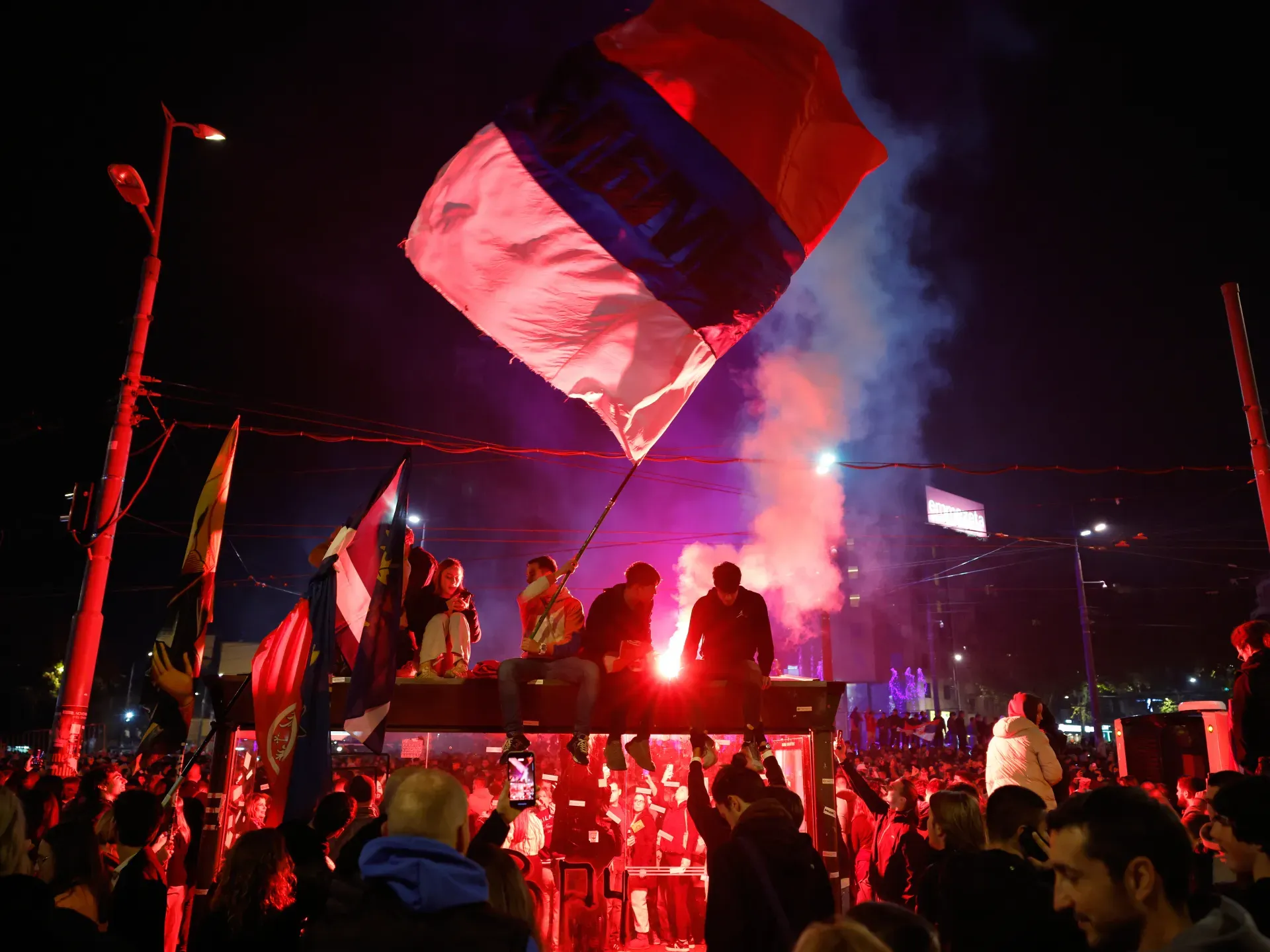
Vucic's defeat: How Serbia's foreign policy might shift in 2026
Vucic's defeat in the October 2026 elections marks the end of 14 years of dominance by Aleksandar Vucic and the Serbian Progressive Party (SNS). The victory of the opposition Student List signals a major political transition for Belgrade. While many expect a swift pivot toward Western institutions, experts suggest that domestic institutional reform must precede any significant realignment in foreign affairs. This article examines the potential shifts in Serbia's relations with the EU, Russia, Israel, and its regional neighbours during this period of uncertainty.
October 27, 2026
5 min read
Source: ASHENVOW
Will the new government immediately pivot toward the West?
A rapid shift in Serbia's international orientation is unlikely to happen immediately following the opposition's victory. While the departure of an authoritarian regime often triggers expectations of a quick pro-Western realignment, the incoming administration faces the daunting task of internal consolidation. The new leadership must first address the systemic issues left behind by the SNS, which has been accused of capturing democratic institutions across the country.
According to Aleksandar Popov, director of the Centre for Regionalism in Novi Sad, the new authorities will prioritize "tidying up at home" before attempting to solve regional problems. This domestic cleanup involves reforming several key sectors that were under the influence of the previous regime, including:
- The judiciary and prosecution services
- The national police force
- The media landscape and information flow
- The integrity of democratic institutions
Until these internal structures are stabilized, any major changes to Serbia's geopolitical stance will likely remain secondary to the necessity of building a functional domestic state.
How will Serbia's relations with its Balkan neighbours change?
Regional stability remains a primary concern as the new government attempts to mend ties that were frequently strained by the nationalistic rhetoric of the Vucic era. Relations with Bosnia and Herzegovina, Croatia, Montenegro, and Kosovo have historically been volatile, often characterized by Belgrade's use of external friction to bolster domestic support. The transition period presents both a risk of continued tension and an opportunity for a regional reset.
The complex dynamic with Croatia and Bosnia
Croatia represents one of the most difficult diplomatic challenges for the new Serbian leadership. Relations between Belgrade and Zagreb have been marked by sharp rhetoric, with Vucic previously accusing Croatia of attempting to trigger a "colour revolution" within Serbia. This friction is partly attributed to the ideological clash between the SNS and Croatia's ruling Croatian Democratic Union (HDZ), both of which have utilized nationalist-populist frameworks.
Despite the public hostility, a quiet convergence exists regarding Bosnia and Herzegovina. While Belgrade has historically supported Milorad Dodik in the Republika Srpska, and Zagreb has favored the creation of a third entity, the new government's ability to navigate these sensitivities will determine if Serbia can move toward the EU. As Aleksandar Popov notes, the EU will not accept a member state that lacks good neighbourly relations, making the repair of these damaged ties a prerequisite for integration.
What is the outlook for Serbia-Russia relations?
Serbia's foreign policy regarding Russia is expected to undergo the least amount of transformation among all its external relations. Under the previous administration, Belgrade maintained a delicate balancing act: refusing to join EU sanctions against Moscow while simultaneously allowing indirect ammunition flows to Ukraine. This "sitting on multiple chairs" approach is likely to persist, even under new leadership.
Vuk Vuksanovic, a lecturer in foreign policy at King’s College London, suggests that many of the structural elements shaping Serbian policy will remain intact. Several factors prevent a sudden, hawkish shift toward the West regarding Moscow:
- Energy security: The continued necessity for preferential gas prices from Russia.
- Unresolved disputes: The ongoing Kosovo issue remains a central pillar of Serbian domestic and foreign policy.
- Public sentiment: Significant portions of the Serbian population remain disillusioned with Western influence.
While the uncritical glorification of Russia in state-aligned media may decrease, and intelligence cooperation might be downgraded, the new government is unlikely to adopt a stance that contradicts Serbian national interests. Regarding Ukraine, Serbia is expected to maintain its refusal to recognize the annexation of Crimea and the Donbas, though the transparency of ammunition deliveries to Kyiv may face greater scrutiny.
Will ties with Israel be re-evaluated?
The relationship between Belgrade and Jerusalem, which was strengthened under Vucic through arms trade and technological exchange, is set for a period of scrutiny rather than termination. While the new government has no strategic reason to abandon cooperation with Israel, the controversial nature of certain recent agreements may lead to a formal review of existing contracts.
Foreign policy analyst Bosko Jaksic points out that the new administration will likely re-examine:
- Serbian ammunition exports to Israel
- Israeli surveillance technology imports to Serbia
The shift in Serbia also marks a change in the geopolitical landscape for Israel, which has lost a significant nationalist ally in Europe following the removal of Viktor Orban in Hungary. However, the depth of the new bilateral relationship will depend heavily on the political climate within Israel and the outcome of its own domestic elections.
FAQ: Serbia's political transition
Will Serbia join the EU more quickly now?
A faster path to EU membership depends on the new government's ability to repair relations with its neighbours and implement deep institutional reforms. While the opposition is more pro-EU, the EU requires stable neighbourly relations and a functional judiciary before integration can accelerate.
How will Russia react to the election results?
Russia is unlikely to see a radical shift in Serbian policy. While the era of uncritical media glorification of Moscow may end, Serbia's need for Russian energy and its stance on the Kosovo dispute mean that Belgrade will likely maintain its current neutral position.
Is the relationship with Croatia improving?
Improvement is not guaranteed and will require significant diplomatic effort. The relationship has been historically strained by nationalist rhetoric and ideological clashes between the ruling parties in Belgrade and Zagreb, requiring a shift away from the "production of enemies" strategy.
What happens to existing arms contracts with Israel?
Existing contracts, particularly those involving Serbian ammunition and Israeli surveillance equipment, are expected to undergo re-examination. The new government is likely to scrutinize these deals to ensure they align with new domestic priorities and international standards.
Will the new government change its stance on Ukraine?
The government is expected to maintain its policy of not recognizing Russian annexations in Ukraine. However, the previous administration's practice of selling weapons to Kyiv as a way to gain Western favor may be viewed differently by the new leadership.
Key takeaways
- The Student List victory ends 14 years of SNS dominance in Serbia.
- Domestic institutional reform is the immediate priority over foreign policy shifts.
- Serbia will likely maintain its neutral stance regarding Russia and energy needs.
- Regional stability depends on repairing ties with Croatia and Bosnia.
- Arms contracts with Israel are expected to face new scrutiny.
The path toward regional stability
The transition in Belgrade represents a significant moment for the Western Balkans. While the end of the SNS era removes a source of nationalist friction, it does not automatically resolve the underlying geopolitical tensions of the region. The new government faces a dual challenge: rebuilding the internal democratic framework of the Serbian state while simultaneously re-engaging with a skeptical European Union and a complex neighbourhood. Success will be measured not by sudden shifts in allegiance, but by the gradual restoration of institutional integrity and the ability to move away from the destabilizing policy of playing multiple global powers against one another.



