
Venezuela democratic transition: US phased plan and oil deals
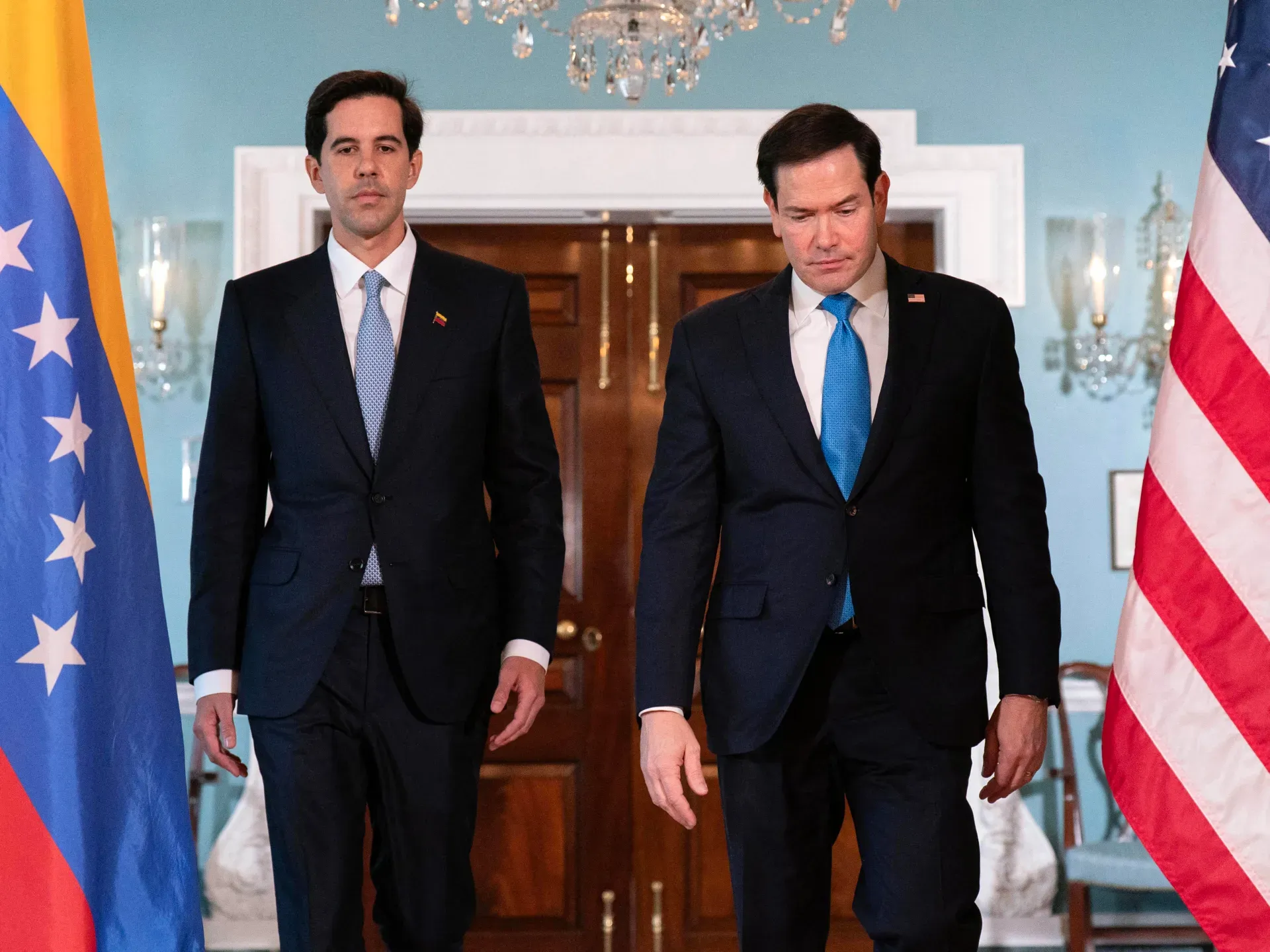
The Venezuela democratic transition is currently governed by a three-phase framework established by the Trump administration. This plan prioritizes stabilization, economic recovery, and political reconciliation before moving toward democratic elections. Following a meeting between US Secretary of State Marco Rubio and Venezuelan Foreign Minister Oliver Blanco on November 2, 2026, Washington reaffirmed its commitment to this gradual approach. The diplomatic process occurs against a backdrop of significant shifts, including the abduction of former President Nicolas Maduro and a major US-Venezuela oil agreement. This article examines the three-phase roadmap, the role of opposition leader Maria Corina Machado, and the implications of the NABEP oil venture.
November 8, 2026
5 min read
Source: ASHENVOW
What is the US three-phase plan for Venezuela?
The United States is advocating for a structured, gradual approach to the Venezuela democratic transition rather than immediate electoral proceedings. According to a State Department readout following a meeting between Secretary of State Marco Rubio and Venezuelan Foreign Minister Oliver Blanco on November 2, 2026, the Trump administration has outlined a specific sequence of events.
This strategy is categorized into three distinct stages designed to ensure long-term stability:
- Stabilization: Establishing basic order and security within the country following the removal of the previous administration.
- Economic Recovery: Implementing measures to revitalize the national economy and restore essential services.
- Political Reconciliation and Democratic Transition: Facilitating dialogue between factions and preparing the groundwork for free elections.
The ultimate goal of this phased approach, as noted by Secretary Rubio, is to ensure that the eventual holding of presidential elections in 2027 is conducted in a stable and sustainable environment. This sequence aims to prevent a power vacuum or economic collapse that could undermine the democratic process.
How does Maria Corina Machado fit into the transition?
Maria Corina Machado, a Nobel Peace Prize laureate, has returned to Venezuela to organize a political movement aimed at preparing the nation for the projected 2027 elections. Her return marks a significant moment in the domestic political landscape, as she seeks to mobilize the population under the framework of the US-supported transition plan.
Machado has expressed support for the sequence of events established by the US, noting that Rubio has set a clear path toward democratic elections. However, her role is complex, as she must navigate the interests of an administration that is simultaneously engaging in high-stakes economic negotiations with the current interim government. While she thanked President Trump and Secretary Rubio for their support, her political focus remains on the legitimacy of the upcoming electoral cycle.
The tension between political reform and economic interests
A notable friction exists between the democratic goals championed by Machado and the pragmatic energy policies of the Trump administration. While Machado focuses on organizational movements for elections, the US has been actively striking deals with the interim government led by President Delcy Rodriguez. This dual-track approach—pushing for democracy while securing energy resources—creates a delicate balancing act for both Venezuelan opposition leaders and US diplomats.
What are the details of the US-Venezuela oil agreement?
The US administration has secured a significant stake in Venezuela's energy sector through a deal involving North American Blue Energy Partners (NABEP). This agreement is part of a broader effort by the Trump administration to extract oil resources while navigating the political instability caused by the abduction of former President Nicolas Maduro.
The terms of the agreement are substantial, involving a joint venture that grants US interests significant control over Venezuelan assets. Key details of the deal include:
- Resource Access: Caracas has granted NABEP 100-year rights over 17 oilfields.
- Proven Reserves: The targeted oilfields contain an estimated 65 billion barrels of proven reserves.
- Ownership Structure: The Pentagon will hold a 35 percent stake in NABEP.
- Production Rights: The US is guaranteed the right to purchase 20 percent of the oil output at cost.
NABEP is owned by Venezuelan businessman Alejandro Betancourt and currently stands as the second-largest private oil operator in Venezuela, trailing only Chevron. This deal represents a major pivot in how the US engages with Venezuelan territory, moving from pure sanctions to direct economic partnership through a third-party operator.
How is the interim government responding to these developments?
The interim government, led by Delcy Rodriguez, who assumed power following the abduction of Nicolas Maduro, is attempting to project an image of stability and readiness for democratic processes. Rodriguez has publicly assured the Venezuelan people that elections will eventually take place "with the world as witness," though she has stopped short of providing a specific date for the vote.
Despite these assurances, the interim government's legitimacy and its methods for managing the transition remain under scrutiny. The administration's willingness to negotiate oil rights with US-linked entities suggests a pragmatic approach to maintaining power and economic flow, even as it promises a return to democratic norms. This creates a landscape where the interim government acts as both a political placeholder and an economic partner to Washington.
Challenges to transparency and legitimacy
The lack of transparency regarding the oil agreements has become a central point of contention for the opposition. Maria Corina Machado has voiced skepticism regarding the NABEP deal, stating that the agreement "does not reflect the levels of transparency that Venezuelan society wants." This criticism highlights a growing divide: while the US and the interim government focus on economic stabilization through energy deals, the opposition argues that these opaque arrangements may undermine the very democratic transition they are meant to fund.
Frequently asked questions
What is the expected date for the Venezuelan presidential elections?
The US-supported transition plan, as articulated by Secretary of State Marco Rubio, aims for presidential elections to be held in 2027. This timeline is contingent upon the successful completion of the stabilization, economic recovery, and political reconciliation phases.
Who is currently leading the Venezuelan interim government?
Delcy Rodriguez, the former vice president under Nicolas Maduro, serves as the interim president of Venezuela. She assumed leadership following the abduction of Maduro by US forces, a move that fundamentally altered the country's political structure.
What is the significance of the NABEP oil deal?
The deal provides the US with a 35 percent stake in NABEP and guarantees the right to buy 20 percent of its oil output at cost. It grants 100-year rights to 17 oilfields containing 65 billion barrels of reserves.
Has Maria Corina Machado endorsed the US oil agreement?
No, Maria Corina Machado has expressed skepticism regarding the agreement. She has stated that the deal lacks the transparency required by Venezuelan society, suggesting a disconnect between US economic interests and the domestic political movement.
Why was Nicolas Maduro removed from power?
Former President Nicolas Maduro was abducted by US forces from Caracas and brought to the United States. He currently faces various charges, including drug trafficking, as part of a broader US effort to address the political situation in Venezuela.
Key takeaways
- The US is implementing a three-phase plan: stabilization, economic recovery, and political reconciliation.
- Presidential elections in Venezuela are tentatively targeted for the year 2027.
- A major oil deal grants NABEP 100-year rights to 17 oilfields with 65 billion barrels of reserves.
- The US Pentagon will maintain a 35 percent stake in the NABEP joint venture.
- Opposition leader Maria Corina Machado has criticized the transparency of recent US-Venezuela oil agreements.
Conclusion
The path toward a Venezuela democratic transition is currently defined by a tension between rapid economic pragmatism and long-term political reform. While the Trump administration's three-phase plan provides a structured roadmap toward 2027 elections, the massive oil agreements with NABEP introduce significant complexities. These deals secure vital energy resources and economic stability but face intense criticism from opposition leaders like Maria Corina Machado regarding transparency. As the interim government under Delcy Rodriguez navigates this period, the success of the transition will depend on whether economic recovery can be achieved without compromising the democratic legitimacy required for a lasting settlement.



