
Task Force Iron Gate: US moves to cut Iran weapon routes
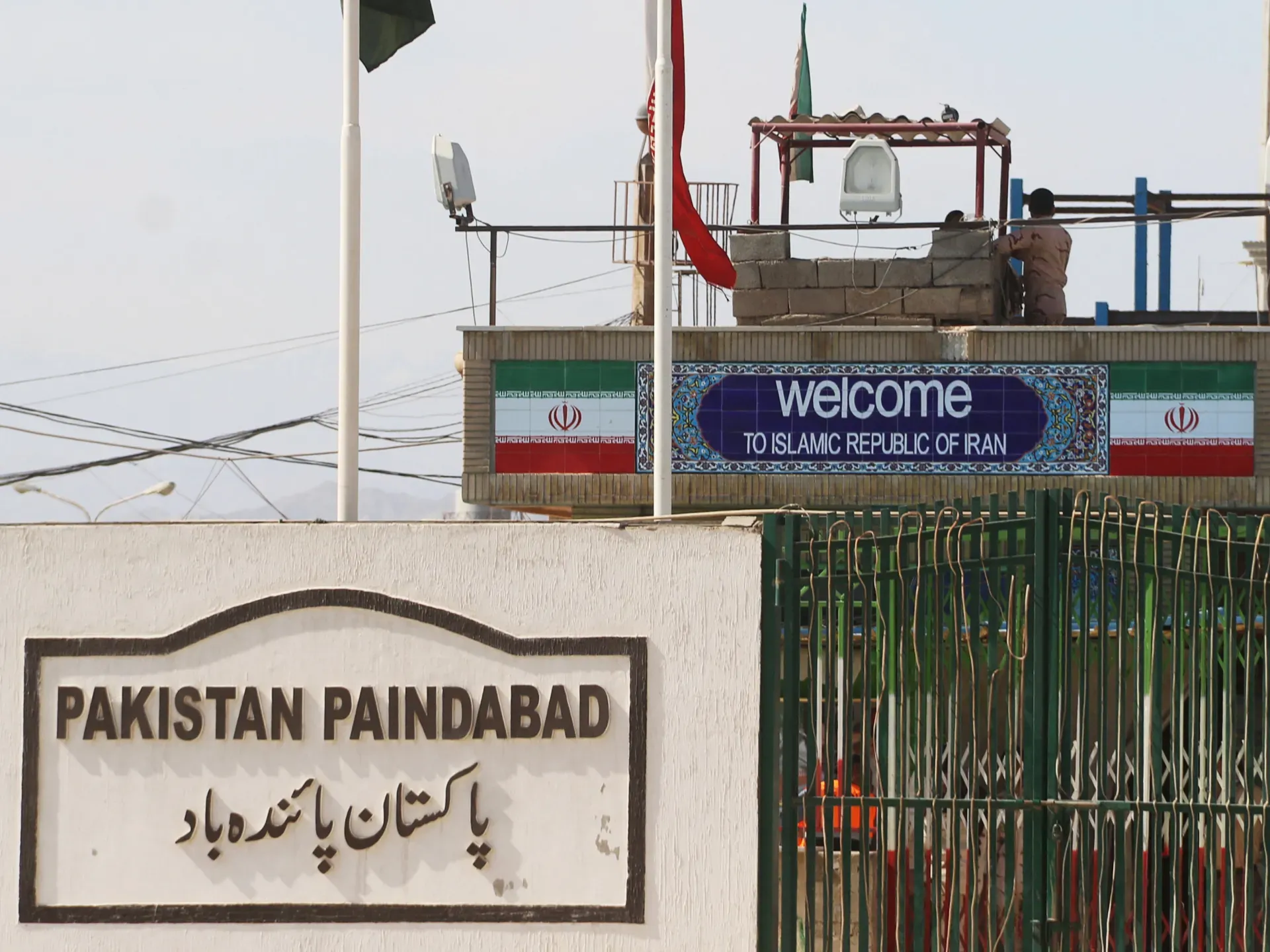
As fears of a regional escalation grow, Washington has officially announced the formation of Task Force Iron Gate. This specialized military unit is designed to target critical land routes and Caspian Sea corridors used by Tehran. By focusing on these specific transit points, the United States intends to choke off the flow of advanced weaponry being moved across borders. The operation marks a significant shift in maritime and terrestrial surveillance strategies aimed at disrupting the supply chains that sustain regional instability and ongoing military tensions.
November 16, 2026
4 min read
Source: ASHENVOW
Expanding the blockade to land and Caspian Sea routes
Task Force Iron Gate will focus on identifying how weapons systems enter Iran and determining how these supply lines can be severed. While the US has maintained an "ironclad blockade" against Iran at sea, the new unit expands this strategy to encompass Iran's land borders and the Caspian Sea, according to CENTCOM. The mission includes monitoring the movement of dual-use technologies, sanctioned materials, and illegal revenue streams that support Tehran's military capabilities.
The task force, which is based in Tampa, Florida, will reportedly be run by 20 civilian and military personnel. These personnel will coordinate with various US government agencies to monitor the seven countries that share borders with Iran: Afghanistan, Armenia, Azerbaijan, Iraq, Pakistan, Turkiye, and Turkmenistan. By targeting these terrestrial corridors and the Caspian Sea, Washington aims to move beyond maritime restrictions to create a more comprehensive economic and logistical strangulation of the Iranian regime.
Targeting economic and infrastructure nodes
Michael Mulroy, a former US deputy assistant defence secretary for the Middle East, suggested that the task force represents a shift in targeting priorities. Unlike previous operations such as Operation Epic Fury, which primarily focused on military targets, this new approach is expected to focus on economic and infrastructure targets. This strategy is intended to degrade the regime's fundamental ability to both fight and fund its military operations.
According to Mulroy, the unit acts as a coordination body looking for ways to increase the US economic strangulation strategy. He noted that if US President Donald Trump ramps up the war, there will likely be attacks on this series of targets, moving the focus from purely military assets to the infrastructure that sustains the regime's capacity to function.
Iran's response and underground military developments
The Islamic Revolutionary Guard Corps (IRGC) has dismissed the announcement, with spokesman Sardar Mohebi calling the plan "just a play on words." Speaking via the Fars news agency, Mohebi argued that the US cannot achieve its goal of collapsing the Iranian economy through such measures. He pointed to previous Washington claims that Iran would face economic collapse within two weeks, which he stated did not materialize.
The diplomatic friction comes as the IRGC announced ambitious plans for underground complexes designed to sustain missile and drone production even under heavy bombardment. This announcement follows reports of ongoing construction near Iranian missile bases, supported by satellite imagery. Tehran has previously claimed that US strikes have failed to destroy its existing underground facilities.
Potential for Russian confrontation
While CENTCOM's announcement did not explicitly name Russia, analysts suggest the task force is a direct attempt to disrupt supply networks involving Russian connections. US media reports have indicated that Russia has sent drone components and explosives to Iran via the Caspian Sea. Furthermore, there are claims that Russian technology may be assisting Iran in the development of advanced supersonic cruise missiles.
Mahjoob Zweiri, a professor of contemporary history and politics at Qatar University, told Al Jazeera that reports of military equipment being imported via Russia are a "real concern" for the United States. Consequently, the implementation of Task Force Iron Gate could potentially cause a direct confrontation with Russia.
Challenges to choking off supply lines
Experts have raised doubts about the feasibility of the US mission. Rami Khouri, a public policy fellow at the American University of Beirut, noted that Iran has a history as a trading nation spanning thousands of years, maintaining an enormous web of contacts with traders and allies across the region, particularly in Asia. Khouri argued that it is "virtually impossible" for the US to seal off every single route.
Khouri emphasized that while the US can impose sanctions and blockades, it cannot control the behavior of all regional actors, including Russia, China, and the Emirates. He noted that many materials used in Iran's weapons systems are purchased from various countries—including the US and Europe—and are subsequently channeled through companies in Asia.
Internal US political tensions
The creation of the task force has also sparked criticism from within US political circles. Joe Kent, a former Trump aide and top counterterrorism official who resigned in March due to the US's war on Iran, suggested the move might subvert diplomatic efforts. Posting on X, Kent characterized the unit as "policy by CONOP," suggesting that the military is finding ways to ensure war escalates or perpetuates, even while the vice president attempts to negotiate with the Iranians.



