
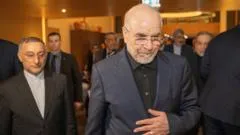
US midterm elections and Iran conflict: Impact on Trump's policy
The US midterm elections and Iran conflict have become deeply intertwined following significant Republican losses in the recent polls. Iran's chief negotiator suggests that the American electorate has signaled a desire to avoid further escalation. While President Donald Trump attributed part of the Republican defeat to rising petrol prices caused by the ongoing war, he maintained his stance on the February joint strikes with Israel. This article examines the political fallout in Washington, the escalating maritime tensions in the Strait of Hormuz, and the current status of indirect peace negotiations.
November 8, 2026
6 min read
Source: ASHENVOW
How did the US midterm elections affect the Iran conflict?
The Republican Party's significant losses in the US midterm elections have prompted Iranian officials to interpret the results as a public mandate against continued warfare. Iran's chief negotiator suggested that the American people have effectively voted "no to war" following the electoral outcome. This interpretation views the shift in congressional control as a potential pivot point for US foreign policy regarding Tehran.
However, President Donald Trump has offered a different perspective on the electoral results. During an interview with Fox News, Trump acknowledged that the poor performance of Republican candidates was partially linked to the conflict, specifically citing the resulting surge in gasoline prices. He noted that while many people support his stance on Iran, they were likely unwilling to endure the short-term economic consequences of higher fuel costs. Despite these political setbacks, the President has remained firm in his military decisions, stating he does not regret the joint operations conducted with Israel against Iran in February.
The President's stance on military escalation
Despite the electoral shifts, the White House has not signaled an immediate retreat from its military posture. In communications with CBS News, President Trump asserted that the conflict would conclude only "when I say it ends." Furthermore, he has issued warnings that the United States and Israel could return to all-out warfare if a viable diplomatic agreement is not reached in the wake of the midterms. This creates a volatile environment where political domestic pressure meets a highly assertive executive branch.
What is the current situation in the Strait of Hormuz?
Maritime tensions in the Strait of Hormuz have escalated, with the Islamic Revolutionary Guard Corps (IRGC) reporting multiple incidents involving commercial shipping. The IRGC claimed on Wednesday that four oil tankers caught fire after striking naval sea mines within the Strait. According to the semi-official Tasnim news agency, two of these vessels remained on fire, while two others were intercepted. The IRGC alleged these tankers were attempting to utilize a prohibited southern route to bypass Iranian-controlled waters.
There are significant discrepancies between official Iranian claims and independent maritime reports. BBC Verify has investigated the IRGC's assertions and has not found evidence to support the claim that four tankers were destroyed. However, the UK Maritime Trade Operations (UKMTO) did confirm that a tanker was struck by two unknown projectiles on Tuesday evening, approximately 14 nautical miles northeast of Limah, Oman. While no casualties were reported in that specific incident, the regional instability is evidenced by the death of an Indian crew member on a dhow earlier in the week during an attack in the same vicinity.
The impact of the naval blockade on global energy
The Strait of Hormuz, a critical artery for global energy, remains under extreme pressure. Typically, one-fifth of all global oil and gas shipments pass through this waterway. Since the onset of the Iran war, the Strait has been effectively closed to normal commerce due to a combination of Iranian missile and drone attacks and a US naval blockade. Although a preliminary agreement to reopen the waterway was reached in June, it collapsed shortly after Iranian attacks on shipping resumed. Consequently, the US military has had to provide direct protection for tankers to ensure the continued flow of exports from Gulf Arab states.
Are there any viable paths to diplomatic resolution?
Indirect negotiations mediated by Qatar remain the primary, albeit stalled, mechanism for ending the conflict. Iranian President Masoud Pezeshkian has expressed a commitment to resolving the crisis through dialogue, warning that a resumption of active warfare would yield no benefits for any party involved. Pezeshkian also noted that the Iranian Supreme Leader has expanded the government's mandate, allowing them to negotiate on issues that were previously considered strictly off-limits.
The current framework for these discussions is based on a seven-step proposal submitted by Iran in September. According to Esmaeil Baqai, the Iranian foreign ministry spokesperson, this proposal has been condensed to allow for a potentially rapid implementation—possibly within two days—should both sides reach an agreement. However, the fundamental disagreement remains centered on maritime control; Iran continues to resist relinquishing influence over the Strait of Hormuz, leading to the continued targeting of vessels using alternative southern routes through Omani waters.
How do Iranian leaders view the US political shift?
Despite the Republican losses in the US, the highest levels of the Iranian leadership remain skeptical that American policy will undergo a fundamental change. The Iranian Supreme Leader, Mojtaba Khamenei, issued a statement suggesting that any expectation of a shift in US "hostility towards the Iranian nation" is a grave mistake. This indicates a deep-seated distrust of the American political system, regardless of which party holds power in Washington.
This skepticism is echoed by the Iranian parliament speaker, Mohammed Bagher Ghalibaf, who endorsed the message that the US public has rejected war. However, Ghalibaf also issued a stern warning: if the US government chooses to prioritize international interests over the expressed will of its people, Iran's response would be a "nightmare." This rhetoric underscores the high stakes of the current geopolitical standoff, where domestic American politics and Iranian security concerns are in direct collision.
Key takeaways
- The US Republican Party suffered significant losses in the midterms, which Iran interprets as a public rejection of war.
- President Trump attributes some of the electoral losses to high gasoline prices caused by the ongoing conflict.
- The Strait of Hormuz remains highly volatile, with conflicting reports regarding tanker attacks and sea mine strikes.
- Indirect negotiations mediated by Qatar are ongoing, based on a condensed seven-step Iranian proposal.
- The US military continues to provide protection for tankers to bypass the blockade and ensure energy security.
FAQ: US midterm elections and Iran conflict
How did the US midterm elections affect the war?
The elections resulted in significant Republican losses, which Iran's chief negotiator claims is a sign that Americans want to avoid war. President Trump, however, believes the losses were partly due to the economic impact of the war, specifically the increase in petrol prices for voters.
Is the Strait of Hormuz open for shipping?
The Strait is not fully open; it has been effectively closed to normal commerce due to Iranian drone/missile attacks and a US naval blockade. While some tankers are being protected by the US military, the area remains a high-risk zone for maritime transit.
What is the status of peace negotiations?
Negotiations are being mediated by Qatar but have been stalled for months. Iran is currently working with a condensed version of a seven-step proposal from September, aiming for a potentially rapid implementation if a breakthrough occurs during these indirect talks.
Has there been recent violence involving tankers?
The IRGC claimed four tankers hit mines and caught fire, though BBC Verify found no evidence of such destruction. However, the UKMTO confirmed a tanker was struck by unknown projectiles near Oman, and an Indian crew member was killed in a separate attack.
Will US policy change after the midterms?
While Iranian negotiators hope for a shift, the Iranian Supreme Leader stated that he does not expect US policy to change. He maintains that American hostility toward Iran will continue regardless of the recent electoral outcomes in the United States.
Conclusion
The intersection of the US midterm elections and the Iran conflict has created a complex geopolitical landscape. While the American electorate's shift provides a potential opening for diplomacy, the political reality in Washington remains confrontational. President Trump's insistence on maintaining his military stance, coupled with the Iranian leadership's skepticism, suggests that a breakthrough remains elusive. As maritime tensions in the Strait of Hormuz continue to threaten global energy supplies, the pressure for a negotiated settlement through Qatari mediation grows, even as the risk of renewed all-out warfare remains a constant threat.



