
US midterm elections impact on Iran: Trump's loss effect
Tehran views the US midterm elections impact on Iran as a decisive public rejection of President Donald Trump’s military and economic campaign against the Islamic Republic. Following sweeping Democratic victories, Iranian officials suggest the American electorate has signaled a desire to end the ongoing conflict. While these electoral shifts complicate the Republican administration's remaining term, the risk of unilateral military action remains high. This article examines the Iranian leadership's reaction, the potential for escalated tensions in the Strait of Hormuz, and the diplomatic prospects following the US political shift.
November 8, 2026
6 min read
Source: ASHENVOW
How are Iranian leaders interpreting the US midterm results?
Iranian authorities are characterizing the significant losses sustained by the Republican Party in the US midterm elections as a direct repudiation of the current administration's 'war on Iran.' From the perspective of Tehran, the electoral outcome represents a shift in American public sentiment, moving away from military confrontation and toward economic stability.
Mohammad Bagher Ghalibaf, the Speaker of the Iranian parliament, explicitly linked the election results to a desire for peace. He stated that Americans chose 'conscience or the cost of living' over war, endorsing the idea that the public has said 'no' to the ongoing hostilities. Ghalibaf, who previously participated in talks that led to a brief memorandum of understanding in June, warned that if the US government ignores this perceived public will to serve international interests, Iran would respond with a 'nightmare.'
The rhetoric from the Iranian judiciary has been equally assertive. Gholam-Hossein Mohseni-Ejei, head of the Iranian judiciary, claimed that President Trump has suffered defeats in both the political and military spheres. He suggested that the Islamic Republic is prepared to impose further setbacks on the United States in response to continued pressure.
What are the implications for the conflict in the Strait of Hormuz?
The geopolitical tension surrounding the Strait of Hormuz is expected to intensify as both sides navigate the new US political landscape. The waterway remains a critical flashpoint, with the Trump administration utilizing a naval blockade and stringent sanctions to exert pressure on the Iranian economy and its 90 million citizens.
Despite the shift in the US Congress, Iran’s core demands regarding the Strait of Hormuz appear to be hardening rather than softening. According to Hamidreza Azizi, a senior Iran analyst at the International Crisis Group, the sense of political victory in Tehran is likely to make Iranian decision-makers more uncompromising. The leadership has established seven specific conditions for the partial reopening of the Strait, insisting that the United States must take the initial step in any de-escalation process.
The Nuclear Standoff and Economic Pressure
The political shift in Washington may also impact the long-standing nuclear negotiations. Analysts suggest that the likelihood of Iran offering concessions on its nuclear program has decreased following the midterm results. As the US continues to use trade disruptions and economic warfare as primary tools of statecraft, Tehran views its maritime control as its most effective lever for 'absolute deterrence.'
Will the US military respond despite the Democratic gains?
While the Democratic victories provide a potential pathway for a change in foreign policy direction, they do not guarantee an immediate cessation of military threats. The risk of a Trump-led military strike remains a significant concern for international observers, as the President has frequently discussed the possibility of attacking Iran.
Sanam Vakil, director of the Middle East and North Africa Programme at Chatham House, notes a complex psychological dynamic at play. She suggests that while the electoral defeat increases the pressure to find a diplomatic resolution, President Trump may be reluctant to appear weak in the face of such a significant political loss. This creates a paradox where the need for a 'diplomatic victory' or an 'off-ramp' competes with the impulse to assert strength through military action.
Furthermore, the timing of potential escalations is a critical factor. Barbara Slavin, a fellow at the Stimson Center, expressed concern that the President might utilize his 'lame duck' period to launch attacks before the new Congress is seated. However, she also noted that the magnitude of the Republican defeat might actually make an all-out war less probable, as the economic and political costs of such a conflict are clearly reflected in the election results.
How has the anniversary of the 1979 embassy seizure influenced current tensions?
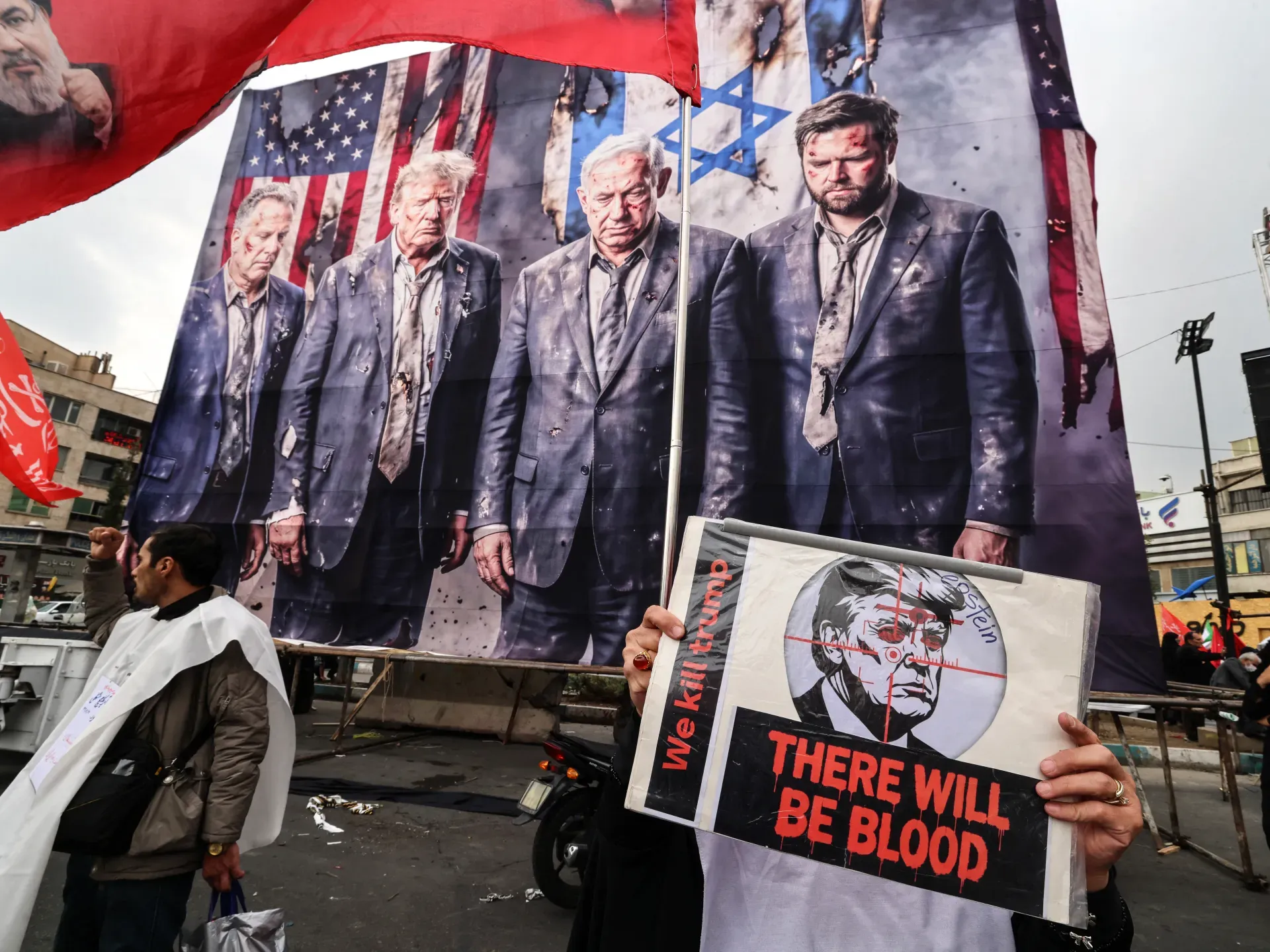
The timing of the US midterm results coincided with the anniversary of the 1979 seizure of the US embassy in Tehran, a day that the Iranian state uses to reinforce its anti-Western stance. Demonstrations and state-organized marches were held across major Iranian cities, including Tehran, Bandar Abbas, Mashhad, and Qom, to denounce what they term 'global arrogance.'
A significant component of this symbolic resistance came from Supreme Leader Mojtaba Khamenei. In a statement released to mark the anniversary, Khamenei asserted that the recent developments in the Persian Gulf, particularly regarding the Strait of Hormuz, have dismantled the 'myth of American invincibility.' This statement is particularly notable given that Khamenei has maintained a low public profile since assuming the leadership in March following the death of his father.
Khamenei's message was one of continued resistance, dismissing any hope that changes in US partisan politics would alter Washington's fundamental 'enmity' toward Iran. He emphasized that the path to true security lies in the pursuit of strength rather than seeking concessions from the United States.
What is the realistic outlook for future US-Iran diplomacy?
The prospects for a comprehensive settlement between the United States and Iran remain dim, but the possibility of localized or interim agreements is growing. The current environment is defined by a struggle between intense economic pressure and the need for regional stability.
Expert analysis suggests that the most likely path forward is not a grand bargain, but rather a series of smaller, functional arrangements. Sanam Vakil of Chatham House posits that an interim agreement specifically focused on the Strait of Hormuz and the lifting of the naval blockade is a more realistic objective than a full-scale diplomatic breakthrough. Such an arrangement would address immediate economic and maritime concerns without requiring a total resolution of the underlying political and nuclear disputes.
Frequently asked questions
How do US midterm elections affect Iran's negotiating position?
The elections appear to have strengthened Iran's domestic negotiating position. Iranian leaders interpret the Republican losses as a sign of American fatigue with the conflict, making them more likely to maintain their core demands and less inclined to offer concessions on nuclear or maritime issues.
Is a US military strike against Iran still a possibility?
Yes, a military strike remains a possibility despite the Democratic victories. While the political pressure to find a diplomatic exit has increased, there is a risk that the Trump administration may seek to avoid appearing weak by continuing or escalating military threats.
What role does the Strait of Hormuz play in the current conflict?
The Strait of Hormuz is a primary point of leverage for Iran. The US has implemented a naval blockade to exert economic pressure, while Iran uses its control over the waterway to demand the lifting of sanctions and the reopening of maritime routes under specific conditions.
Who is the current Supreme Leader of Iran?
Mojtaba Khamenei is the current Supreme Leader of Iran. He assumed the position in early March 2026 following the death of his father. He has recently used official statements to emphasize the need for Iranian strength and to challenge American influence in the Persian Gulf.
What is the expected nature of future US-Iran agreements?
Most analysts believe that a comprehensive, long-term settlement is unlikely in the near term. Instead, the focus is expected to shift toward interim agreements, such as those addressing the blockade in the Strait of Hormuz, to manage immediate tensions and economic pressures.
Key takeaways
- Iranian leaders view US midterm losses as a public rejection of the war on Iran.
- The Strait of Hormuz remains a critical flashpoint for naval and economic confrontation.
- The Trump administration maintains the capability to launch military strikes during its remaining term.
- Diplomatic prospects are shifting toward interim agreements rather than comprehensive settlements.
- Iranian leadership is becoming more uncompromising on core nuclear and maritime demands.
Conclusion
The US midterm elections have introduced a new layer of complexity to the confrontation between Washington and Tehran. While the Democratic gains may eventually pave the way for a more restrained foreign policy, the immediate future remains fraught with risk. The Iranian leadership, emboldened by what they perceive as an American electoral shift, is unlikely to make significant concessions. Consequently, the international community must prepare for a period of intensified volatility, where the potential for limited military strikes and economic brinkmanship in the Strait of Hormuz remains a constant threat to regional stability.



