
U.S. midterm elections 2026: Democrats sweep Congress
The U.S. midterm elections 2026 resulted in a decisive victory for Democrats, who gained control of both the Senate and the House of Representatives. Following a day of significant political shifts, including historic upsets in South Carolina, Texas, and Kansas, the Republican Party faced a substantial setback in legislative influence. While the election saw localized Republican successes, such as in Guam, the national trend favored a Democratic surge. This article examines the specific electoral shifts, Donald Trump's reaction via Truth Social, his criticisms of media outlets, and the constitutional implications of a divided government.
November 8, 2026
6 min read
Source: ASHENVOW
What were the key results of the U.S. midterm elections 2026?
Democrats achieved a decisive victory by taking control of both chambers of the U.S. Congress, the Senate and the House of Representatives. The election was defined by several high-profile upsets in traditionally conservative strongholds, signaling a significant shift in the political landscape. For instance, in South Carolina, Annie Andrews was elected as the state's first Democratic senator in 28 years. Similarly, Texas saw James Talarico win a Senate seat, marking the first Democratic victory in that state for over three decades. Perhaps most strikingly, Kansas swung to the Democratic column as Adam Hamilton secured a Senate seat that had not been held by a Democrat in 94 years.
While these national results favored the Democratic Party, there were isolated Republican wins that provided early optimism for the GOP. In Guam, Republican Tony Ada was elected governor, reclaiming the position from Democrats for the first time since 2014. Additionally, Republicans secured a majority in the Guam State Senate. However, these local outcomes in Guam did not influence the broader composition of the federal Senate or House.
How did Donald Trump respond to the election results?
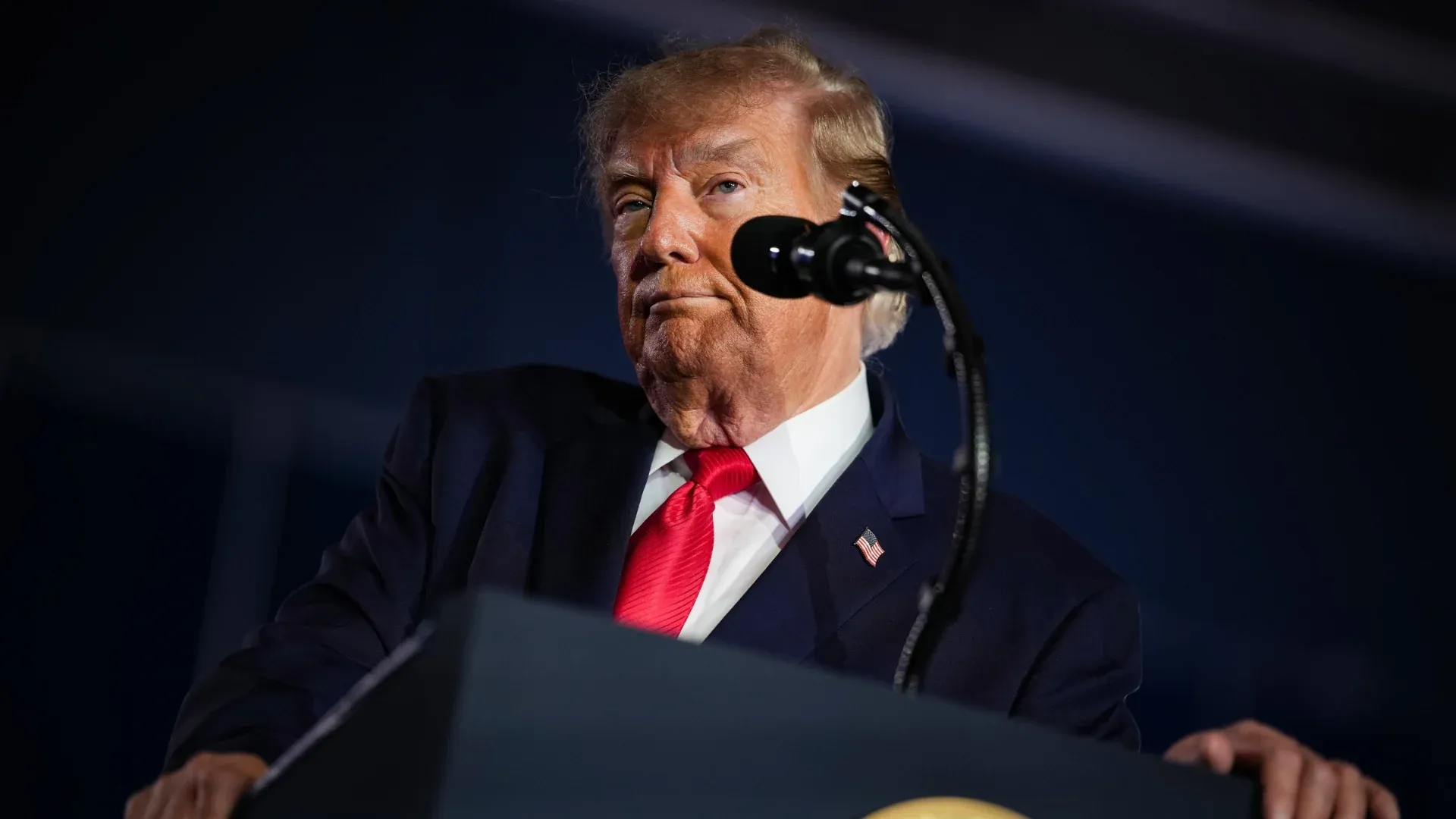
President Donald Trump expressed significant displeasure regarding the midterm outcomes through his social media platform, Truth Social. Throughout election night, the President's posts transitioned from early optimism regarding Guam to direct criticism of the national results and the media. As the Democratic sweep became evident, Trump claimed that had he been on the ballot, the Republicans would have won in a landslide.
Trump utilized his platform to project strength and contest the narrative of the election. He shared content from right-wing commentator Benny Johnson, suggesting that Republican turnout was at a "presidential-level" on Election Day. He also cited polling data to bolster his standing among his base, though these claims were often contextualized within specific subsets of voters rather than the general electorate.
Trump's interpretation of polling and approval ratings
The President's social media activity frequently involved reinterpreting various polls to support his political standing. For example, he cited a CNN poll claiming he held 99% support among Republicans. However, this figure was derived from a 2024 poll specifically measuring support among the "MAGA GOP" when facing Democrat Kamala Harris, rather than a general Republican consensus. Furthermore, Trump highlighted a CNN poll regarding historical admiration, noting his 53% rating among Republican presidents compared to much lower figures for Ronald Reagan (18%) and Abraham Lincoln (8%).
These assertions came at a time when his official approval ratings were under pressure. According to a Reuters/Ipsos poll conducted just prior to the midterms, the President's approval rating had fallen to a record low of 31%.
Why did Trump criticize Fox News during the election?
Donald Trump launched multiple attacks against Fox News, accusing the network of being biased against him and contributing to Republican losses. His criticisms began as early as 6:36 p.m. ET, shortly after the first polls closed, where he described the network's polling questions as "hit jobs" and dismissed their findings as "bullshit." He further suggested that the network's declining viewership was a direct result of their coverage of what he termed "Trump Deranged Dumocrats."
The President's accusations coincided with a period of documented viewership decline for the network. Fox News viewership reportedly dropped by 27% compared to the same period in the previous year. While Trump attributed this decline to the network's perceived opposition to him, Fox Corp. CEO Lachlan Murdoch attributed the trend to "viewer fatigue" following several intense news cycles in recent years. Trump also specifically targeted the network for its corporate donations, noting that Fox Corp. provides financial support to both Republican and Democratic candidates.
What is the impact of a Democratic-controlled Congress on presidential power?
The transition to a Democratic majority in both the House and Senate creates a period of divided government, which Donald Trump indicated he would meet with the use of the presidential veto. During a call to Fox News, the President stated his intention to block legislation passed by the new Democratic majority, describing the veto as an "impervious" power. He suggested that after a period of frequent vetoes, the Democratic leadership would eventually be forced to negotiate with him.
The constitutional reality of the presidential veto
While the President possesses significant authority to refuse to sign legislation, the power is not absolute. Under the U.S. Constitution, Congress holds the ability to override a presidential veto. To do so, both the House of Representatives and the Senate must pass the legislation again with a two-thirds supermajority. This mechanism ensures that while a President can impede the legislative process, a sufficiently unified Congress can still enact laws despite executive opposition.
This tension between the executive and legislative branches is expected to define the upcoming term. With Democrats controlling the agenda in both chambers, the President's strategy of using the veto as a primary tool of resistance will likely lead to frequent legislative stalemates and intense political maneuvering.
What are the underlying trends in Republican voter sentiment?
The midterm results reflect broader challenges within the Republican Party, particularly regarding voter disillusionment. Beyond the electoral losses, there have been reports of growing dissatisfaction among many traditional Republican voters. This sentiment appears to be linked to the administration's handling of several critical national issues.
Specific areas of concern cited by voters include the state of the economy and the ongoing conflict in Iran. As the Democratic Party gains legislative ground, the Republican Party faces the dual challenge of rebuilding its platform and addressing the concerns of a base that has expressed increasing skepticism toward the current leadership's direction.
Frequently asked questions
Who won the 2026 U.S. midterm elections?
The Democratic Party won a decisive victory in the 2026 midterms. They successfully took control of both the U.S. Senate and the House of Representatives, marking a significant shift in the balance of power in Washington D.C. and securing a period of legislative dominance.
Which states saw major political upsets?
Several states experienced historic shifts. South Carolina elected its first Democratic senator in 28 years, Texas elected its first Democratic senator in over 30 years, and Kansas elected its first Democratic senator in 94 years. These results were central to the Democratic sweep.
How did Donald Trump react to the results?
Donald Trump reacted with displeasure on Truth Social, claiming that Republicans would have won in a landslide if he had been on the ballot. He also used the platform to criticize Fox News, accusing the network of bias and contributing to the Republican defeat.
Can Congress override a presidential veto?
Yes, Congress can override a veto. According to the U.S. Constitution, if both the House of Representatives and the Senate pass a bill with a two-thirds majority, the President's veto is nullified and the bill becomes law despite executive opposition.
What was the state of Fox News viewership?
Fox News viewership saw a 27% decline compared to the previous year. While Donald Trump attributed this to the network's perceived political bias, Fox Corp. CEO Lachlan Murdoch cited "viewer fatigue" following intense news cycles as the primary cause.
Key takeaways
- Democrats secured control of both the U.S. Senate and the House of Representatives in 2026.
- Historic Democratic Senate wins occurred in South Carolina, Texas, and Kansas.
- Donald Trump expressed dissatisfaction via Truth Social, blaming media and the results.
- The President plans to use the veto power to counter the Democratic legislative majority.
- Fox News viewership declined by 27% compared to the previous year.
Synthesis and Perspective
The 2026 midterm elections represent a transformative moment in American politics, characterized by a significant Democratic resurgence in traditionally Republican strongholds. The sweeping control of Congress places the Democratic Party in a position to drive the national legislative agenda, while the President's signaled reliance on the veto power suggests a period of intense institutional friction. As the Republican Party navigates internal disillusionment and electoral setbacks, the ability of both parties to manage a divided government will be the defining challenge of the upcoming term. The results underscore a volatile electorate and a deeply polarized political landscape.



