
US midterm elections 2026: Markets rally as Democrats win
The US midterm elections 2026 resulted in a decisive Democratic sweep, with the party securing control of both the House and the Senate. Following the announcement, US markets opened higher on Wednesday, November 5, 2026, as political uncertainty eased. The Dow Jones Industrial Average rose 1.8%, the S&P 500 gained 1.1%, and the Nasdaq climbed 1%. This shift in legislative power is expected to reshape tariff policies, AI regulation, and healthcare oversight. This article examines the market reactions, sector-specific volatility, and the geopolitical implications of the election outcome.
November 8, 2026
5 min read
Source: ASHENVOW
The US midterm elections 2026 resulted in a decisive Democratic sweep, with the party securing control of both the House and the Senate. Following the announcement, US markets opened higher on Wednesday, November 5, 2026, as political uncertainty eased. The Dow Jones Industrial Average rose 1.8%, the S&P 500 gained 1.1%, and the Nasdaq climbed 1%. This shift in legislative power is expected to reshape tariff policies, AI regulation, and healthcare oversight. This article examines the market reactions, sector-specific volatility, and the geopolitical implications of the election outcome.
How did US markets react to the midterm election results?
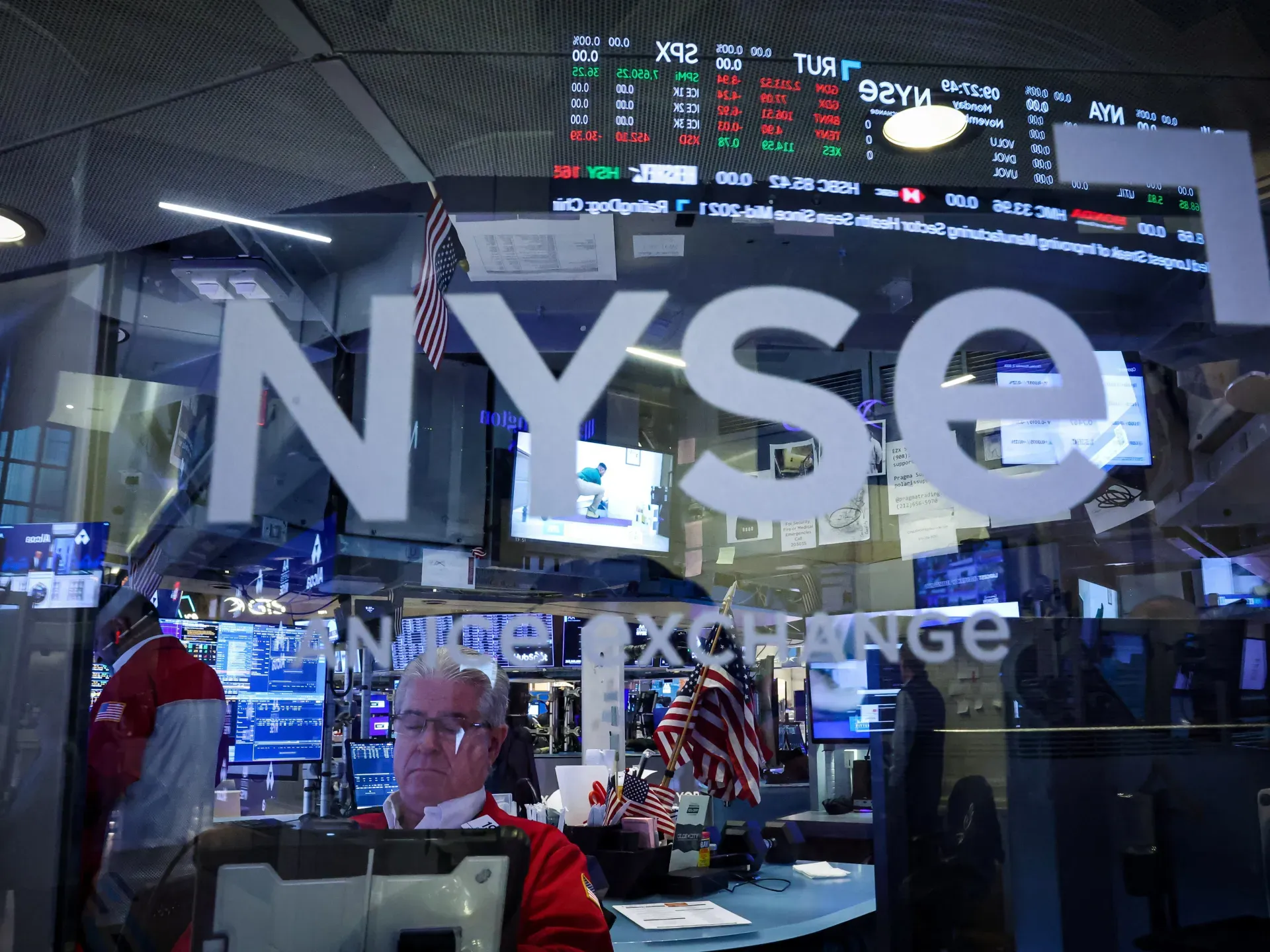
US stock indices trended upwards immediately following the news that Democrats had taken control of both chambers of Congress. At the market opening at 9:30 am ET on Wednesday, the Dow Jones Industrial Average showed the strongest gain, rising 1.8%. The S&P 500 followed with a 1.1% increase, while the Nasdaq Composite opened up 1%.
A significant driver of this positive market sentiment was the reduction of political risk. Investor anxiety regarding the transition of power was mitigated after President Donald Trump posted on social media that he would accept the election results. This acceptance helped stabilize the environment, allowing markets to focus on economic fundamentals rather than potential political instability.
Key Market Indices at Opening
| Index | Percentage Change |
|---|---|
| Dow Jones Industrial Average | +1.8% |
| S&P 500 | +1.1% |
| Nasdaq Composite | +1.0% |
Which sectors saw the most significant movement?
The impact of the Democratic victory was unevenly distributed across different industrial sectors, with retail and healthcare showing distinct trends based on expected policy shifts. Retailers that are heavily dependent on international trade and imports saw gains, likely due to anticipated changes in tariff structures under a Democratic-controlled Congress. For instance, Target shares rose by 3.3%, while Walmart increased by 1.3%.
The healthcare sector, however, experienced notable volatility. While Cigna saw a modest rise of 1.6%, other major providers faced significant sell-offs. CVS Health experienced a sharp decline of 12%, and UnitedHealthcare dropped by 2.9%. These movements suggest that investors are pricing in potential legislative changes to healthcare insurance and provider regulations under the new congressional leadership.
What is the impact of the Democratic sweep on the AI sector?
The artificial intelligence (AI) industry faces a more challenging legislative landscape following the Democratic takeover of the Senate. While some tech giants saw gains, the broader sentiment for companies involved in the massive AI infrastructure buildout remains cautious. Alphabet (the parent company of Google) performed well, rising 3.5% at the opening bell, but other industry leaders like Nvidia and Oracle opened lower.
Analysts suggest that the Democratic platform may introduce more stringent oversight and regulatory hurdles for the technology sector. Dan Ives, managing partner of Yorkville Ives, noted that the shift in control, particularly in the Senate, will create substantial obstacles for AI and technology-related legislation in Washington over the next two years.
Projected impact on infrastructure
The regulatory shift is expected to have tangible consequences for physical infrastructure. According to Dan Ives, it is estimated that approximately 10% of planned data center developments may be stalled or fail to proceed due to the new legislative environment. This highlights a growing tension between rapid technological expansion and the regulatory frameworks proposed by the Democratic party.
How did the election influence state-level politics and AI hubs?
The Democratic performance was particularly strong in states that are central to the current American technological and industrial expansion. The party successfully flipped key seats in regions where the AI buildout is most active, signaling a shift in the political geography of the tech sector.
- Ohio: Democrats successfully flipped a Senate seat, with Sherrod Brown securing the position.
- Texas: The party captured a Senate seat through James Talarico and also won the governor's race via Gina Hinojosa.
These victories in Texas and Ohio are significant because these states are becoming critical nodes in the national AI and energy infrastructure. The shift in leadership in these regions may influence how state-level incentives and land-use policies support the burgeoning tech industry.
Why are global oil prices declining?
Global oil prices experienced a notable decline following the election results and amidst shifting geopolitical narratives. Brent crude oil futures fell by $3.20, a 3.09% decrease, bringing the price to $100.40 per barrel. Similarly, West Texas Intermediate (WTI) crude saw a drop of $3.01, or 3.13%, settling at $93.08 per barrel.
While the midterm results contributed to the downward pressure, market participants are also closely monitoring geopolitical developments. Reports regarding potential peace talks in the conflicts involving Russia and Ukraine, as well as tensions with Iran, have introduced uncertainty regarding long-term energy security. These factors, combined with the recent trend of oil hitting four-week lows, have contributed to the current bearish sentiment in the energy markets.
FAQ: US midterm elections 2026
Which political party won the 2026 US midterms?
The Democratic Party won a decisive victory in the 2026 midterm elections. They successfully secured control of both the United States House of Representatives and the United States Senate, marking a significant shift in the legislative balance of power in Washington.
How did the stock market respond to the election?
US markets responded positively to the election results. On the Wednesday following the vote, the Dow Jones Industrial Average rose by 1.8%, the S&P 500 gained 1.1%, and the Nasdaq increased by 1%. This rise was supported by President Trump's acceptance of the results.
Will the election impact the AI industry?
Yes, the AI sector faces potential regulatory challenges. Analysts, including Dan Ives of Yorkville Ives, suggest that Democratic control of the Senate will create hurdles for tech legislation and could potentially prevent about 10% of planned data center developments from occurring.
What happened to oil prices after the vote?
Oil prices declined following the election results. Brent crude fell by 3.09% to $100.40 per barrel, while West Texas Intermediate dropped by 3.13% to $93.08 per barrel, driven by both election news and geopolitical developments.
Which retail stocks performed well?
Retailers that rely on imports, such as Target and Walmart, saw stock increases. Target rose by 3.3% and Walmart by 1.3%, as investors anticipated potential changes to tariff policies under the new Democratic-led Congress.
Key takeaways
- Democrats secured control of both the US House and Senate in the 2026 midterms.
- Major indices rose, with the Dow Jones leading at a 1.8% increase.
- The AI sector faces regulatory hurdles, with a projected 10% reduction in data center projects.
- Oil prices fell significantly, with Brent crude dropping over 3%.
- Retailers like Target and Walmart gained on expected tariff policy shifts.
The changing landscape of US governance
The 2026 midterm elections have fundamentally altered the legislative trajectory of the United States. By securing both chambers, the Democratic Party has positioned itself to implement significant changes in trade, healthcare, and technology regulation. While the initial market reaction was positive due to reduced political uncertainty, the long-term impact on high-growth sectors like AI and the energy market remains to be seen. As the new Congress prepares to take office, the tension between industrial expansion and new regulatory frameworks will likely define the economic narrative for the next two years.



