
US constitutional brinkmanship: Trump vs Democratic Congress in 2026
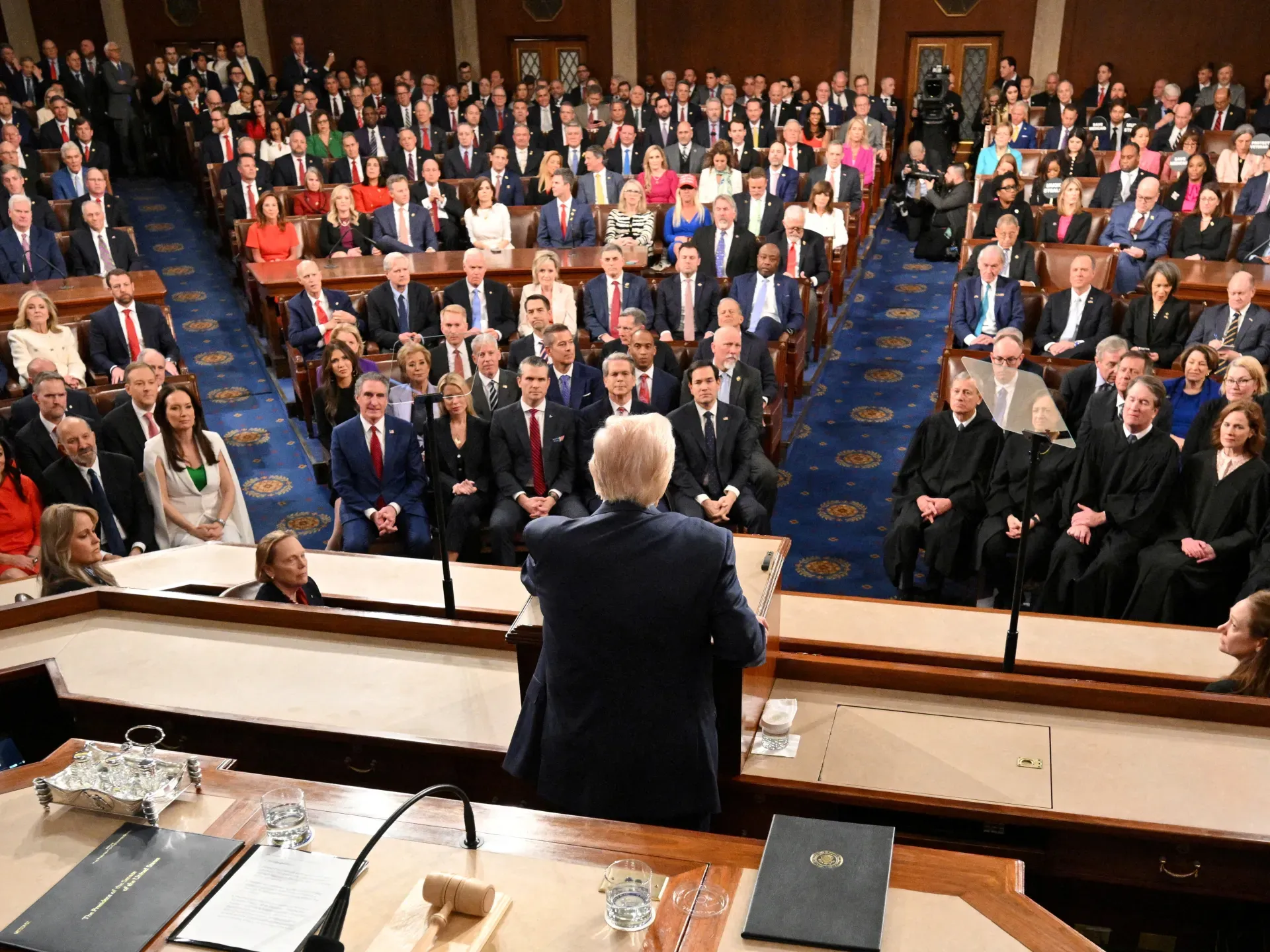
US constitutional brinkmanship is expected to define the next two years of American governance as President Donald Trump faces a Democratic-controlled Congress. Rather than traditional legislative gridlock, the political landscape is shifting toward a volatile struggle over the boundaries of executive and legislative authority. This friction will manifest through transactional domestic policymaking, unilateral foreign policy actions, and frequent impeachment proceedings. As the administration seeks to bypass Capitol Hill through executive orders and emergency declarations, the structural stability of the US government faces unprecedented testing. This article examines the drivers of this institutional conflict, the specific flashpoints in domestic and foreign policy, and the implications of perpetual political warfare.
November 8, 2026
6 min read
Source: ASHENVOW
Why is the US entering a period of constitutional brinkmanship?
The impending collision between President Donald Trump and a Democratic Congress stems from a fundamental mismatch in governing styles and ideological foundations. Traditional political analysis suggests that a divided government leads to legislative paralysis; however, the current landscape suggests a more aggressive form of confrontation. Donald Trump operates as a transactional populist, largely unmoored from the conventional conservative doctrines of limited government and free-market orthodoxy that once defined the Republican Party.
Because the President views governance through the lens of the 'deal' rather than constitutional restraint, his approach to a hostile legislature will not be passive. Instead of accepting stagnation, the administration is expected to employ a dual strategy: seeking ad hoc alliances on specific populist issues while simultaneously utilizing the expansive powers of the executive branch to bypass legislative resistance. This creates a system where governance occurs not through consensus, but through constant, high-stakes negotiation and unilateral action.
How will domestic policy be shaped by transactional populism?
Domestic governance will likely be characterized by blurring ideological lines and fleeting, issue-by-issue alliances. While the Republican Party has historically championed deregulation, the Trump administration's populist leanings may lead to unexpected overlaps with the Democratic centre-left on specific economic fronts.
The administration is expected to find common ground with Democratic lawmakers on policies that provide direct benefits to local constituencies. These areas of potential cooperation include:
- Massive infrastructure spending projects.
- Protectionist trade policies and tariffs.
- Aggressive state intervention to bolster domestic manufacturing.
By leveraging these issues, the President can dare Democratic majorities to vote against legislation that brings investment to their own districts. These alliances will be inherently unstable and purely transactional, designed to provide political victories for both the White House and a vulnerable congressional majority. When these transactional deals fail, the administration is prepared to pivot toward the administrative state, using executive orders and emergency declarations to implement policy without congressional approval.
The role of the judiciary in legislative bypass
As the executive branch seeks to govern by decree, the federal courts will become a primary battleground. The administration will likely deploy expansive interpretations of federal statutes to circumvent a stubborn Capitol Hill. This strategy forces the Democratic leadership into a difficult position: they must either accept the administration's unilateral actions or attempt to tie up the government in lengthy, politically charged legal battles. This effectively turns the judiciary into a political weapon, where the slow pace of the courts becomes a central component of the executive's strategy to maintain momentum.
What are the foreign policy risks of executive unilateralism?
The most significant constitutional showdown is anticipated to occur in the realm of foreign policy, where the executive branch possesses the greatest degree of autonomy. The Trump doctrine—defined by maximum economic pressure and unpredictable, asymmetric tactical deterrence—is expected to clash directly with a Democratic Congress that favors multilateral diplomacy and strict adherence to legislative oversight.
The primary flashpoint involves the relationship with Iran. While the administration views unpredictability as a strategic asset to keep adversaries off balance, Democratic lawmakers are likely to view such volatility as an existential threat to national security. This tension is expected to trigger a historic conflict regarding the War Powers Resolution of 1973.
To mitigate the risk of unilateral military escalation, Congress is expected to use its 'power of the purse' to implement statutory fences. These measures would aim to:
- Defund specific military maneuvers.
- Explicitly prohibit unilateral escalations against Tehran or other adversaries.
- Limit the President's ability to engage in undeclared conflicts.
The administration is expected to respond with contempt for these constraints, asserting an absolute reading of Article II of the Constitution. The President will likely argue that modern geopolitical threats demand executive agility that cannot be hampered by congressional committee deliberations.
How will impeachment be used as a tool of political warfare?
Impeachment is expected to transition from an extraordinary remedy for misconduct into a routine instrument of partisan friction. With both the House and the Senate controlled by the President's opponents, congressional oversight is likely to be weaponized to achieve political destruction rather than mere governance.
Democratic committee chairs are expected to launch continuous investigations, utilizing subpoenas to audit every facet of the administration's operations. This environment creates a state of permanent interrogation for cabinet members and ensures that every foreign policy decision is scrutinized for potential 'high crimes and misdemeanors.' In this context, the House may draft articles of impeachment not necessarily to remove the President, but as a standard penalty for political nonconformity.
The political impact of impeachment proceedings
While the constitutional requirement of a two-thirds Senate majority makes the actual removal of a President a statistical improbability, the political consequences of impeachment are profound. The process allows the President to frame the opposition as an illegitimate, obstructionist force. By transforming congressional investigations into a spectacle of public grievance, the administration can consolidate its base, portraying the legislature as a cabal that is subverting the will of the voters. This ensures that even if the President remains in office, the institutional relationship between the branches remains fundamentally broken.
Key takeaways
- US governance is shifting toward a period of perpetual constitutional brinkmanship rather than traditional legislative gridlock.
- President Trump is expected to use transactional populism to find ad hoc domestic alliances with Democrats on infrastructure and trade.
- The executive branch will likely use emergency declarations and executive orders to bypass congressional resistance.
- A major constitutional conflict is anticipated over the War Powers Resolution and presidential authority in the Middle East.
- Impeachment is expected to become a routine tool of partisan oversight rather than a rare measure for misconduct.
FAQ: US constitutional brinkmanship
What is the main cause of the expected US constitutional tension?
The tension arises from the clash between a transactional, populist President who favors executive unilateralism and a Democratic Congress that seeks to assert legislative oversight and multilateral diplomacy. This creates a struggle over the boundaries of power between the executive and legislative branches.
Will the US government face total legislative gridlock?
No, the period is expected to be characterized by 'brinkmanship' rather than simple gridlock. While many issues will stall, the President is expected to use transactional deals on populist issues and executive orders to maintain a level of active, albeit volatile, governance.
How will the President bypass Congress on domestic issues?
The administration is expected to utilize the administrative state, employing executive orders, emergency declarations, and broad interpretations of existing federal laws to implement policy when the legislative process is blocked by the opposition in Congress.
What role will the courts play in this conflict?
The federal courts will serve as a primary venue for resolving disputes between the branches. The administration may use the judiciary to validate its unilateral actions, while Congress may attempt to use the courts to challenge the legality of executive decrees.
Is impeachment likely to result in the President's removal?
Actual removal is considered a statistical fantasy due to the two-thirds Senate majority requirement. However, impeachment is expected to be used frequently as a tool of political attrition and to frame the President's opponents as obstructionist to his base.
Conclusion
The United States is entering an era where the traditional boundaries of institutional power are being systematically tested. The intersection of a transactional executive and an adversarial legislature suggests that the next two years will be defined by constant friction rather than stability. While the constitutional architecture is designed to manage such tensions, the shift toward using impeachment and executive decrees as routine tools of warfare threatens the underlying reverence for institutional limits. The structural framework of the US government may hold, but the constant state of brinkmanship will fundamentally alter the nature of American governance and its global standing.



