
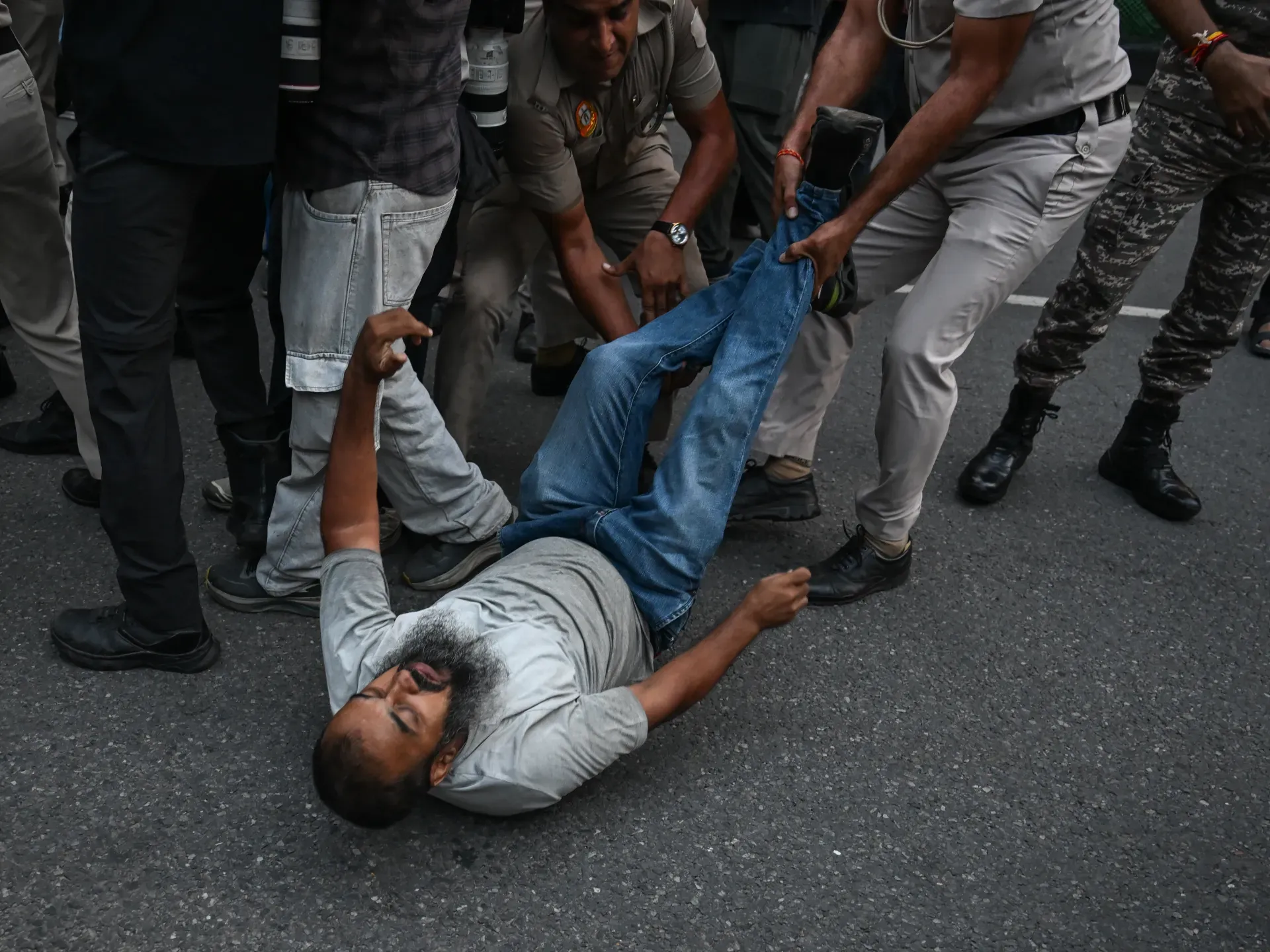
Excessive force in India protests: UN experts call for investigation
UN experts have formally called on the Indian government to cease the use of excessive force against demonstrators following recent crackdowns on student and opposition groups. The two dozen independent experts expressed deep concern regarding reports of physical injuries, ill-treatment, and sexual violence during protests and detentions. This intervention follows widespread unrest triggered by the removal of 130 million names from voter lists, a move critics claim targets marginalized communities. The article examines the UN's specific demands, the context of the voter list controversy, and the Indian government's response to international scrutiny.
October 27, 2026
5 min read
Source: ASHENVOW
Why have UN experts intervened in the Indian protests?
UN experts have demanded that the Indian government immediately stop using excessive force against citizens participating in recent demonstrations. In a statement released on Tuesday, October 21, 2026, a group of two dozen independent experts called for an impartial investigation into the conduct of Indian law enforcement agencies.
The experts noted that protesters have sustained various injuries and have reported being subjected to ill-treatment while in custody. Beyond physical violence, the statement highlighted specific and alarming reports regarding sexual violence and other forms of gender-based abuse occurring during both the protests and subsequent detentions. These experts, though appointed by the UN Human Rights Council to monitor human rights crises, operate independently from the United Nations organization itself.
The role of independent UN experts
It is essential to distinguish the nature of these experts from the UN's central political bodies. These individuals are appointed to document and monitor specific human rights crises globally. Their role is to provide objective, expert analysis of whether state actions align with international human rights standards. When they issue statements such as this one, they are signaling that the domestic legal and policing frameworks may be failing to protect fundamental civil liberties.
What triggered the unrest regarding voter lists?
The current wave of protests was ignited by the removal of 130 million names from official voter lists in India. This massive administrative action has led to significant political friction between the ruling Bharatiya Janata Party (BJP) and opposition groups, including the Cockroach Janta Party (CJP), student organizations, and various other political entities.
Protesting groups argue that the removal of these names is not a neutral administrative process but a targeted effort that disproportionately impacts vulnerable populations. Specifically, they claim the deletions affect:
- Poor and homeless individuals who may lack consistent documentation.
- Ethnic minorities, including Muslim communities.
- Demographics perceived as unlikely to support Prime Minister Narendra Modi’s Hindu nationalist BJP.
The central demand from these opposition groups has been the resignation of Chief Election Commissioner Gyanesh Kumar, whom they hold responsible for the integrity of the electoral rolls. The scale of the removals—130 million individuals—has turned a procedural matter into a major crisis regarding the democratic right to vote in India.
How is the Indian government responding to these allegations?
The Indian government and its electoral bodies have categorically denied that the voter list removals were discriminatory or politically motivated. The Election Commission has maintained that the process is a standard administrative necessity to ensure the accuracy of the electoral rolls.
According to the Election Commission, the removal of names was conducted to eliminate:
- Duplicate entries.
- Deceased voters.
- Voters who have shifted residence.
- Other ineligible individuals.
The Commission further stated that the process includes safeguards, noting that any individual who believes they have been excluded in error has the right to pursue legal appeals. Furthermore, the ruling BJP has consistently dismissed international criticism regarding its handling of domestic protests, often characterizing such interventions as an attempt to interfere in India's internal sovereign affairs. This stance mirrors previous reactions to concerns raised by the UN human rights office earlier in October 2026 regarding mass detentions.
What specific policing methods are under scrutiny?
The UN experts highlighted the use of aggressive policing tactics against what they described as non-violent assemblies. A primary concern is the deployment of force against unarmed students and the implementation of measures designed to prevent large-scale gathering.
One specific tactic mentioned is the "lathi charge." This involves coordinated movements by police forces using long sticks (lathis) to strike and disperse crowds. The experts noted that despite the non-violent nature of the assemblies, these charges have been used extensively. Additionally, the experts identified several other methods of control that they believe infringe upon human rights:
- Blanket assembly bans: The use of wide-reaching restrictions to prevent thousands of people from joining protests.
- Digital surveillance: The potential misuse of biometric data and other high-tech monitoring tools.
- Internet disruptions: The strategic cutting of digital connectivity to hamper communication during unrest.
The impact of digital and physical restrictions
The combination of physical force and digital suppression creates a dual layer of control. While lathi charges provide immediate physical dispersal, internet shutdowns and biometric surveillance act as long-term deterrents to political organizing. The UN experts' call to rescind blanket bans and refrain from digital misuse suggests a belief that the state is using technology and police power to stifle the fundamental right to peaceful assembly and free expression.
Frequently asked questions
What is a lathi charge in the context of Indian policing?
A lathi charge is a method used by Indian law enforcement to disperse crowds using long wooden sticks known as lathis. The experts noted that these coordinated strikes have been used against unarmed students and non-violent demonstrators during the recent protests in India.
Why are 130 million names being removed from voter lists?
The Indian Election Commission states that the removal of 130 million names is intended to clean voter rolls by removing duplicates, deceased persons, and those who have moved. However, opposition groups argue this disproportionately targets minorities and the poor.
Who are the UN experts calling for an investigation?
The UN experts are calling for an impartial investigation into the conduct of Indian authorities. They are specifically concerned with reports of physical injuries, ill-treatment, and instances of sexual violence and gender-based abuse during protests and detentions.
How does India view international criticism of its human rights record?
India has repeatedly dismissed such criticism, including from the UN, as an interference in its internal affairs. The government maintains that its actions are matters of national sovereignty and domestic law enforcement.
What is the primary demand of the Cockroach Janta Party (CJP)?
The CJP, along with other opposition and student groups, is demanding the resignation of Chief Election Commissioner Gyanesh Kumar. This demand stems from the massive removal of names from the voter lists, which they claim undermines democratic integrity.
Key takeaways
- UN experts have demanded an investigation into reports of sexual violence and excessive force during Indian protests.
- Opposition groups claim the removal of 130 million voters disproportionately affects minorities and the poor.
- The Election Commission defends the removals as a necessary process to eliminate duplicate and deceased voters.
- Authorities are accused of using lathi charges, internet disruptions, and biometric surveillance to suppress assembly.
Conclusion
The standoff between the Indian government and international human rights observers highlights a deepening tension regarding democratic processes and policing in the country. While the Election Commission maintains that voter list updates are a technical necessity, the scale of the changes and the subsequent crackdown on protesters have raised fundamental questions about electoral integrity and civil liberties. The call from UN experts for an impartial investigation into allegations of sexual violence and excessive force places significant pressure on the Indian state to balance domestic security with international human rights obligations. The resolution of this crisis will likely depend on whether the government addresses the transparency of its electoral processes and the conduct of its law enforcement agencies.



