
French student protests: UN experts condemn excessive use of force
French student protests have triggered severe international criticism following reports of disproportionate police responses and mass detentions. UN experts expressed alarm on October 28, 2026, regarding the scale of arrests affecting several thousand individuals, many of whom are minors. According to a statement from UN Human Rights Council-mandated experts, the security-focused crackdown may deter citizens from exercising their rights to peaceful assembly and expression. This article examines the origins of the unrest, the specific allegations of excessive force, and the socio-economic drivers behind the nationwide mobilization.
November 8, 2026
5 min read
Source: ASHENVOW
Why are UN experts sounding the alarm over French student protests?
United Nations experts have formally condemned the methods used by French authorities to disperse recent nationwide student demonstrations. In a statement released on Wednesday, October 28, 2026, four experts mandated by the UN Human Rights Council warned that the current policing strategy is excessive and potentially harmful to democratic freedoms.
The experts, which include Gina Romero, the special rapporteur on the freedom of peaceful assembly, and Farida Shaheed, the UN expert on cultural rights, highlighted the massive scale of law enforcement interventions. They noted that the detention of several thousand people—a significant portion of whom are minors—appears disproportionate to the situation. This approach, they argue, serves to intimidate demonstrators and prevent them from exercising their fundamental rights to assembly and expression.
The UN rapporteurs emphasized that while the French government has attempted some dialogue, the overarching priority has shifted toward a security-centric response. This focus on containment rather than communication has, according to the experts, caused the actual root causes of the student mobilization to be sidelined in favor of maintaining order through force.
What triggered the wave of student demonstrations across France?
The unrest began in mid-September 2026, primarily driven by deteriorating conditions within the French high school system. Students initially organized to protest against overcrowded classrooms, significant teacher absences, and the physical decay of educational buildings.
As the movement progressed, the scope of the protests expanded beyond school infrastructure to include broader socio-economic grievances. The demonstrations have become a vehicle for expressing widespread anger regarding the rising cost of living in France. This escalation has occasionally manifested in more volatile forms, including riots and looting occurring on the periphery of the organized student marches.
The intersection of educational and economic grievances
The mobilization represents a convergence of two distinct but related frustrations. On one hand, students are reacting to a perceived decline in the quality of public services, specifically education. On the other hand, they are joining a larger national sentiment of economic discontent. This dual pressure has made the protests particularly difficult for the government to manage, as the demands range from local school repairs to national fiscal policy changes.
How has the French government responded to the unrest?
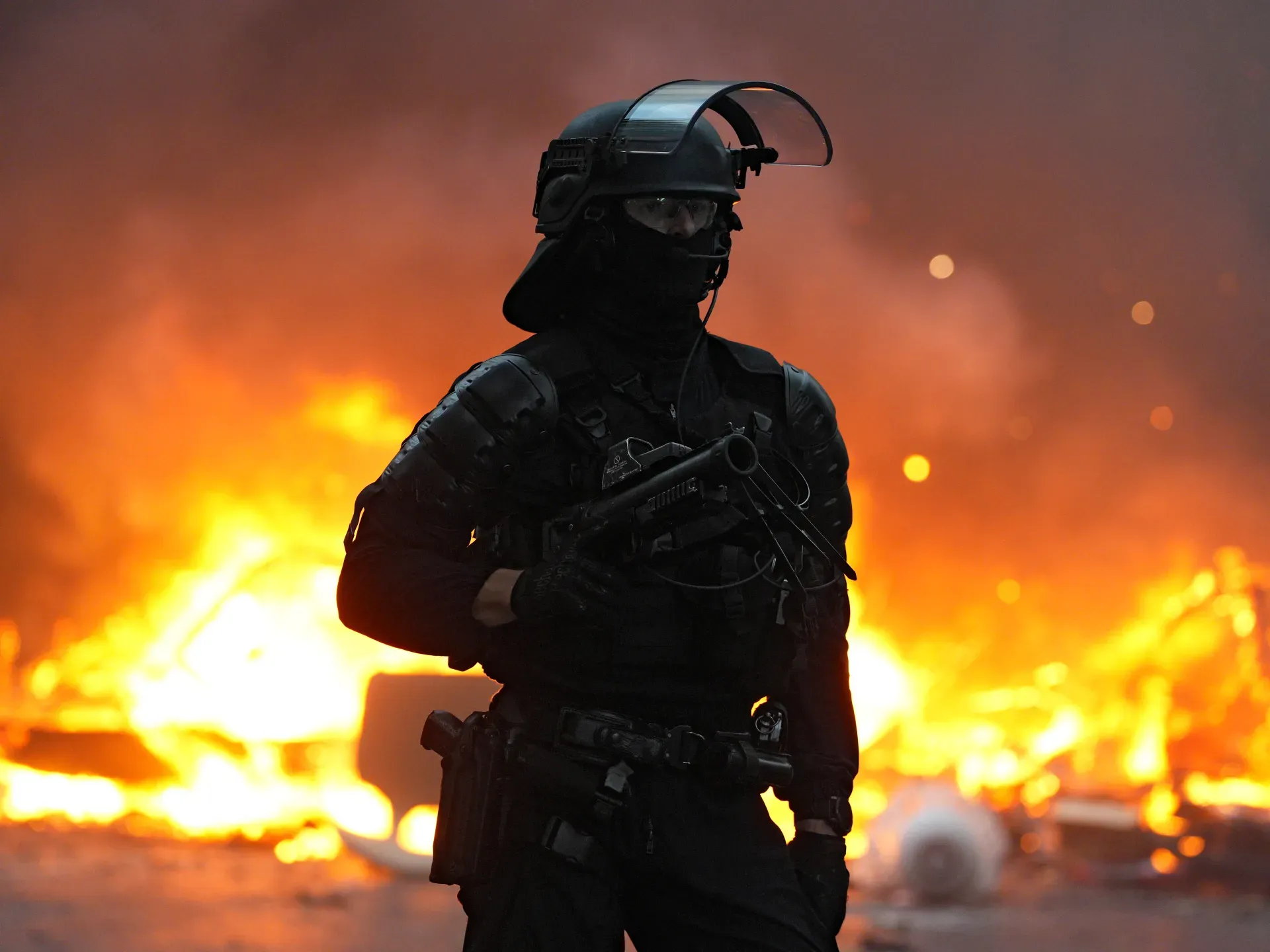
The French government has adopted a firm security stance, deploying massive numbers of law enforcement officers to manage the protests. According to the French Interior Ministry, 70,000 security forces were deployed during demonstrations on a single Saturday that drew approximately 410,000 protesters across the country.
Interior Minister Laurent Nunez has signaled a policy of strict enforcement, vowing to remain "extremely vigilant, extremely firm" to prevent further civil disorder. This follows a period of intense volatility where public buildings were vandalized and hundreds of businesses were looted. During one such period of unrest, authorities reported that 2,700 people were arrested.
The government's strategy appears to prioritize the restoration of public order through visible and significant police presence. However, this stance has drawn criticism from student advocates who claim the government is using a "riots" narrative to avoid addressing the underlying issues.
What is the impact of police tactics on demonstrators?
The physical impact of law enforcement operations has resulted in serious and, in some instances, permanent injuries to young protesters. One notable incident occurred in the northern city of Lille, where a teenager reportedly lost a hand following the explosion of a grenade during a clash between students and police.
The UN experts described these irreversible injuries sustained by underage demonstrators as "unacceptable and unjustifiable." The scale of the crackdown is not merely measured in injuries but also in the legal consequences for participants. The mass arrests of minors have become a central point of contention for human rights observers.
The legal and social consequences of mass arrests
The detention of thousands of individuals, particularly those under the age of 18, creates long-term social and legal implications. Critics argue that the heavy-handed approach creates a cycle of resentment. Alice Cohen-Morzadec, a spokesperson for the Union Etudiante, stated to Al Jazeera that the current situation is a "general outburst of resentment" against President Emmanuel Macron’s policies, which she claims have undermined living conditions and fundamental rights.
What are the underlying economic causes of the protests?
Analysts suggest that the protests are deeply rooted in a severe fiscal crisis currently facing the French state. The government is navigating significant budget constraints, which have directly impacted the education sector through planned spending cuts.
The drop in the national education budget is a primary driver of the dissatisfaction among students and educators. As the state seeks to manage its finances, the reduction in resources for schools has exacerbated the issues of overcrowding and building maintenance, turning local grievances into a national political crisis.
Frequently asked questions
Why are UN experts criticizing France?
UN experts are criticizing France due to what they describe as the "excessive use of force" by police. They are specifically concerned about the disproportionate scale of arrests and the detention of thousands of people, many of whom are minors, which they believe deters peaceful assembly.
What are the main demands of the French students?
Students are primarily demanding better conditions in high schools, including improved buildings and more teachers. Additionally, they are protesting the rising cost of living and the reduction of the national education budget caused by government fiscal policies.
How many people have been arrested during the protests?
The figures vary by specific incidents. During one Saturday demonstration, the Interior Ministry reported 1,000 arrests. In a preceding period of unrest involving looting and vandalism, authorities recorded 2,700 arrests.
Has anyone been seriously injured during the clashes?
Yes, there have been reports of serious injuries. In Lille, a teenager reportedly lost a hand due to a grenade explosion during a clash with police. UN experts have called these irreversible injuries to underage demonstrators unacceptable.
What is the government's official position?
The French government, through Interior Minister Laurent Nunez, has maintained a position of extreme firmness. The administration aims to quell unrest and protect property, emphasizing vigilance against riots and looting while managing a significant fiscal crisis.
Key takeaways
- UN experts have condemned the disproportionate use of force by French police during student protests.
- The demonstrations involve thousands of arrests, with a significant number affecting minors.
- Protests are driven by school conditions and broader economic concerns like the cost of living.
- A severe fiscal crisis and education budget cuts are identified as underlying causes.
- Law enforcement has deployed up to 70,000 officers to manage nationwide mobilizations.
The future of social dialogue in France
The tension between the French government's security-first approach and the students' socio-economic demands remains unresolved. While the administration focuses on maintaining order through firm policing and large-scale deployments, the UN experts warn that this may only deepen public resentment. Addressing the root causes—specifically the fiscal pressures on the education system and the rising cost of living—will likely be necessary to move beyond the current cycle of protest and crackdown. Without a shift toward meaningful dialogue, the demonstrations are expected to persist as a symbol of broader discontent with current national policies.



