
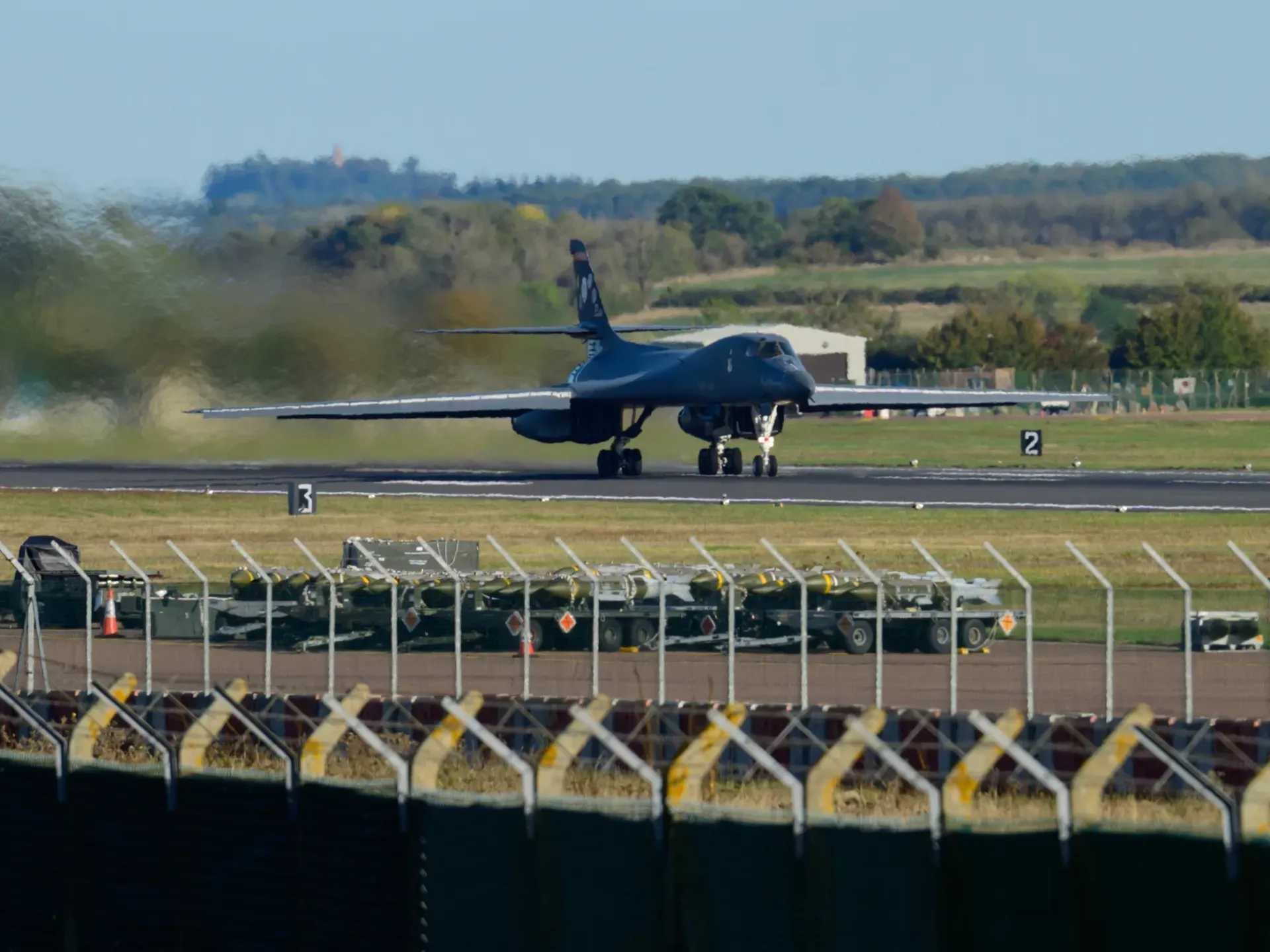
Assisting Iranian intelligence: UK police rearrest two men
UK police have rearrested two men on suspicion of assisting Iranian intelligence following a security breach at a US-run airbase. The suspects, a 24-year-old British national and a 25-year-old dual British-Iranian national, were detained under the National Security Act. This development follows a major incident at RAF Fairford in September, where suspicious vehicles prompted a large-scale security response. Authorities believe the plot likely involved the Islamic Revolutionary Guard Corps (IRGC). This article examines the ongoing investigation, the context of the RAF Fairford incident, and the broader threat posed by foreign intelligence services in the UK.
October 27, 2026
6 min read
Source: ASHENVOW
Why were the two men rearrested in connection to Iran?
The rearrest of the two men stems from a suspected link to an intelligence operation involving the Iranian state. According to Counter Terrorism Policing in the UK, the individuals—a 24-year-old British national and a 25-year-old dual British-Iranian national—are being investigated for assisting Iranian intelligence services. Their detention was conducted under the provisions of the National Security Act, a legal framework designed to address threats to the United Kingdom's sovereignty and safety.
The investigation is deeply connected to a security event that occurred last month at RAF Fairford, a Gloucestershire-based airbase. This facility has played a critical role in recent military operations, serving as a launch point for strikes against Iranian targets during the ongoing conflict this year. The suspicion that these individuals were working to undermine such strategic assets has led to a significant escalation in police activity. While the men had previously been released on bail to allow for further investigation, the emergence of new evidence or developments necessitated their return to custody.
The legal framework of the National Security Act
The use of the National Security Act in these arrests highlights the UK's evolving legal approach to modern espionage and state-sponsored interference. Unlike traditional criminal charges, investigations under this Act focus on actions that benefit a foreign power at the expense of national security. This includes the gathering of sensitive information, the disruption of critical infrastructure, or the facilitation of operations by foreign intelligence agencies.
What happened during the RAF Fairford incident?
A major incident was declared at RAF Fairford after members of the public reported seeing three suspicious vans operating near the perimeter of the base. The report triggered an immediate and intensive response from security services, including armed police officers and army bomb-disposal experts, who swarmed the rural area in Gloucestershire. The scale of the response forced local residents to temporarily evacuate their homes as authorities secured the site.
Following a thorough search of the vehicles involved, investigators discovered a quantity of petrol—an accelerant—inside the three vans. Although no explosive devices were recovered, the presence of accelerants near a high-value military installation was treated as a significant threat. The incident had immediate operational consequences, leading the United States to withdraw its bombers from the RAF Fairford base temporarily. British authorities have since pointed toward Iran as the likely architect of the disruption.
Timeline of the September security breach
The security breach unfolded in stages throughout late September and early October. One suspect was initially detained on September 27, coinciding with the arrival of the suspicious vehicles at the base. A second suspect was arrested shortly after, on October 1. This staggered series of arrests suggests that investigators were working to map out a network or a specific timeline of planned activities before moving toward the current phase of the investigation.
How significant is the suspected Iranian involvement?
Law enforcement and political leaders believe that the plot was likely directed by the Islamic Revolutionary Guard Corps (IRGC). Laurence Taylor, head of National Counter Terrorism Policing in the UK, described the investigation as "hugely complex," noting that detectives are currently pursuing many different lines of enquiry. Taylor stated that the police consider it "highly likely" that there is direct Iranian state involvement in the attempted disruption of the airbase.
British Prime Minister Andy Burnham has reinforced this assessment, stating that the apparent plot was "almost certainly" orchestrated by the IRGC. The motivation behind the incident appears to be retaliatory, given that RAF Fairford has been utilized to launch strikes against Iranian territory. While Iran has officially denied any involvement in the incident, the government in Tehran has previously maintained that any military base used to attack its sovereign territory is a legitimate target for response.
The role of the IRGC in regional tensions
The IRGC is a key component of Iran's military and political structure, often operating independently of the regular armed forces. Its involvement in such plots would signal a high level of intent to strike back at Western military capabilities. For the UK, the suspicion of IRGC direction moves the incident from a localized criminal matter to a significant international security crisis involving state-sponsored sabotage.
Is this part of a larger pattern of foreign interference?
The RAF Fairford incident is viewed by intelligence officials not as an isolated event, but as part of a broader trend of foreign state actors targeting UK military infrastructure. Ken McCallum, the UK’s domestic intelligence spy chief, has warned that both Iran and Russia are actively expanding their efforts to conduct attacks against military installations within the United Kingdom. This suggests a shift in the threat landscape, where hybrid warfare and intelligence-led sabotage are becoming more frequent.
The scale of this threat is reflected in recent arrest statistics. According to Ken McCallum, more than 50 people have been arrested in connection with Iran-linked plots over the past year. This high number of arrests indicates that UK counter-terrorism and intelligence services are actively intercepting a significant volume of activity intended to undermine national security. The ongoing investigation into the two men is a single component of a much wider effort to defend against these escalating foreign threats.
Comparing different foreign intelligence threats
While the Iranian threat is currently highly visible due to its direct link to ongoing military conflicts, the intelligence community also monitors Russian activities with equal scrutiny. While Iranian operations may focus on retaliatory strikes or disruption of specific military assets, Russian interference often takes the form of broader disinformation or cyber-enabled sabotage. Both, however, represent a shared challenge for the UK in maintaining the security of its strategic sites.
FAQ: Assisting Iranian Intelligence Investigation
Why were the men arrested under the National Security Act?
The men were arrested under the National Security Act because the investigation focuses on suspected activities intended to benefit a foreign intelligence service. This specific legal framework allows authorities to prosecute actions that threaten the United Kingdom's national security and involve state-sponsored interference or espionage.
What was found in the suspicious vans at RAF Fairford?
Police discovered a quantity of petrol, which is classified as an accelerant, inside the three suspicious vans found near the base. Although investigators did not find any explosive materials, the presence of the accelerant was sufficient to trigger a major incident and a large-scale security response.
Has Iran admitted to any involvement in the plot?
No, Iran has denied any involvement in the incident at RAF Fairford. However, the Iranian government has previously stated that it views any military base used to conduct strikes against its territory as a legitimate target for potential retaliation.
How many people have been arrested in Iran-linked plots recently?
According to Ken McCallum, the UK's domestic intelligence chief, more than 50 people have been arrested in connection with plots linked to Iran over the course of the last year. This highlights the intensity of current counter-intelligence efforts in the UK.
What was the impact of the incident on US military operations?
The security breach at RAF Fairford led the United States to temporarily pull its bombers out of the base. This decision was made in response to the major incident and the potential threat posed by the suspicious vehicles and the presence of accelerants.
Key takeaways
- Two men were rearrested under the National Security Act for suspected links to Iranian intelligence.
- The investigation follows a major security incident involving suspicious vans at RAF Fairford in Gloucestershire.
- Authorities believe the plot was likely directed by Iran's Islamic Revolutionary Guard Corps (IRGC).
- Ken McCallum reported over 50 arrests related to Iran-linked plots in the past year.
- The incident caused the temporary withdrawal of US bombers from the RAF Fairford airbase.
The evolving landscape of UK national security
The rearrest of the two suspects underscores the increasing complexity of protecting domestic military assets from foreign intelligence services. As the UK faces simultaneous threats from actors such as Iran and Russia, the role of the National Security Act becomes central to the state's defensive posture. The RAF Fairford incident serves as a stark reminder that strategic military bases are now primary targets in the realm of hybrid warfare. Moving forward, the outcome of this investigation will likely provide critical insights into the methods used by state actors to conduct sabotage on British soil.



