
Tunisia unrest 2026: Violent clashes hit Tunis and Sfax
Tunisia unrest 2026 has escalated following violent clashes between police and protesters in Tunis, Jebiniana, and Sfax. These incidents stem from recent deaths in custody and perceived medical negligence, further destabilizing a nation facing a severe economic and political crisis. Demonstrations in Ettadhamen and Sfax governorate were triggered by specific fatalities, leading to the use of tear gas and road blockades. This surge in volatility comes as President Kais Saied faces mounting pressure from thousands of citizens demanding democratic restoration and economic reform.
October 27, 2026
5 min read
Source: ASHENVOW
Why are clashes breaking out in Tunis and its suburbs?
Clashes in the capital region, specifically in the suburb of Ettadhamen, were triggered by the death of a man detained on suspicion of drug dealing. The incident has become a flashpoint for local anger, with the deceased's family alleging that the man died due to physical abuse by police officers during his arrest. The family is currently demanding a transparent investigation to clarify the circumstances and ensure accountability for those involved.
However, conflicting reports have emerged regarding the cause of death. While the family points to police misconduct, local media outlets have reported that the individual died after swallowing drugs. This discrepancy has fueled the intensity of the protests, with demonstrators engaging in several forms of civil disobedience, including:
- Blocking major roadways to disrupt traffic.
- Burning tyres to create barricades.
- Throwing stones at security forces.
Security forces responded to these actions by deploying tear gas. According to reports from the Reuters news agency, police were also focused on securing a National Guard station in the area during the height of the unrest. The volatility in Ettadhamen serves as a microcosm of the broader tension between the Tunisian security apparatus and a population increasingly skeptical of state conduct.
What is happening in Jebiniana and the Sfax governorate?
Unrest has spread to the southern town of Jebiniana, located in the Sfax governorate, following another death that has ignited local fury. In this instance, relatives of the deceased claim the man died while being pursued by security forces. The nature of this incident has led to similar patterns of violent protest seen in the capital.
In Jebiniana, protesters have engaged in significant property damage and public disturbance. Local media reported that demonstrators set a vehicle on fire and burned tyres as a form of protest against the perceived actions of the police. Like the events in Tunis, the response from authorities involved the use of tear gas to disperse the crowds.
The medical crisis in Sfax
Beyond the direct clashes with police, the city of Sfax is facing its own wave of protests centered on the failure of public services. Students in the coastal city have taken to the streets to protest the death of a female student, which they attribute to medical negligence rather than direct police violence. The students allege that the death was caused by a cardiac problem and that ambulance services failed to respond in a timely manner. This perceived delay, attributed to a lack of adequate medical facilities, has prompted calls for strikes across the faculties of Sfax University.
How is the political climate affecting the scale of protests?
The recent flare-ups are not isolated incidents but are deeply embedded in a deepening economic, social, and political crisis across Tunisia. The anger seen on the streets is a reaction to deteriorating living conditions and a significant decline in the quality of public services. This environment has allowed for the mobilization of large-scale demonstrations that directly challenge the current administration.
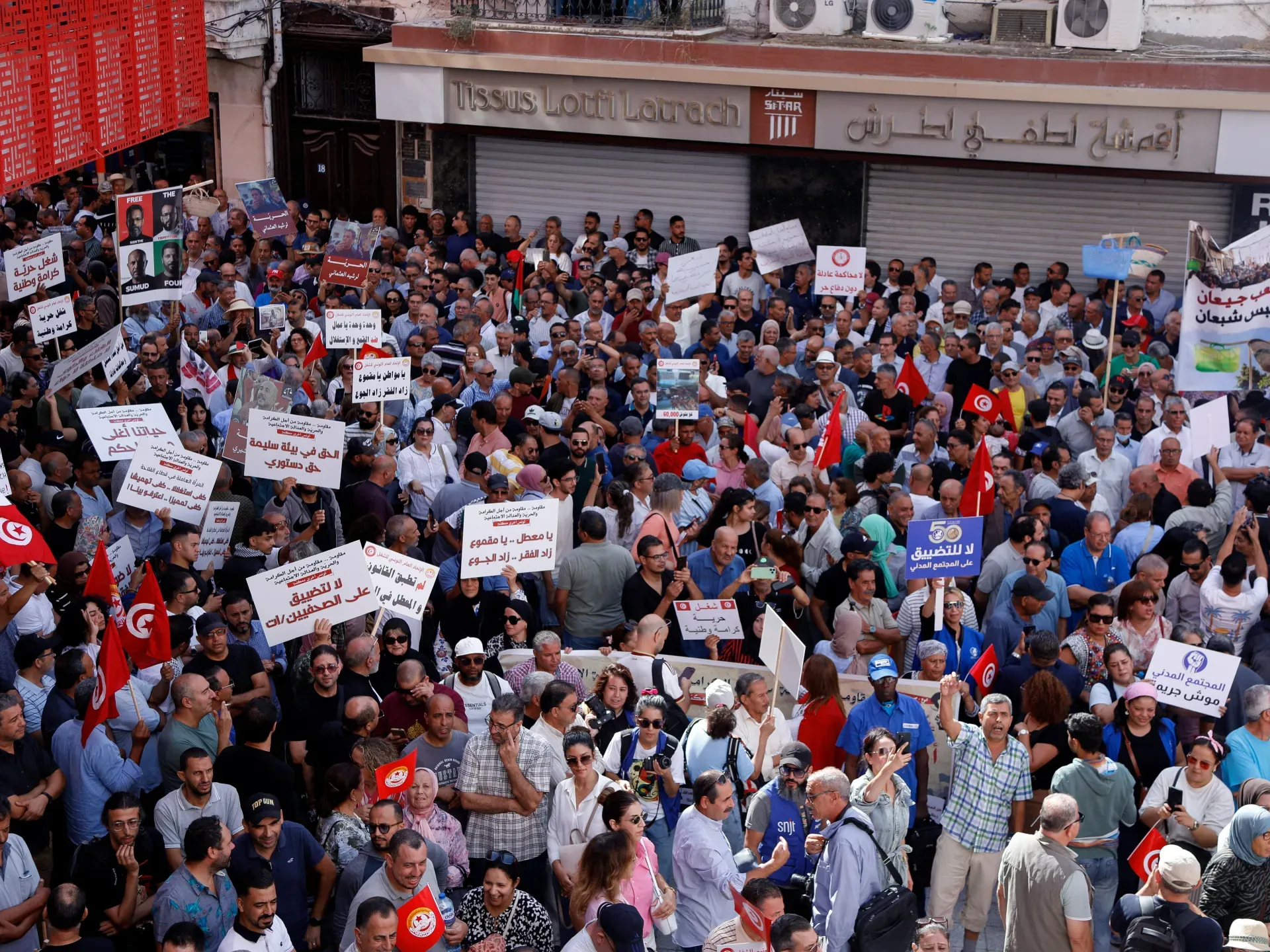
On a recent Saturday, thousands of Tunisians gathered in the capital for one of the largest protests against President Kais Saied in several years. The demonstrators' grievances are two-fold:
- Democratic Erosion: Protesters accused Saied of undermining democratic institutions and restricting fundamental freedoms.
- Economic Mismanagement: The administration is facing intense criticism for its handling of the country's worsening economic situation.
The political pressure is further compounded by the judicial treatment of opposition figures. For example, a Tunisian military court recently sentenced opposition politician Olfa Hamdi to four years in prison. She was charged with plotting against state security and inciting military disobedience, a move that critics view as part of a broader crackdown on political opponents of the presidency.
What are the broader implications of this instability?
The current wave of unrest heightens fears of a wider cycle of violent protests throughout the country. As the gap between the government's promises and the reality of Tunisian citizens' lives widens, the potential for social volatility increases. The convergence of economic hardship, perceived police brutality, and the suppression of political dissent creates a highly combustible environment.
The persistence of these protests suggests that the Tunisian public is increasingly unwilling to accept the status quo. Whether these movements lead to meaningful political reform or further state crackdowns remains a critical question for the region's stability. The ability of the state to address the underlying economic grievances and restore trust in public institutions like the police and medical services will likely determine the trajectory of the coming months.
Frequently asked questions
What caused the protests in Ettadhamen?
The protests in the Ettadhamen suburb of Tunis were sparked by the death of a man held on suspicion of drug dealing. While his family alleges police abuse caused his death, local media reported he died after ingesting drugs, leading to violent clashes and the use of tear gas.
Why are students protesting in Sfax?
Students in Sfax are protesting the death of a female student who suffered a cardiac event. They blame the local ambulance services for the death, claiming that a lack of medical facilities and slow response times prevented life-saving intervention, leading to calls for university strikes.
Who is Olfa Hamdi and why was she sentenced?
Olfa Hamdi is a Tunisian opposition politician who was sentenced to four years in prison by a military court. The charges against her included plotting against state security and inciting military disobedience, which many see as an attempt to silence critics of President Saied.
How has President Saied's leadership been characterized by protesters?
Protesters have characterized President Kais Saied's leadership as a threat to democracy. During large-scale rallies, citizens have accused him of undermining democratic processes and failing to manage the nation's economic crisis, which has led to worsening living conditions for many Tunisians.
What are the main drivers of unrest in Tunisia?
The primary drivers of unrest include a deepening economic crisis, deteriorating public services, and political instability. Recent specific triggers include deaths in police custody and perceived negligence in the healthcare sector, all of which exacerbate existing social and political tensions.
Key takeaways
- Clashes occurred in Tunis, Jebiniana, and Sfax following recent deaths in custody and medical negligence.
- Protesters in Ettadhamen used stones and tyres to resist police tear gas deployment.
- Sfax students are calling for strikes following the death of a student due to alleged ambulance delays.
- Opposition politician Olfa Hamdi received a four-year prison sentence from a military court.
- Large-scale protests target President Saied over democratic erosion and economic mismanagement.
Conclusion
The recent surge in unrest across Tunisia reflects a nation at a critical crossroads. From the violent clashes in Tunis and Jebiniana to the student-led protests in Sfax, the common thread is a profound loss of public trust in state institutions. Whether through the police, the judiciary, or medical services, Tunisians are expressing a growing frustration with the current socio-political order. As the administration of President Kais Saied faces intensifying challenges from both the streets and the political opposition, the risk of prolonged instability remains high, driven by unresolved economic grievances and a demand for democratic accountability.



