
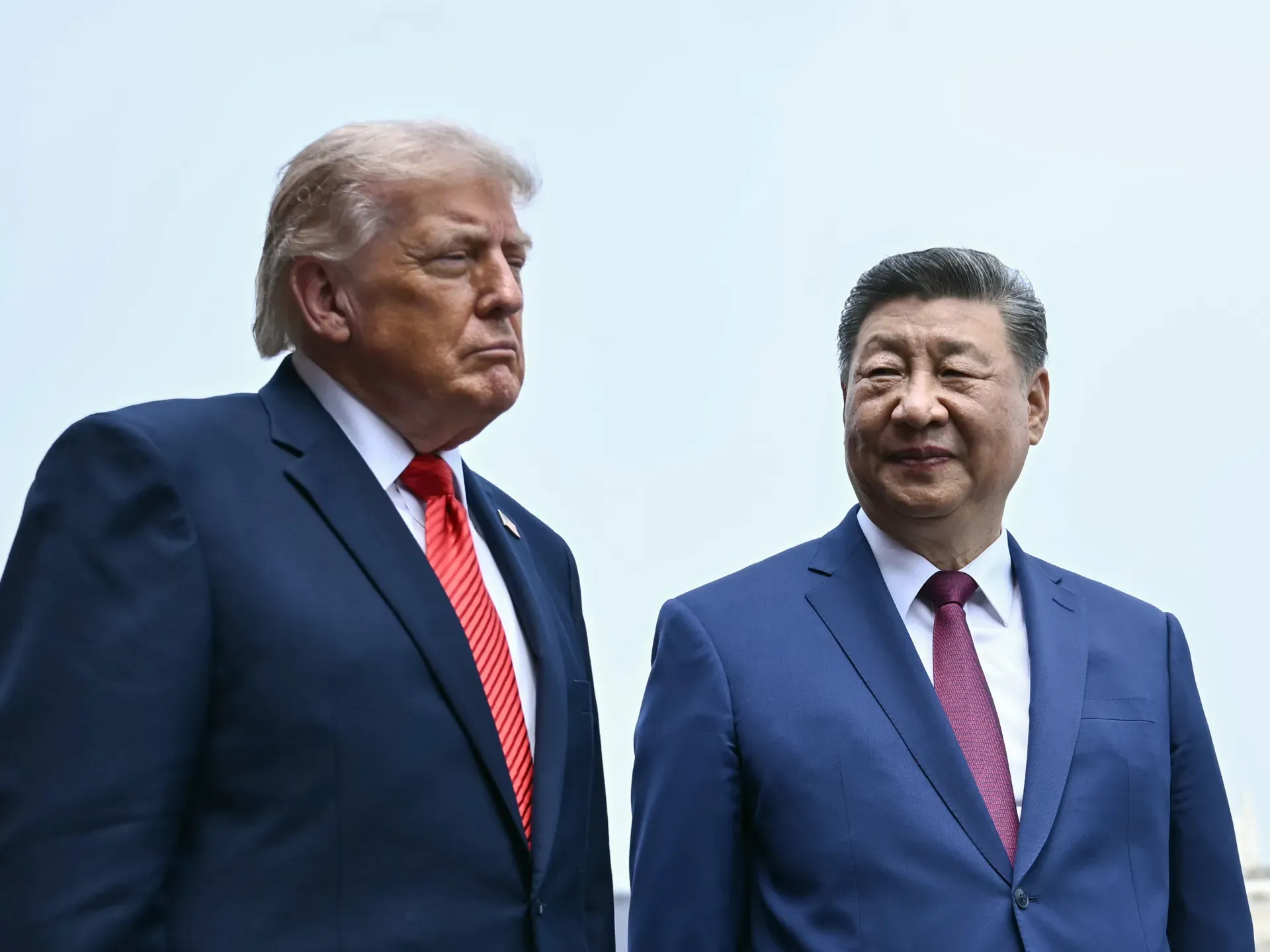
Trump-Xi-Putin summit: What a trilateral meeting could mean
A Trump-Xi-Putin summit on the sidelines of the APEC summit in Shenzhen could fundamentally alter the landscape of international diplomacy. If the meeting occurs between November 18-19, it would represent the first formal trilateral engagement between the leaders of the United States, China, and Russia. While the Kremlin and the White House have indicated openness to such talks, China has signaled a more cautious stance, particularly regarding the scope of discussions. The summit's outcome remains uncertain, but it carries significant implications for the future of the Russia-Ukraine war and the role of traditional Western allies in global security architecture.
November 13, 2026
5 min read
Source: ASHENVOW
The diplomatic maneuvering behind the proposed meeting
Coordinated efforts are currently underway to facilitate a historic three-way meeting between US President Donald Trump, Chinese President Xi Jinping, and Russian President Vladimir Putin. Chinese Foreign Ministry spokesperson Mao Ning confirmed on Wednesday that Beijing is in communication with relevant parties to coordinate such an encounter. Simultaneously, Kremlin spokesman Dmitry Peskov stated on Tuesday that work is progressing and expressed hope that the meeting would be finalized in the coming days.
The potential timing for this summit is set for November 18-19 during the Asia-Pacific Economic Cooperation (APEC) summit in Shenzhen, China. While President Trump has expressed openness to discussions focused on nuclear weapons—stating, “If President Xi wants to have it, I’d have it”—the specific agenda remains a point of contention among the three powers. The meeting would mark the first time these three heads of state have held formal, simultaneous talks, despite having met separately in the past.
Logistical and political coordination
The coordination involves multiple diplomatic channels, with both Moscow and Beijing acknowledging the possibility of a high-level meeting. However, the degree of enthusiasm varies significantly between the participants. While the Kremlin appears eager to finalize the details, Beijing’s response suggests a more limited scope for what can be achieved in such a short window.
Moscow's strategic interests and the 'New Yalta' prospect
For Russia, a meeting with both the United States and China offers a significant symbolic victory and a platform to assert its role in global security. Alexander Bratersky, a Moscow-based political analyst, noted that such an event would allow Vladimir Putin to "talk big" while potentially sidelining Ukraine in discussions regarding the continent's future. The meeting could serve as a massive photo opportunity that Putin can leverage for domestic consumption.
Some Russian officials have even framed the potential summit as a path toward a "new Yalta," referencing the 1945 conference where the US, UK, and Soviet Union established the post-war order. By sitting at the same table as the world's other two superpowers, Putin would effectively position himself as "first among equals" in any negotiations regarding the security architecture of Europe following the conclusion of the conflict in Ukraine.
The leverage available to the US may also be in flux. Bratersky observed that the US leadership might face diminished influence if the Democratic Party, which recently won control of both chambers of Congress in the midterm elections, increases financial support to Kyiv. Consequently, even if the summit produces no concrete policy changes, the mere act of the meeting would be viewed as a success for the Kremlin.
Trump's objectives: Optics and the 'indispensable deal-maker'
President Trump's interest in a trilateral summit appears driven by a combination of domestic political needs and a desire for high-stakes personal diplomacy. Inderjeet Parmar, a professor of international politics at City St George’s, University of London, suggested that Trump seeks a "personal, high-drama encounter" that allows him to project strength and control over the world's major powers.
The summit would provide a stage for Trump to present himself as the "indispensable deal-maker," capable of navigating complex issues such as trade, energy, arms control, and the war in Ukraine. This is particularly relevant in the wake of the US midterm elections, where the need for a significant foreign policy achievement is high. For the President's domestic audience, including his MAGA base, any image showing him negotiating directly with Xi and Putin could be framed as evidence of restored American leadership.
The role of domestic politics in foreign policy
The intersection of US domestic politics and international diplomacy is a critical factor in how this summit might be perceived. As Parmar noted, the symbolic value of the meeting might outweigh its substantive diplomatic output. Even if the discussions result in little more than shared statements, the visual of the three leaders together serves a specific purpose for the US administration's political narrative.
China's cautious approach to the summit's agenda
Unlike the US and Russia, China appears to have clear boundaries regarding what can be discussed at a Shenzhen summit. President Xi Jinping has indicated that while a meeting might take place, it is unlikely to center on the Russia-Ukraine war. German President Frank-Walter Steinmeier reported that when he raised the issue of Ukraine with Xi in Beijing on October 30, the Chinese leader responded that the conflict is a European matter that requires Europeans to be at the negotiating table.
Furthermore, China seems prepared to resist American pressure regarding trilateral nuclear disarmament talks. The Chinese Foreign Ministry has previously stated that it would be "neither fair, reasonable nor realistic" to involve China in such negotiations at this stage. This suggests that while Beijing may participate in the summit for the sake of regional stability and diplomatic engagement, it does not intend to concede to US-led security frameworks.
Global implications: The risk of sidelined allies
A successful Trump-Xi-Putin summit could signal a major shift in how global affairs are managed, moving away from the post-1945 model of multilateralism toward a system of "personalised great-power diplomacy." This shift poses a significant risk to traditional alliances, as major powers might reach agreements that treat their allies as secondary players whose interests can be managed or traded after the fact.
Inderjeet Parmar warned that such a meeting could mark a "clear break" from the practice of Washington coordinating closely with European and Asian allies before engaging with rivals. The primary danger is not necessarily the formation of a formal "G3" alliance between the three nations, as their interests regarding Taiwan, technology, and the global economy remain sharply divergent, but rather the normalization of deals struck without consulting those most affected by them.
Historically, moments where great powers act in isolation from their allies have rarely resulted in a stable international order. For the nations and organizations excluded from these high-level negotiations, the cost of such "great-power deals" could be significant, potentially leaving them to deal with the consequences of decisions made in Shenzhen without their input.
| Country | Primary Stated Interest | Potential Stance on Ukraine | Nuclear Negotiations Stance |
|---|---|---|---|
| United States | Nuclear arms control; high-profile deals | Active involvement/negotiation | Seeking trilateral talks |
| Russia | Security architecture; global status | Central to the agenda | Open to engagement |
| China | Regional stability; avoiding European entanglement | Secondary/European issue | Resisting trilateral talks |



