
Trump White House media access lawsuit: Why citizens are suing
The Trump White House media access lawsuit filed on October 26, 2026, represents a novel legal challenge against the administration's restrictions on news outlets. Unlike previous litigation brought by media organizations, this suit is spearheaded by private citizens who argue that limiting press access impedes their ability to perform professional duties. The plaintiffs include educators, scholars, and advocates who rely on White House reporting for journalism, teaching, and human rights work. This legal action follows recent controversies regarding the eviction of journalists from the James S Brady Press Briefing Room and the potential restoration of a historical swimming pool in the space.
October 27, 2026
5 min read
Source: ASHENVOW
What is the basis of the new lawsuit against the Trump administration?
The lawsuit, filed in a New York federal court on Monday, October 26, 2026, is built on the premise that restricting White House media access harms the public's ability to receive information. While most legal battles regarding press freedom are initiated by the news organizations themselves, this case is unique because it is brought by private citizens who consume and utilize that reporting.
The plaintiffs argue that the administration's actions create a barrier to the vital information that the White House press corps typically provides. Because these individuals depend on independent reporting to conduct their professional lives, they claim the restrictions constitute a direct interference with their work. The legal argument centers on the idea that the right to a free press is not just for journalists, but for the citizens who rely on that journalism for scholarship, advocacy, and education.
The diverse profile of the plaintiffs
The group of plaintiffs represents a broad cross-section of society, emphasizing that the impact of media restrictions extends far beyond the newsroom. The lawsuit includes:
- A university history professor
- A high school social studies teacher
- A human rights advocate
- A media watchdog
- A legal journalist
- A student journalist
By including educators and researchers, the lawsuit attempts to demonstrate that the flow of information from the White House is a public good essential to the functioning of a democratic society.
How have previous media access restrictions been handled by courts?
The Trump administration has already faced significant judicial pushback regarding its practice of banning specific journalists from White House functions. The administration's approach of targeting outlets it perceives as hostile has led to direct constitutional conflicts in federal court.
In a recent development, the administration had banned reporters from CNN, MS NOW, and Politico from attending White House news conferences. However, a federal judge intervened, ruling that such an order was unconstitutional. The judge determined that these actions violated the First Amendment, which provides explicit protections for the freedom of the press. Although the court ordered that access be restored to these outlets, the Trump administration has continued to contest the ruling in ongoing legal battles.
What is the status of the White House press briefing room?
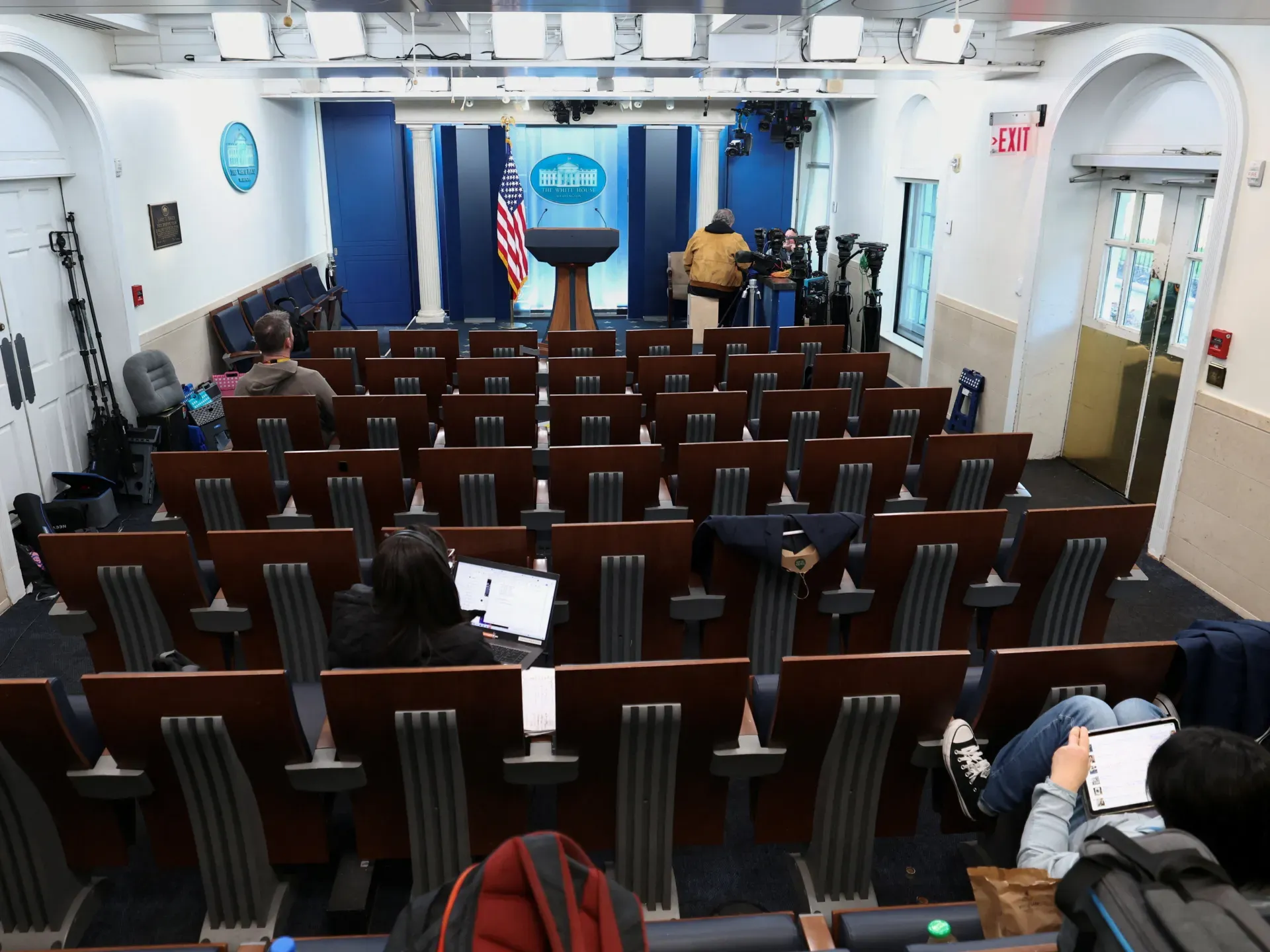
The future of the James S Brady Press Briefing Room remains uncertain as President Trump considers relocating the press corps to make room for other White House needs. This has sparked intense speculation regarding the physical workspace used by journalists to cover the executive branch.
There have been persistent media reports suggesting that the administration might evict journalists from the briefing room to restore a historical indoor swimming pool. This pool was originally installed by Franklin D. Roosevelt in 1933. While President Trump dismissed specific reports regarding the pool's restoration last week, he did not rule out the possibility of moving the press corps entirely.
The potential relocation of the press corps
In a social media post, Trump indicated that he is actively considering a change in the location of the White House press corps. He stated, “I am thinking about moving the Press, and putting them in a different location, but I will use that location for very badly needed space.” This suggests that the administration views the current media workspace as a luxury or an inefficiency that can be reclaimed for other administrative or historical purposes.
Why are experts concerned about these media restrictions?
Human rights experts and academic observers have warned that the current trend of penalizing independent media is a common indicator of shifting political landscapes. The restrictions are viewed not merely as administrative changes, but as potential precursors to broader systemic changes in governance.
Kenneth Roth, a senior fellow at Yale University and the former executive director of Human Rights Watch, has drawn parallels between these actions and the behavior of authoritarian regimes. According to Roth, the effort to penalize independent journalists is a recognized pattern seen globally in countries where leaders seek to consolidate power. He noted that such efforts often serve as a prelude to the rise of autocracy, suggesting that the fight for press access is a fundamental struggle for the preservation of democratic norms.
Frequently asked questions
Who are the plaintiffs in the White House media lawsuit?
The plaintiffs are a group of private citizens, including a high school teacher, a university professor, a human rights advocate, a legal journalist, and a media watchdog. They are suing because they rely on White House reporting for their professional work in teaching, scholarship, and advocacy.
Has the administration's ban on specific outlets been ruled legal?
No, a federal judge previously ruled that the administration's order to ban journalists from CNN, MS NOW, and Politico was unconstitutional. The judge found that the ban violated the First Amendment's protections for the freedom of the press and ordered that access be restored.
Is the White House press briefing room being closed?
While not officially closed, President Trump has expressed interest in moving the press corps to a different location. He indicated that the current space is needed for other purposes, though he has not yet provided a specific new location for the media.
What is the connection to the 1933 swimming pool?
Media reports have suggested that the administration might evict the press to restore an indoor swimming pool in the briefing room area that was installed by Franklin D. Roosevelt in 1933. Trump has dismissed some of these specific reports but remains open to moving the press.
Why is this lawsuit different from previous ones?
This lawsuit is unique because it is not brought by the news organizations themselves. Instead, it is filed by the citizens and professionals who depend on the information provided by those news organizations to perform their jobs and participate in civic life.
Key takeaways
- A new federal lawsuit has been filed by private citizens, not media outlets, regarding White House press access.
- Plaintiffs include educators and advocates who argue that media restrictions impede their professional and scholarly work.
- A federal judge previously ruled that banning specific outlets like CNN and Politico violated the First Amendment.
- President Trump is considering relocating the press corps to repurpose the current briefing room space.
- Human rights experts warn that penalizing independent media is often a precursor to authoritarianism.
The legal and democratic implications of press access
The litigation surrounding the Trump White House media access lawsuit highlights a growing tension between executive administration and the constitutional right to information. By shifting the legal focus from the media organizations to the citizens who rely on them, the plaintiffs are attempting to frame press freedom as a fundamental component of public utility and civic participation. Whether the courts will uphold the First Amendment protections in the face of administrative restructuring remains a critical question for the future of American political transparency and the role of the independent press in a democratic society.



