
Oval Office national monument: Trump seeks to block changes
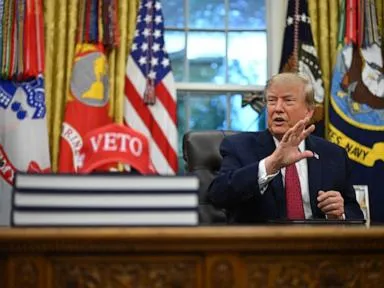
On November 5, 2026, President Donald Trump signed a proclamation to designate the Oval Office, the outer Oval Office, and the Cabinet Room as national monuments. This measure is intended to prevent future presidents from making major structural modifications to these historic spaces. To ensure the designation becomes permanent, the move requires formal ratification by Congress. This action follows recent major White House renovations, such as the construction of a new ballroom and the earlier removal of the East Wing.
November 11, 2026
4 min read
Source: ASHENVOW
The scope of the national monument proclamation
President Donald Trump signed a proclamation on Thursday, November 5, 2026, to designate the Oval Office, the outer Oval Office, and the Cabinet Room as national monuments. The primary objective of this designation is to ensure that these specific spaces cannot be "knocked down and change[d] in any meaningful way" by subsequent administrations. Trump stated that the move is intended to prevent the offices from being "destroyed" or "ripped down by stupid people" to accommodate different architectural shapes.
While the proclamation seeks to protect the core structure of these historic rooms, it does not establish an absolute ban on all types of alterations. The President clarified that the designation does not prevent future leaders from redecorating or refurnishing the interior of the offices. However, he emphasized that no "major modification" would be permitted to the Cabinet Room or the Oval Office without receiving formal approval from Congress. When questioned regarding whether future presidents could remove specific gold accents recently added to the Oval Office, Trump indicated that such changes could occur, but they would have to be handled "very carefully."
Specific areas protected by the designation
The proclamation specifically targets three distinct areas within the West Wing of the White House to ensure continuity of the current layout. These include:
- The Oval Office
- The outer Oval Office
- The Cabinet Room
By grouping these areas under a national monument status, the administration aims to create a legislative barrier against the kind of large-scale structural shifts seen in previous years.
Congressional ratification and legislative requirements
The designation of the Oval Office as a national monument is not an immediate, unilateral permanent change, as the President indicated the proclamation must be sent to Congress for ratification. Trump noted, "So we're going to be declaring it a national monument, and we're going to send it over to Congress, have it ratified." This step is necessary to move the designation beyond a standard executive action and into a more permanent legislative framework.
This requirement for Congressional involvement serves as a check on the President's ability to alter the status of these rooms. Without successful ratification, the designation remains subject to the executive powers of future presidents. This is a critical distinction, as the President's own history shows that executive-led monument designations can be reversed. For instance, Trump has previously used executive authority to shrink the Bears Ears National Monument and the Grand Staircase-Escalante in Utah—protections originally established by Barack Obama and later restored by Joe Biden—before reversing them again. By seeking Congressional ratification, the current administration is attempting to insulate these White House spaces from the same cycle of executive-driven reversals.
Context of recent White House structural modifications
The push to protect the Oval Office comes in the wake of extensive and controversial construction projects led by the Trump administration. These projects have significantly altered both the interior and the grounds of the White House. In October 2025, the administration undertook major structural changes that involved the demolition of the East Wing with minimal notice or oversight to facilitate the construction of a new White House ballroom.
The following table summarizes the recent and proposed changes to the White House infrastructure mentioned in official statements:
On Wednesday, November 5, 2026, Trump invited reporters to the construction site of the ballroom to witness the raising of the final beam. During this event, he addressed criticisms regarding his focus on White House renovations. "I'm doing it because the White House is the ultimate symbol of America, and it's got to be pristine," Trump stated, defending the scale of the ongoing projects.
Comparison of executive monument authority and permanence
The attempt to secure the Oval Office through a national monument designation highlights the tension between executive authority and long-term preservation. Traditionally, presidents have used the Antiquities Act or executive proclamations to protect land and monuments, but these actions are often vulnerable to the next administration. The Trump administration's strategy appears to be an effort to bypass this vulnerability by involving the legislative branch.
The distinction between "redecorating" and "structural modification" is central to the current plan. While the President has noted that the Cabinet Room is "pretty much the same" as it was previously, he has also highlighted recent upgrades, such as the installation of new chandeliers. The goal of the new proclamation is to draw a hard line between these aesthetic updates and the structural integrity of the rooms. By requiring Congressional approval for any "major modification," the administration seeks to ensure that the current configuration of the West Wing becomes a permanent fixture of the American presidency, rather than a temporary reflection of a single term.
| Project / Action | Status / Nature of Change | Context |
|---|---|---|
| East Wing Demolition | Completed (October 2025) | Part of the White House ballroom construction plan. |
| White House Ballroom | Under construction (November 2026) | Final beam raised as of November 5, 2026. |
| Cabinet Room Upgrades | Completed | Includes new chandeliers and "substantially upgraded" interiors. |
| Oval Office Accents | Completed | Addition of gold touches throughout the West Wing. |
| Oval Office/Cabinet Room Protection | Proposed (November 2026) | Aims for national monument status via Congressional ratification. |



