
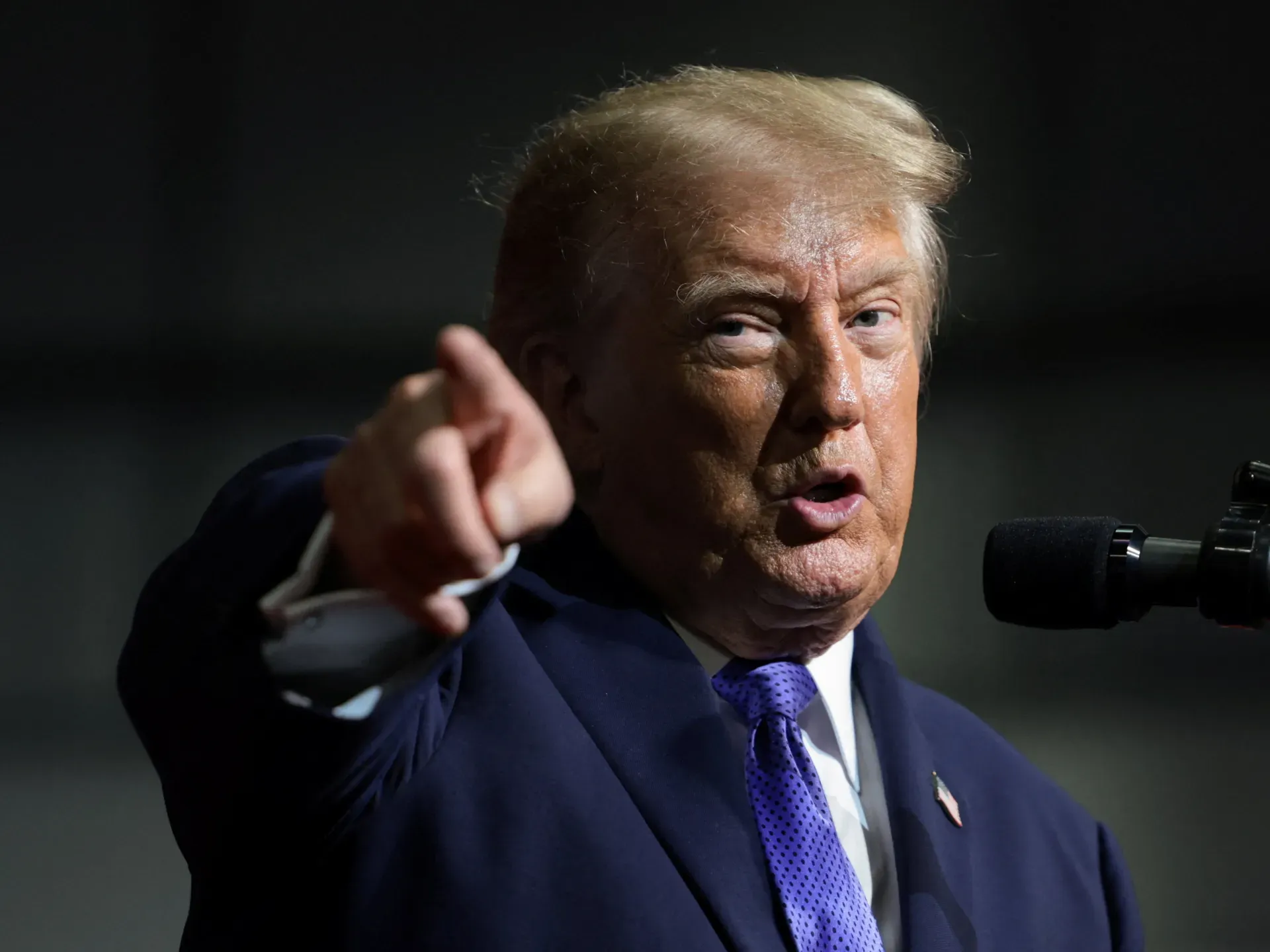
Trump midterm election 2026: Tele-rallies replace events
The Trump midterm election 2026 campaign has pivoted to a virtual format following the cancellation of several high-profile in-person appearances. President Donald Trump has opted for "tele-rallies" in place of scheduled events in Iowa and Kansas, a move the Republican National Committee (RNC) claims will maximize voter reach. With the November 3 elections approaching, the Republican Party faces critical battles to maintain its narrow majorities in the House and Senate. This shift occurs as political analysts and forecasting models suggest a potential Democratic surge. This article examines the RNC's new strategy and its impact.
November 8, 2026
4 min read
Source: ASHENVOW
The Trump midterm election 2026 campaign has pivoted to a virtual format following the cancellation of several high-profile in-person appearances. President Donald Trump has opted for "tele-rallies" in place of scheduled events in Iowa and Kansas, a move the Republican National Committee (RNC) claims will maximize voter reach. With the November 3 elections approaching, the Republican Party faces critical battles to maintain its narrow majorities in the House and Senate. This shift occurs as political analysts and forecasting models suggest a potential Democratic surge. This article examines the RNC's new strategy and its impact.
Why is Donald Trump switching to tele-rallies for the 2026 midterms?
President Donald Trump has decided to scale back his traditional campaign schedule by replacing physical rallies in Iowa and Kansas with a series of virtual broadcasts. The Republican National Committee (RNC) confirmed this strategic shift on Thursday, announcing that these "tele-rallies" will be broadcast to approximately 20 states. This includes critical battleground territories such as Michigan, Alaska, Texas, and Iowa, where Senate races are particularly competitive.
RNC Chairman Joe Gruters defended the decision, arguing that a digital-first approach offers greater efficiency during the final stages of the campaign. According to Gruters, the virtual format allows the President to reach a broader audience of voters than would be possible through localized, on-the-ground stops. He described the upcoming 72-hour period as a "sprint" designed to provide a significant boost to Republican momentum in the closing days before Election Day.
Despite these cancellations, some traditional events remain on the schedule. For instance, the President is still expected to proceed with a planned rally in Daytona Beach, Florida, on Friday. The transition to virtual campaigning represents a significant tactical change as the campaign enters its final week of intensive outreach.
What are the stakes for Congressional control in the 2026 midterms?
The midterm elections on November 3, 2026, will determine the legislative landscape for the final two years of Donald Trump's second term. The outcome will decide which party holds the power to advance or block the President's legislative agenda. Currently, the Republican Party maintains narrow majorities in both the House of Representatives and the Senate, making these contests essential for party survival.
The composition of the two chambers is governed by different electoral rules, which impacts the complexity of the 2026 cycle:
- The House of Representatives: All 435 offices are up for election. The Republican Party currently holds 218 seats.
- The Senate: Only approximately one-third of the 100 seats are on the ballot. The Republican Party currently holds 53 seats.
The stakes extend beyond mere policy implementation. President Trump has indicated that a Democratic victory in both chambers could lead to a third impeachment attempt against him. Consequently, the Republican strategy has centered on mobilizing the base through the President's personal brand, with Trump encouraging supporters to view his own reelection as inextricably linked to the success of the Republican candidates.
Forecasting the election results
Political analysts and mathematical models suggest that the Democrats may hold a distinct advantage in this cycle. Observers point to several factors, including slumping poll numbers for the President and voter dissatisfaction regarding the cost of living and foreign policy issues. These economic and geopolitical pressures are expected to drive turnout among opposition voters.
The Harvard University ElectIt forecasting model provides specific probabilities for the outcome. According to the ElectIt model, Democrats have a 94 percent chance of seizing control of the House of Representatives. The battle for the Senate appears more constrained due to the fewer number of seats available, but the model still assigns a 74 percent probability to a Democratic majority in that chamber.
How are individual Senate races shaping the Republican strategy?
While much of the national focus remains on the President, specific state-level contests are providing early indicators of the shifting political tides. In Kansas, a state traditionally considered a Republican stronghold, the race for the Senate has become unexpectedly tight. The Republican incumbent, Senator Roger Marshall, is facing a significant challenge from Democrat Adam Hamilton, a megachurch pastor.
The competitiveness of the Kansas race is underscored by recent polling data. According to a CNN poll released on Thursday, Adam Hamilton leads Roger Marshall by four percentage points, with Hamilton holding 49 percent support compared to Marshall's 45 percent. This is a notable development in a state that has not elected a Democrat to the Senate since 1932.
These localized battles are crucial because they test the effectiveness of the RNC's "tele-rally" strategy. If virtual appearances fail to bolster candidates in states like Kansas, the Republican Party may find itself struggling to defend its existing margins in the Senate, even if they manage to hold onto more secure territories.
What role does President Trump's health play in the campaign narrative?
At 80 years old, Donald Trump is set to become the oldest president upon the conclusion of his term, a fact that has kept his physical health at the forefront of political discourse. During the current campaign, speculation has been fueled by photographs showing bruising on his hands, leading to questions regarding potential undisclosed medical conditions.
The intersection of health concerns and campaign logistics became a point of direct confrontation during a recent media interaction. Following a rally in South Carolina on Thursday, a reporter from Reuters questioned the President on the tarmac regarding his physical well-being and whether the cancellation of the Kansas trip was due to travel fatigue. The exchange was marked by significant tension.
Initially, the President attempted to pivot the conversation toward his political optimism, stating, "We're going to have a strong Tuesday night." However, when the questioning persisted, Trump responded with an aggressive rebuke of the reporter. He dismissed the inquiry as "sick" and directed personal insults toward the journalist, asserting that he felt "perfect" while telling the reporter to "put yourself in shape."



