
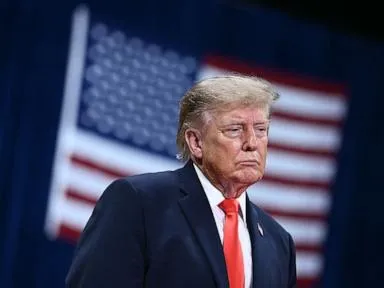
Trump deportation policies: President admits midterm impact
Trump deportation policies may have contributed to Republican losses during the recent midterm elections, according to President Donald Trump. In a CBS '60 Minutes' interview aired Sunday night, November 9, 2026, the President acknowledged that his administration's aggressive immigration enforcement felt "too tough" and ultimately hurt his political standing. While maintaining support for border security and removing criminal elements, Trump expressed regret over the removal of immigrants holding stable employment. He indicated a newfound willingness to negotiate an immigration deal with Democrats to address the status of long-term residents.
November 17, 2026
4 min read
Source: ASHENVOW
Trump deportation policies may have contributed to Republican losses during the recent midterm elections, according to President Donald Trump. In a CBS '60 Minutes' interview aired Sunday night, November 9, 2026, the President acknowledged that his administration's aggressive immigration enforcement felt "too tough" and ultimately hurt his political standing. While maintaining support for border security and removing criminal elements, Trump expressed regret over the removal of immigrants holding stable employment. He indicated a newfound willingness to negotiate an immigration deal with Democrats to address the status of long-term residents.
The impact of aggressive enforcement on midterm results
President Donald Trump admitted that the severity of his administration's immigration agenda likely played a role in the Republican Party's performance during the midterm elections. Speaking during an interview with CBS' "60 Minutes," the President stated, "I think it was too tough. And I think -- I think ultimately, that hurt me." This admission suggests a strategic reassessment of how hardline deportation measures influence voter sentiment and electoral outcomes.
The President's comments reflect a distinction between his successes in border security and the political fallout from broader enforcement actions. He characterized his efforts in two distinct categories:
- Border Security and Criminal Enforcement: Trump claimed to have received "high marks" for closing the border and removing individuals he categorized as "the bad ones."
- Economic and Social Impact: He noted that the backlash stemmed from the deportation of individuals who occupied "good jobs," such as cleaners, waitresses, and landscapers.
According to Trump, the removal of these workers created a sense of hardship that resonated negatively with voters. "When you go into a hotel and you have a woman that's worked there as a, you know, as a maid, as a cleaner ... as a waitress, a lot of good things, great jobs. And all of a sudden they're being taken out of the country. It's tough. It's a tough thing," he explained during the interview.
Shifting leadership in the White House
The President's admission regarding the consequences of his immigration stance coincides with a significant shift in his administration's internal hierarchy. On Monday, November 10, 2026, Trump elevated Stephen Miller to a high-ranking position, replacing former Chief of Staff Susie Wiles.
Miller has been a central figure in shaping the administration's immigration policies. His elevation to replace Wiles marks a critical moment for the White House, especially as the President simultaneously signals a potential softening of his public stance on the political viability of his previous enforcement methods. This leadership change occurs even as Trump acknowledges the need for a more nuanced approach to immigration to avoid further political damage.
Administrative transitions and policy architects
The appointment of Stephen Miller follows the departure of Susie Wiles, a move that underscores the administration's continued focus on immigration as a core pillar of its agenda. While Trump has expressed regret over the political impact of certain deportation actions, the promotion of one of the policy's primary architects suggests that the underlying ideological framework of the administration remains intact. The tension between Miller's hardline reputation and Trump's recent comments regarding the need for a bipartisan deal represents a key variable for upcoming legislative sessions.
Potential for a bipartisan immigration deal
Despite his recent electoral setbacks, President Trump expressed an openness to negotiating with Democrats to establish a path for certain immigrant groups. During the "60 Minutes" segment, when asked about areas of potential cooperation, Trump stated, "I'd love to do something on immigration." He described a potential agreement as something that is "actually doable."
The President's proposed framework for such a deal appears to focus on individuals who have established long-term residency in the United States. He specifically mentioned those who have been in the country for 10 to 15 years, suggesting that a path to legal status or stability could be negotiated for these specific populations. "Let the people that are here and in some cases here for 10 and 15 years, work a deal for them," Trump suggested.
| Policy Aspect | Trump's Stated Position |
|---|---|
| Border Security | Strongly supports; claims "A+" performance. |
| Criminal Deportation | Supports "getting the bad ones out." |
| Economic Migrants | Acknowledges deportation of workers with "good jobs" was "too tough." |
| Legislative Approach | Open to negotiating a deal with Democrats. |
Trump also noted that he had already received inquiries regarding this matter, stating, "People have already called me," though he did not identify the specific individuals or lawmakers involved in these communications.
Negotiation tactics and political temperament
A significant hurdle in bipartisan negotiations is often the personal and political rhetoric used by leadership. During the interview, Trump was directly questioned about his ability to maintain a constructive relationship with Democratic lawmakers to facilitate a deal. Specifically, he was asked if he could refrain from using insulting language toward Democrats for a period of six months to allow for serious negotiations.
Trump responded affirmatively to this condition, indicating a willingness to moderate his rhetoric if it serves the purpose of striking an immigration agreement. This willingness to adjust his communication style suggests a pragmatic shift in response to the midterm results. However, the success of such a transition remains to be seen, as the administration continues to navigate a polarized political landscape following the recent elections.



