
Trump Democratic cooperation: Can they work together in 2026?
Trump Democratic cooperation remains uncertain following the 2026 US midterm elections, which saw the Democratic Party secure majorities in both chambers of Congress. Democrats have won at least 253 of 435 House seats and at least 54 of 100 Senate seats, stripping the Republican Party of its control over the legislature. While President Donald Trump has expressed a willingness to work with Democrats to avoid two years of constant vetoes, his administration faces significant legislative hurdles. The President's ability to block laws through vetoes, contrasted with Democratic efforts to pass core campaign promises, suggests a period of intense political negotiation or gridlock.
November 11, 2026
4 min read
Source: ASHENVOW
The shift in Congressional control and the President's response
The 2026 midterm election results have fundamentally altered the balance of power in Washington, leaving the Republican Party without control of either the House of Representatives or the Senate. Democrats secured a comfortable majority in the House with at least 253 seats out of 435, while also capturing at least 54 of the 100 Senate seats. This shift follows a significant wave for the Democratic Party that impacted Republican standing nationwide.
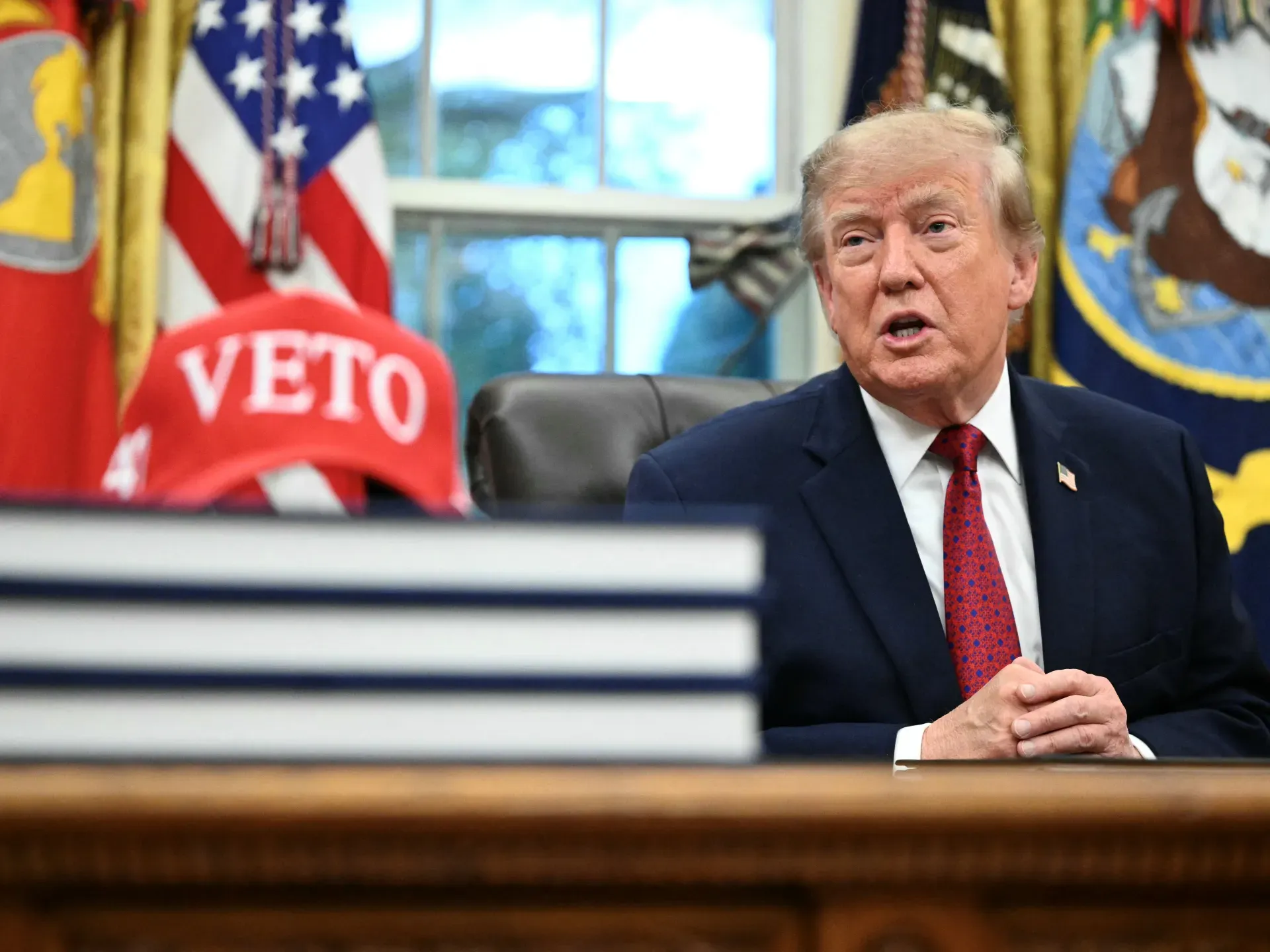
In a phone interview with Politico, President Donald Trump indicated a potential openness to bipartisan engagement despite the electoral setback. He stated, “They’ve already called, and they want to work with me. I have the right to veto everything, but I don’t want to be just sitting there for two years just vetoing everything.” However, his social media activity suggests a readiness for confrontation, as he posted a photo on Truth Social featuring a red 'Make America Great Again' hat with the word “VETO” on it.
Legislative mechanisms and the veto power
Under Article 1, Section 7 of the US Constitution, the President possesses the authority to reject legislation passed by Congress. While Congress can attempt to override a presidential veto, doing so requires a two-thirds majority in both chambers. Because the Democrats do not hold a two-thirds supermajority in either the House or the Senate, a Trump veto effectively kills any legislation he chooses to reject. This gives the President significant leverage to block the Democratic agenda, even without a Republican majority.
Three primary strategies for a divided government
Analysts suggest that the Trump administration has three distinct paths to exert influence or manage the new legislative reality: utilizing the presidential veto, enforcing executive orders, or negotiating bipartisan deals. The use of executive orders has already been a central pillar of the administration's policy implementation. According to the Federal Register, Trump has passed 292 executive orders since his inauguration in January 2025, including 225 in 2025 and 67 so far in 2026.
Andrew Proctor, a lecturer in US politics at University College London, notes that the President's leverage has changed significantly due to the loss of Congressional control. Proctor anticipates a period of substantial legislative gridlock, noting that while Democrats will attempt to pass their own policies, the President's veto power remains a formidable barrier. He suggested that while Trump might engage in negotiations if it benefits his political standing, the likelihood of him working with Democrats on major legislation remains low based on recent political history.
Potential areas for bipartisan healthcare negotiations
Despite the prospect of gridlock, some Democratic leaders have signaled a readiness to negotiate on specific policy issues. Senator Abdul El-Sayed of Michigan, the first Muslim elected to the US Senate, stated he is willing to work with the President if the focus remains on core issues such as Medicare for All, ending Medicare cuts, and addressing tariffs with Canada. El-Sayed emphasized his role as a senator for the United States, stating, “if he’s interested in working on issues that I want to work on... then let’s talk about doing that and go and deliver for the public.”
Progressive Senator Bernie Sanders has also suggested he would not rule out Trump signing a Medicare for All bill if it passes both chambers. Sanders characterized Trump as a "politician" who is not "too ideological." However, experts remain skeptical about the feasibility of such broad reforms.
Andrew Proctor argued that while a broad healthcare debate like Medicare for All is unlikely to succeed in the next two years, specific niche policies might emerge. He specifically pointed to the possibility of rolling back certain healthcare subsidies that were cut under previous Trump legislation, noting that such a move could make healthcare more affordable for millions of Americans.
The role of the filibuster in blocking legislation
While the President uses the veto to stop laws that have already passed, Republicans have other tools to prevent legislation from ever reaching the President's desk. The filibuster, a Senate tactic used to delay votes through extended debate, remains a potent weapon. Proctor noted that Senate Republicans will likely employ the filibuster to obstruct Democratic initiatives, mirroring tactics used during the Obama administration. This could lead to a situation where the legislative process is stalled so early that the President's veto power is never even invoked.
Impeachment threats and investigations in the new Congress
The Democratic sweep of the midterms has immediately triggered calls for increased oversight and investigations into the Trump administration. During his first term, Trump faced two impeachments: one for abuse of power and obstruction of Congress, and another for inciting the US Capitol riots. The new Democratic leadership appears poised to resume aggressive investigative tactics.
Following the election results, several key figures signaled their intent to pursue accountability:
- Robert Garcia: The US Representative set to become chairman of the House Oversight Committee posted "LAWYER UP" on X.
- Ron Wyden: The Senator expected to lead the Senate Finance Committee posted "Subpoenas" on X.
- Defence Secretary Pete Hegseth: Reports suggest imminent impeachment proceedings may be initiated against Hegseth regarding the Iran war.
The White House has reacted strongly to these developments. White House spokesperson Lauren Bis stated on Wednesday that if Democrats pursue "sham investigations and radical left policies," they are choosing to work against the American people. This tension between the executive branch and the new Congressional leadership suggests that the upcoming two years will be defined by intense legal and political conflict.
| Policy Area | Likelihood of Bipartisan Deal | Context |
|---|---|---|
| Medicare for All | Low | Requires massive shifts in policy and significant Democratic consensus. |
| Healthcare Subsidies | Moderate | Proctor suggests rolling back previous subsidy cuts could be a point of common ground. |
| Tariff Negotiation | Uncertain | Mentioned by El-Sayed as a potential area for discussion. |



