
Trump approval rating nears record low on eve of 2026 US midterms
The Trump approval rating has reached a critical low as the United States approaches the 2026 midterm elections. According to a Reuters/Ipsos poll, only 32 percent of voters approve of Donald Trump’s job performance, representing a mere 1 percentage point increase from two weeks prior. This low approval coincides with broader Republican Party unpopularity, where 46 percent of respondents prefer a generic Democrat over a Republican. The polling data reflects significant economic and geopolitical pressures facing the administration. This article examines the polling trends, the impact of the US-Israel-Iran conflict, and the political stakes for the upcoming elections.
November 8, 2026
6 min read
Source: ASHENVOW
What is the current status of the Trump approval rating?
The Trump approval rating currently sits at 32 percent, according to the latest Reuters/Ipsos polling data. This figure places the President's job satisfaction levels near historical lows as the nation prepares for the midterm elections scheduled for November 3, 2026. While this represents a slight 1 percentage point rise compared to the results from two weeks ago, the overall sentiment remains deeply critical of the administration's handling of the presidency.
The polling does not merely reflect dissatisfaction with the President personally, but also suggests a broader trend of declining support for the Republican Party. When respondents were asked to choose between a generic Democrat and a generic Republican candidate, 46 percent favored the former, while only 38 percent preferred the latter. This gap indicates that the Republican platform is currently struggling to maintain a majority preference among the electorate.
Comparing recent polling trends
The downward trajectory of the President's approval has been a consistent theme in recent months. While the 32 percent figure is a marginal improvement over the immediate prior poll, it remains significantly lower than previous periods of his presidency. This trend is particularly notable as it occurs during a high-stakes election cycle where the governing party typically seeks to consolidate its base.
How has the US-Israel-Iran conflict impacted voter sentiment?
The ongoing US-Israel war on Iran, which commenced on February 28, has been identified as a primary driver behind the steady decline in the President's approval ratings. The geopolitical instability resulting from this conflict has moved beyond diplomatic concerns and directly into the daily lives of American consumers through economic volatility.
The conflict has triggered several secondary economic effects that have contributed to voter anxiety. Most notably, the war has driven up the costs of petrol and diesel. These rising energy prices have exacerbated existing fears regarding inflation and the general state of the US economy. For many voters, the intersection of foreign policy and domestic cost-of-living issues has created a sense of economic insecurity that translates into lower approval for the sitting administration.
What are the political stakes for the Republican Party in the 2026 midterms?
The Republican Party is fighting to retain control of both the US House of Representatives and the Senate during the upcoming midterm elections. Although Donald Trump is not personally on the ballot, he has exerted significant influence by instructing his supporters to vote as if they were casting ballots for him directly. This strategy aims to bridge the gap between his personal approval ratings and the party's electoral prospects.
The consequences of a potential loss in Congress are significant. Trump has warned his supporters that if the Republican Party loses control of the US Congress, Democratic leadership may attempt to initiate a third impeachment process against him. This high-stakes rhetoric underscores the intensity of the current political climate and the perceived existential threat to his presidency should the midterms go poorly for his party.
The President's campaign blitz
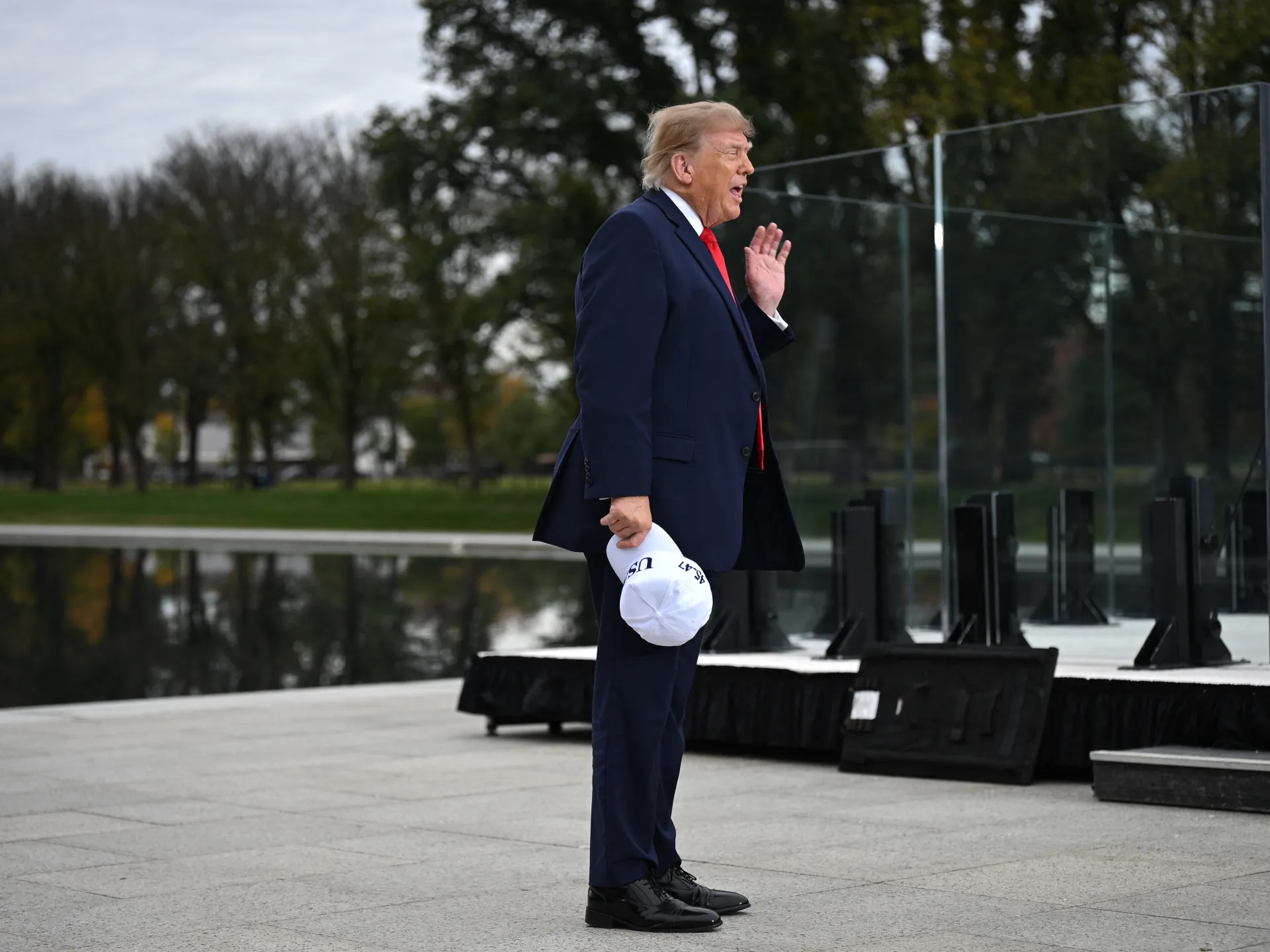
In an effort to mitigate these risks, the President embarked on a month-long intensive campaign blitz. This effort was designed to shore up support for Republican candidates across the country. The campaign culminated in a large-scale rally on Monday afternoon at the Lincoln Memorial Reflecting Pool in Washington, DC, marking the formal end of the midterm election campaign period.
How has the administration's focus on Washington DC renovations influenced the campaign?
During his final campaign rally, President Trump focused heavily on his ambitious plans to renovate Washington, DC. This focus on urban renewal appeared to be a key component of his messaging, though it has been met with both praise and criticism regarding its execution and cost. The President used the platform to defend his vision for the capital, even as specific projects face scrutiny.
One prominent example of these renovation efforts is the work at the Lincoln Memorial Reflecting Pool. The project has been characterized by significant delays and massive cost overruns. According to reports, the project ran months behind schedule and eventually cost more than 10 times its original budget estimate. Additionally, a special liner installed for the pool reportedly began peeling away shortly after its application.
The 'Triumphal Arch' and legal challenges
Beyond the Reflecting Pool, the President has championed the construction of a "Triumphal Arch" as part of his broader vision for the capital. However, this specific project is currently facing various legal challenges that threaten its implementation. Despite these hurdles, Trump used his rally to frame these projects as essential components of his legacy, even while acknowledging the difficulties encountered during the process.
What has the President said about the likelihood of midterm success?
President Trump has displayed a degree of realism regarding the difficulty of winning midterm elections, a phenomenon he described during his final rally. He acknowledged that the political environment is historically difficult for the party in power, yet he maintained that his administration has made a significant effort to secure a victory.
"For some reason, the sitting president doesn’t win the midterms," Trump stated during his speech at the Lincoln Memorial. He concluded by asserting, "But we gave this a very strong shot." This admission suggests that while the administration is aware of the unfavorable polling and the economic headwinds, they are proceeding with the campaign under the assumption that the outcome may follow historical patterns of midterm losses for incumbent parties.
Frequently asked questions
What is the current approval rating for Donald Trump?
As of the latest Reuters/Ipsos poll conducted on the eve of the 2026 midterms, Donald Trump's job approval rating is 32 percent. This figure represents a slight 1 percentage point increase from the rating recorded two weeks prior, though it remains near record lows.
Why is the Republican Party currently unpopular in polls?
The Republican Party is facing lower preference levels than Democrats, with 46 percent of respondents preferring a generic Democrat over a generic Republican (38 percent). This unpopularity is linked to economic concerns and the broader political climate surrounding the midterm elections.
How has the conflict in the Middle East affected the US economy?
The US-Israel war on Iran, which began in February 2026, has caused an increase in petrol and diesel prices. This has led to heightened consumer anxiety regarding inflation and the overall stability of the US economy, impacting the President's approval.
What happens if Republicans lose control of Congress?
Donald Trump has warned that if the Republican Party loses control of the US House of Representatives or the Senate, Democrats may seek to impeach him for a third time. This has become a central theme in his campaign messaging.
What were the issues with the Washington DC renovation projects?
Renovation projects, such as the Lincoln Memorial Reflecting Pool, have faced significant criticism for being months late and costing over 10 times their original estimates. Additionally, some installations, like the pool's liner, have failed shortly after being completed.
Key takeaways
- Trump's job approval rating stands at 32 percent according to a recent Reuters/Ipsos poll.
- The Republican Party currently trails Democrats in generic candidate preference, 46 percent to 38 percent.
- Geopolitical conflict in the Middle East has contributed to rising petrol and diesel prices in the US.
- Trump has warned of potential third impeachment attempts if Republicans lose control of Congress.
- Washington DC renovation projects have faced significant cost overruns and legal challenges.
Conclusion
The 2026 midterm elections arrive at a period of significant political and economic tension for the United States. With the Trump approval rating hovering near record lows at 32 percent, the Republican Party faces an uphill battle to maintain its legislative influence. The intersection of high energy costs driven by international conflict and the historical difficulty of winning midterms creates a challenging landscape for the incumbent administration. While President Trump has attempted to rally his base through intensive campaigning and a focus on domestic renovation projects, the polling suggests that economic anxieties and geopolitical instability remain dominant factors for the American electorate.



