
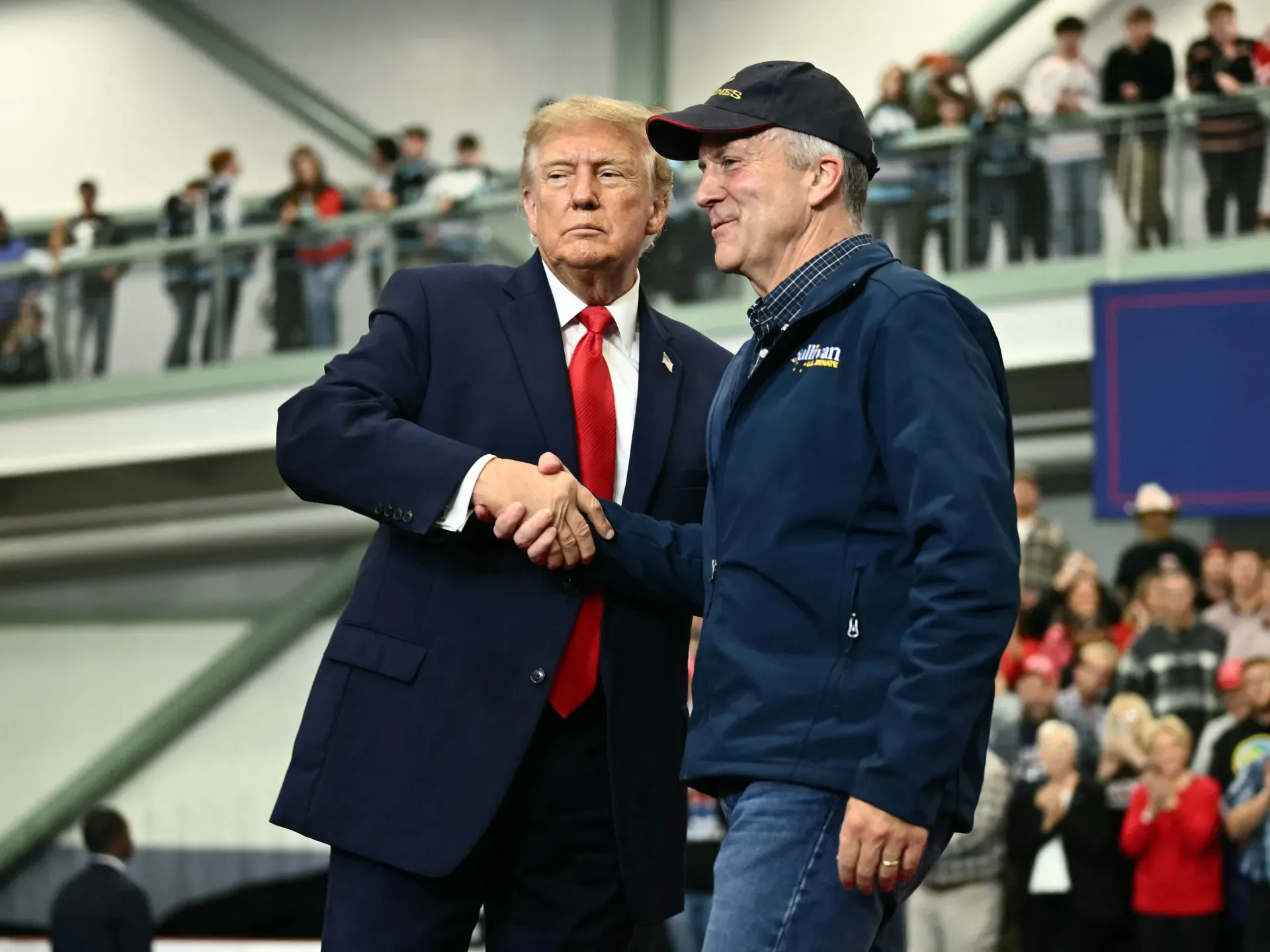
Trump administration Alaska lawsuit: Blocking Senate certification
The Trump administration has filed a lawsuit through the Department of Justice to block the certification of election results in Alaska's contested Senate race. This legal action follows concerns regarding a candidate with a name nearly identical to the Republican incumbent, Senator Dan Sullivan. The DOJ argues that the presence of an independent candidate, Daniel J Sullivan, could mislead voters and distort the democratic process. With the 2026 US midterm elections approaching, the lawsuit has sparked intense debate over federal interference in state-led election certifications. This article examines the legal arguments, the political implications for the US Senate, and the broader context of election integrity concerns.
October 27, 2026
5 min read
Source: ASHENVOW
Why has the Justice Department filed a lawsuit in Alaska?
The US Department of Justice (DOJ) has initiated legal proceedings to prevent the certification of Alaska's Senate election results, citing potential voter confusion. The central argument rests on the presence of an independent candidate named Daniel J Sullivan, who shares a name with the Republican incumbent, Senator Dan Sullivan. According to the DOJ filing, there is a "substantial likelihood" that the inclusion of the independent candidate will mislead voters, thereby compromising the integrity of the electoral process.
The administration's legal team is requesting that a federal judge delay the certification process. This delay is intended to provide sufficient time for an investigation into whether votes cast for the independent Daniel J Sullivan were actually intended for the Republican Senator Sullivan. President Donald Trump has publicly endorsed this legal maneuver, confirming to reporters in Fort Myers, Florida, that he personally directed the Justice Department to take this action.
The legal basis for the delay
The DOJ's position is that the similarity in names creates a risk of electoral distortion. By seeking a judicial intervention, the administration aims to scrutinize the intent behind specific ballots before the results are finalized. This move places the federal judiciary in a position to decide whether name similarity constitutes a sufficient threat to election integrity to warrant halting a state-level certification process.
How does the Alaska Senate race impact the US midterms?
The contested Senate seat in Alaska is a critical battleground that could determine which party maintains control of the US Senate following the November 3 elections. The race features incumbent Republican Senator Dan Sullivan facing a significant challenge from former Democratic Congresswoman Mary Peltola. Current polling indicates an extremely tight contest, with the margin of error frequently encompassing the lead of either candidate.
Recent data highlights the volatility of the race. According to a survey conducted by Public Policy Polling earlier this month, Mary Peltola held a narrow one-point lead over Senator Sullivan. Because the outcome is so closely contested, any legal challenges regarding the validity of specific votes or the method of certification carry immense weight for the national political landscape. If the Republican incumbent loses, it could shift the balance of power in Washington, making the Alaska outcome a focal point for both parties.
What are the safeguards in Alaska's voting system?
Alaska utilizes a ranked-choice voting system, which provides a specific mechanism for voters to navigate candidate confusion. Under this system, voters are not strictly limited to a single choice; they can rank candidates in order of preference. This means that if a voter is uncertain between the two Sullivans, they have the technical ability to select both by ranking them accordingly.
The presence of the independent candidate was previously challenged in court. In June, the Alaska state Supreme Court rejected a Republican effort to remove Daniel J Sullivan from the ballot. As a result, the independent candidate will appear on the ballot without a party designation, while Senator Dan Sullivan will be clearly listed as the Republican candidate. Despite these distinctions, the DOJ maintains that the name overlap remains a primary source of potential electoral error.
The role of state vs federal authority
Legal experts have raised questions regarding the scope of federal authority in this matter. Lauren Miller Karalunas, senior counsel at the Brennan Center for Justice, stated that election certification is a responsibility held by individual US states. She emphasized that the federal government typically has "no role" in this specific stage of the electoral process. Karalunas noted that state legislatures established certification safeguards centuries ago specifically to prevent bad actors from manipulating outcomes, suggesting that existing state mechanisms are designed to handle such challenges.
Is the Justice Department's involvement politically motivated?
The lawsuit has triggered widespread concerns among Democratic lawmakers and voting rights advocates regarding potential political interference. Critics argue that the Trump administration may be attempting to influence midterm outcomes in states where Republicans are facing strong Democratic momentum. This suspicion is fueled by recent DOJ actions against prominent Democratic figures, which some observers have characterized as politically targeted.
Recent examples cited by critics include the indictment of Virginia State Senator L Louise Lucas in a public corruption case and a probe into Democratic Representative Ilhan Omar regarding allegations of immigration fraud. Both individuals have maintained that these legal actions are politically motivated. While US Attorney General Todd Blanche stated that the DOJ does not intend to improperly interfere with state certification processes unless "extreme circumstances" arise, the timing of the Alaska lawsuit has intensified the debate over the agency's impartiality.
Key takeaways
- The DOJ is suing to delay Alaska's Senate election certification due to name confusion between two candidates named Sullivan.
- The Alaska Senate race between Dan Sullivan and Mary Peltola is highly competitive, with Peltola holding a narrow one-point lead according to recent polling.
- Alaska's ranked-choice voting system allows voters to rank multiple candidates, potentially mitigating confusion between the two Sullivans.
- The Alaska state Supreme Court previously ruled that the independent Daniel J Sullivan could remain on the ballot.
- The outcome of the Alaska race is viewed as a potential deciding factor for control of the US Senate.
Frequently asked questions
What is the main reason for the DOJ lawsuit in Alaska?
The Justice Department argues that an independent candidate named Daniel J Sullivan is causing confusion for voters intending to vote for Republican Senator Dan Sullivan. The lawsuit seeks to delay certification to investigate whether votes were cast for the wrong individual due to this name similarity.
Who are the main candidates in the Alaska Senate race?
The primary contenders are the incumbent Republican Senator Dan Sullivan and former Democratic Congresswoman Mary Peltola. Additionally, an independent candidate named Daniel J Sullivan is on the ballot, which is the subject of the current legal dispute regarding voter confusion.
Does the federal government usually certify elections?
No, election certification is primarily handled at the state level. According to legal experts from the Brennan Center for Justice, state-level processes were specifically designed with safeguards to manage election integrity, and the federal government typically does not play a role in the certification stage.
How does ranked-choice voting work in Alaska?
Ranked-choice voting allows voters to list candidates in order of preference. In the context of the Alaska race, this system theoretically allows a voter to select both the Republican Senator Sullivan and the independent Daniel J Sullivan to ensure their intent is captured.
What has Attorney General Todd Blanche said about election interference?
Attorney General Todd Blanche stated that it is not the DOJ's intention to improperly interfere with elections or state certification processes. He noted that such intervention would only occur under extreme circumstances, though the current lawsuit in Alaska has prompted skepticism from political opponents.
Conclusion
The legal challenge initiated by the Trump administration in Alaska represents a significant intersection of electoral law and high-stakes partisan politics. By questioning the integrity of the certification process based on candidate name similarity, the Justice Department has entered a debate over the boundaries of federal oversight and state sovereignty. As the 2026 midterms approach, the resolution of this lawsuit will not only impact the individual candidates in Alaska but will also serve as a precedent for how election disputes and voter confusion are managed in an increasingly polarized political environment.



