
Tigray rebels disarm: Escalating tensions after Mekelle fall
Tigray rebels disarm calls have intensified following the withdrawal of Tigray People’s Liberation Front (TPLF) forces from the regional capital, Mekelle. A senior official in the newly established, federally backed caretaker administration urged fighters to surrender their weapons on Friday, October 23, 2026. This follows a pledge by rebel commander Lieutenant General Fisseha Kidanu to continue armed resistance despite losing control of the city. The renewed hostilities threaten the stability of the 2022 Pretoria peace agreement. This article examines the current military standoff, the humanitarian impact of recent drone strikes, and the political implications for Ethiopia's federal authority.
October 27, 2026
6 min read
Source: ASHENVOW
Why are Tigray officials calling for rebels to disarm?
Redae Halefom Woldeselassie, a high-ranking official within Tigray’s new federally backed caretaker administration, has publicly demanded that rebel forces lay down their weapons to prevent further bloodshed. Speaking from Mekelle, Woldeselassie argued that the ongoing conflict primarily benefits a small group of leaders rather than the civilian population of the Tigray region. He characterized the current state of the rebel forces as collapsing and urged fighters to return to their homes to resume civilian life.
The official's call for disarmament comes as the federal government attempts to stabilize the region through a six-month interim administration. This caretaker body is tasked with several critical objectives, including the restoration of essential services, facilitating the return of displaced persons, and preparing the region for future elections. Woldeselassie emphasized that the time for settling political scores has passed, suggesting that continued military engagement is counterproductive to the region's recovery.
The role of the caretaker administration
The interim government, installed by the Ethiopian federal authorities, serves as a bridge between the period of intense conflict and a stabilized administrative structure. According to the administration's stated goals, the focus must shift from combat to humanitarian logistics and civil governance. However, the legitimacy of this administration remains a point of contention among those loyal to the TPLF, who view the federal intervention as an attempt to consolidate central control over the northern territory.
How has the military situation changed in Mekelle?
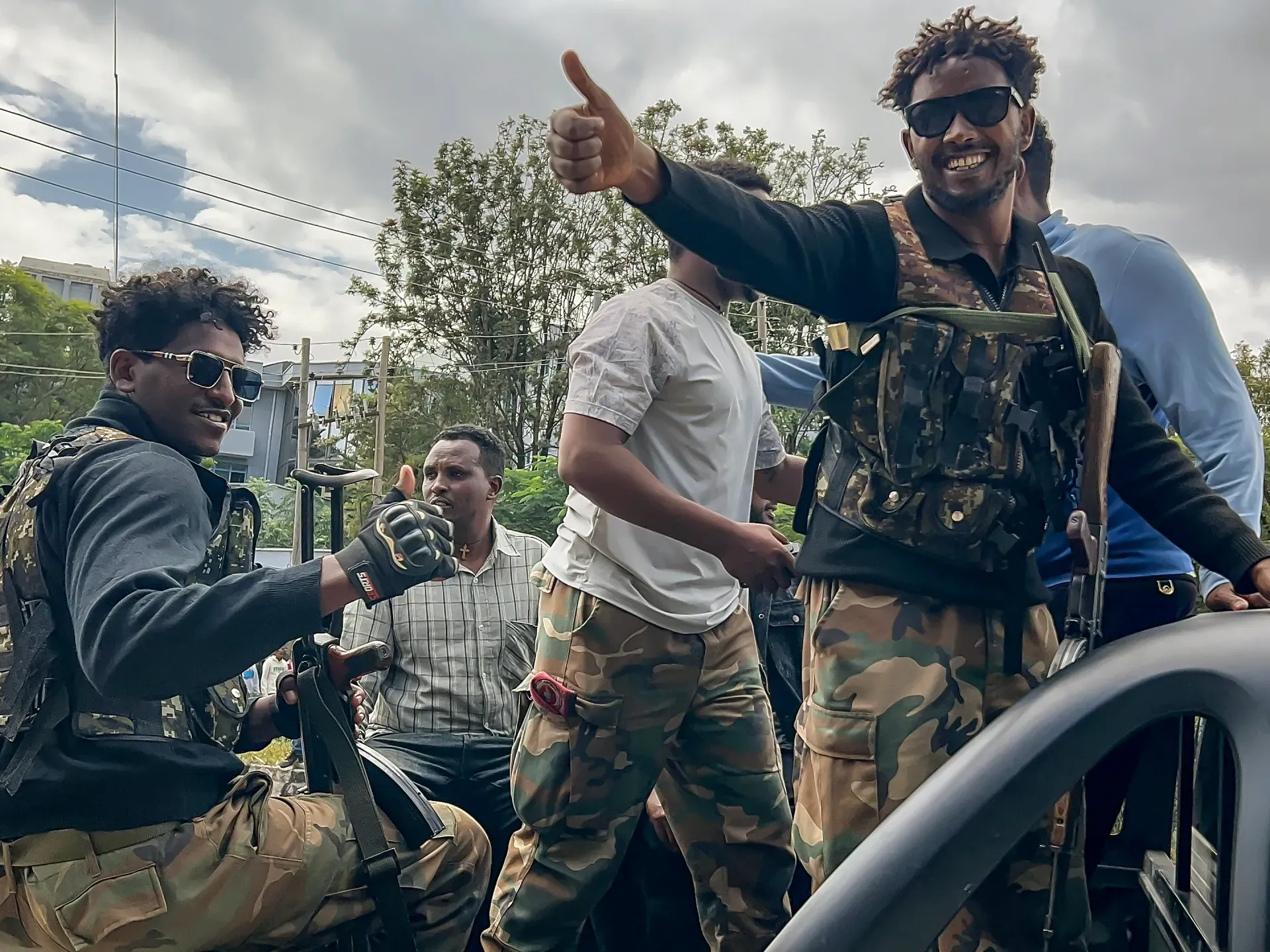
The military landscape in Tigray shifted significantly in early October 2026 when TPLF fighters were forced to withdraw from Mekelle. This withdrawal occurred after government-allied forces entered the capital to suppress an attempted coup against the Ethiopian federal government. The loss of the capital represents a major strategic setback for the TPLF, which previously held Mekelle as its primary stronghold during the 2020-2022 war.
Despite the loss of the city, the conflict has not ceased. Lieutenant General Fisseha Kidanu, identified in a recent television broadcast as the commander of the Tigray army, has pledged to continue the fight. Speaking via Tigray Broadcast Media, a rebel-aligned television station, Kidanu vowed to reverse recent military losses and called for local militias and volunteers to engage government-held positions. He acknowledged the significant technological advantages held by the Ethiopian government, specifically regarding the use of drones and heavy weaponry, but maintained that the resistance would persist.
The combatants on the government side include not only federal troops but also the Tigray Peace Force. This group is notably composed of former members of the TPLF’s own armed wing, a development that has added layers of complexity to the internal dynamics of the Tigrayan political and military landscape.
What is the impact of recent violence on civilians?
Civilians in the Tigray region continue to face significant risks from ongoing military operations, including reported drone strikes. In Mekelle, residents recounted a specific incident on Tuesday where a drone strike reportedly killed four people and injured six others. The victims were reportedly engaged in civilian activities, specifically loading goats onto a truck, when the strike occurred. While these casualty figures have been reported by local residents, they have not yet been independently verified by international observers.
The humanitarian situation remains precarious as the region grapples with the aftermath of previous wars and the current instability. Although the caretaker administration has promised to prepare for the return of displaced residents, no specific timetable has been provided for these operations. The presence of joint security operations by Ethiopian federal troops and allied forces is intended to maintain order and prevent looting, but the atmosphere remains one of high tension and uncertainty for the local population.
The humanitarian toll of the conflict
The current violence is occurring against the backdrop of a devastating historical precedent. Researchers at Ghent University in Belgium estimated that the previous conflict between 2020 and 2022 resulted in approximately 500,000 civilian deaths. These fatalities were caused by a combination of direct violence, widespread famine, and the total collapse of regional health services. The potential for a renewed cycle of such devastation weighs heavily on the current calls for disarmament.
Is the Pretoria peace agreement still viable?
The renewed fighting in Tigray has effectively shattered the stability promised by the November 2022 Pretoria peace agreement. This landmark deal was intended to end the devastating war that had ravaged the northern part of the country. However, the recent attempts by the TPLF to challenge federal authority and the subsequent military responses have undermined the core tenets of the agreement.
Prime Minister Abiy Ahmed has directly blamed the TPLF for the breakdown of peace. Speaking to the Ethiopian Broadcasting Corporation on Monday, the Prime Minister accused the rebel group of violating the terms of the Pretoria agreement by forcibly recruiting young people into military service instead of adhering to disarmament protocols. This accusation highlights the fundamental disagreement between the federal government and the TPLF regarding the transition from armed struggle to political participation.
The breakdown of this agreement suggests a return to a period of high-intensity conflict, with the possibility of further regional destabilization. As the TPLF claims to have inflicted losses on government forces and the government expands its control, the diplomatic path toward a lasting peace appears increasingly narrow.
Frequently asked questions
What caused the TPLF to withdraw from Mekelle?
The TPLF withdrew from Mekelle in early October 2026 following an offensive by government-allied forces. The Ethiopian government moved to secure the capital after the TPLF attempted to overthrow the central government. This move allowed the federal administration to install a six-month caretaker government in the region.
Who is leading the Tigrayan resistance currently?
Lieutenant General Fisseha Kidanu has been identified as the commander of the Tigray army. He has publicly pledged to continue resisting government-backed forces through local militias and volunteers, despite the TPLF's recent loss of Mekelle and the government's superior use of drones and heavy weapons.
What is the purpose of the new caretaker administration?
The federally backed caretaker administration is a six-month interim body designed to stabilize Tigray. Its primary mandates include restoring essential public services, managing the return of displaced persons to their homes, and establishing the necessary administrative foundations to hold future elections in the region.
How many people died in the previous Tigray war?
According to researchers at Ghent University in Belgium, the conflict between 2020 and 2022 resulted in an estimated 500,000 civilian deaths. These deaths were attributed to direct combat, famine, and the collapse of the region's healthcare infrastructure during the two-year period of fighting.
Has the Pretoria peace agreement been honored?
The recent escalation in violence suggests the Pretoria peace agreement has been effectively broken. Prime Minister Abiy Ahmed has accused the TPLF of violating the agreement by recruiting young people for combat, while the TPLF's military actions against the federal government have undermined the original peace framework.
Key takeaways
- The TPLF lost control of Mekelle in early October 2026 following a government-led offensive.
- A new six-month federal caretaker administration has been installed to manage Tigray's transition.
- Lieutenant General Fisseha Kidanu has vowed to continue armed resistance against the Ethiopian government.
- Recent drone strikes in Mekelle have reportedly caused civilian casualties, including four deaths.
- The 2022 Pretoria peace agreement is considered effectively shattered by the renewed fighting.
Conclusion
The resurgence of conflict in Tigray marks a significant breakdown in the fragile peace established by the 2022 Pretoria agreement. While the federal government seeks to consolidate control through a caretaker administration and calls for TPLF disarmament, the TPLF's leadership remains committed to armed resistance. The humanitarian risks are profound, as evidenced by recent drone strikes and the historical memory of the 500,000 deaths recorded during the previous war. Without a renewed and credible diplomatic framework, the region faces a period of prolonged instability and potential humanitarian crisis.



