
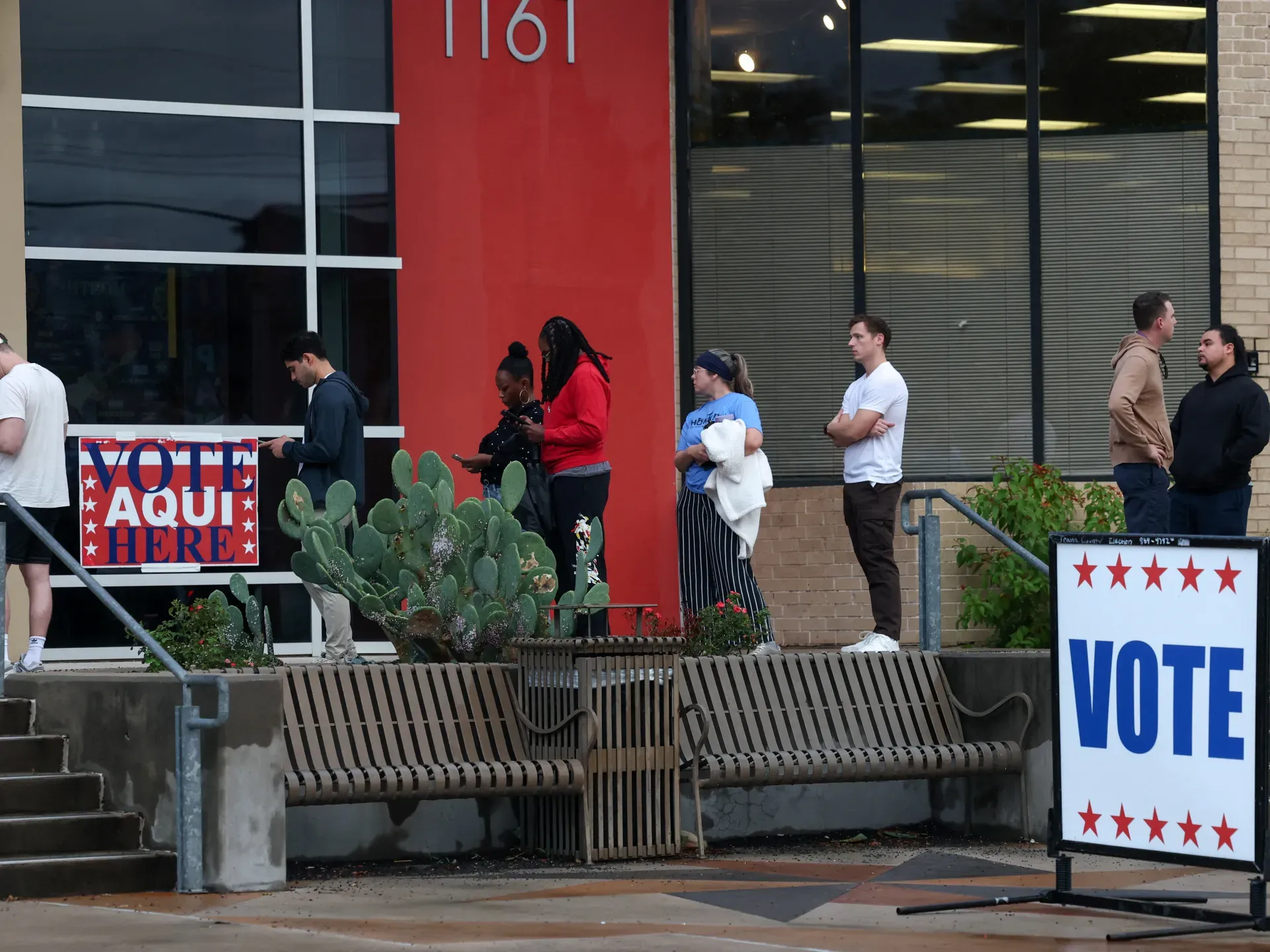
Texas Senate race 2026: Most expensive US election history
The Texas Senate race 2026 has officially become the most expensive contest in United States history, with total spending exceeding $573.2 million. This massive influx of capital, driven by billionaire interests and super PACs, has transformed the midterm battle between Republican Ken Paxton and Democrat James Talarico into a national flashpoint. While Democratic candidate Talarico has led in direct campaign fundraising, Republican Paxton has benefited from unprecedented outside support, most notably from Elon Musk. This article examines the financial breakdown of the race, the influence of super PACs, and how record-breaking spending is colliding with voter concerns over affordability.
November 8, 2026
6 min read
Source: ASHENVOW
How much money was spent in the Texas Senate race 2026?
At least $573.2 million has been poured into the contest between Republican Ken Paxton and Democrat James Talarico ahead of the November 3 vote. This figure represents a historic milestone in American electoral spending, encompassing both direct campaign contributions and massive infusions from outside groups. The scale of the expenditure has sparked significant debate among the electorate regarding the influence of concentrated wealth on democratic processes.
The financial landscape of the race is divided between individual campaign coffers and the more opaque world of political action committees. According to a New York Times analysis, the spending is heavily weighted toward external support, particularly for the Republican side. While the total figure is staggering, analysts suggest the true cost may be even higher due to the prevalence of "dark money"—funds from undisclosed donors that bypass traditional transparency requirements.
The breakdown of campaign vs. outside spending
A critical distinction in this election is the difference between regulated campaign funds and unlimited super PAC spending. While federal law mandates the identification of individual donors to specific campaigns, super PACs operate under different rules, allowing them to spend unlimited amounts as long as they do not coordinate directly with the candidates. This distinction has allowed the Texas race to escalate far beyond the limits of traditional political campaigning.
Who are the primary financial backers in this election?
Elon Musk has emerged as the most significant individual financier, contributing at least $212 million to support the Republican cause. Musk, whose SpaceX corporation is headquartered in southern Texas and who previously led Donald Trump’s Department of Government Efficiency (DOGE), has funneled much of this wealth through the Senate Leadership Fund. According to the New York Times, almost all of these funds were directed toward supporting Ken Paxton.
The distribution of funds shows a stark contrast in how the two candidates access capital:
- James Talarico (Democrat): Has raised $155 million in direct campaign funding, significantly outpacing his opponent in traditional fundraising.
- Ken Paxton (Republican): Has raised $40 million through his official campaign, though he is the primary beneficiary of outside spending.
- MAGA Inc PAC: Has contributed at least $10 million to support Paxton.
- Lone Star Rising PAC: Has directed at least $21 million toward Talarico’s campaign.
This disparity highlights a strategic divide: the Democratic campaign relies more on a robust, direct fundraising apparatus, while the Republican effort is bolstered by massive, concentrated injections of capital from high-net-worth individuals and ideological super PACs.
What are the central themes of the Talarico and Paxton campaigns?
The candidates are running on fundamentally different visions for the state, with Talarico focusing on corruption and economic hardship, while Paxton emphasizes conservative heritage and the preservation of the Texas model. The race is not merely a local contest but a battle for the ideological soul of a state that has been a Republican stronghold for three decades.
James Talarico: The underdog challenger
James Talarico has framed his campaign around the concept of an underdog, frequently referencing the "Friday Night Lights" narrative to connect with voters. His platform focuses on two main pillars: challenging the integrity of Ken Paxton and addressing the cost-of-living crisis. Talarico has used the massive spending by billionaires like Musk as a rhetorical tool, arguing that such influence prioritizes corporate interests over the needs of everyday citizens. If successful, Talarico would become the first Democrat to win a statewide office in Texas since 1994, a major milestone for the party's goal to "turn Texas blue."
Ken Paxton: The defender of the Texas model
Ken Paxton has positioned himself as the guardian of the traditional Texas way of life. His rhetoric leans heavily on the state's history, specifically referencing the 1836 Texas Revolution to frame the current political moment as a fight for survival. Paxton’s campaign emphasizes the importance of a low-tax, low-regulation environment and conservative social values. He has warned voters that a shift in leadership could jeopardize their jobs, livelihoods, and the very identity of the state, stating that if Texas "falls," there is no alternative to move to.
How are Texas voters reacting to the record spending?
Voters expressed a range of emotions regarding the unprecedented financial scale of the race, with many describing the level of spending as "scary" or a distortion of the democratic process. While the money is flowing into political ads and mobilization, many citizens feel that the primary issues facing their households—such as inflation and the cost of groceries—are being overshadowed by political maneuvering.
The reaction of the electorate is not monolithic, but several key sentiments have emerged:
- Disillusionment with influence: Some voters, like 40-year-old union worker Rico Sanchez, believe the money is being spent on "the wrong stuff" and is more about political control than addressing voter needs.
- Concern over transparency: Younger voters have expressed unease about how much money is being used to "distort the view" of the candidates, suggesting that political power should remain with the people.
- Economic priority: For many, the election is secondary to the economy. Voters like Monique Orellana expressed discomfort with billionaire spending while noting that promises to fix grocery prices have not been met.
- Value-based voting: Despite dissatisfaction with the candidates or the spending, some voters continue to follow traditional party lines based on religious or social values, such as the desire for conservative family policies.
Frequently asked questions
Why is the Texas Senate race considered the most expensive in US history?
The race has surpassed $573.2 million in total spending due to a combination of massive direct campaign fundraising and unprecedented contributions from super PACs. High-profile billionaire involvement, specifically from Elon Musk, has driven costs to levels never before seen in a single US Senate contest.
How does Elon Musk's spending affect the election?
Elon Musk has contributed at least $212 million toward the Republican cause, primarily through the Senate Leadership Fund. This massive influx of capital has significantly bolstered Ken Paxton's position, though critics argue it gives disproportionate influence to a single wealthy individual over the state's political direction.
What is the difference between Talarico and Paxton's fundraising?
James Talarico has been more successful in direct campaign fundraising, bringing in $155 million. In contrast, Ken Paxton's official campaign has raised $40 million, but he has received much larger amounts of support through outside super PACs and billionaire donations.
Can a Democrat still win in Texas in 2026?
Yes, it is possible, though it would be historic. A victory for James Talarico would mark the first time a Democrat has won a statewide office in Texas since 1994, representing a significant shift in the state's long-standing Republican dominance.
What are super PACs and how do they work in this race?
Super PACs are political action committees that can spend unlimited amounts of money to support or oppose candidates. Unlike official campaigns, they cannot coordinate directly with the candidates. In this race, they have been responsible for a vast portion of the record-breaking $573.2 million total.
Key takeaways
- The Texas Senate race 2026 has reached a record $573.2 million in total spending.
- Elon Musk has contributed at least $212 million to support Republican Ken Paxton.
- Democrat James Talarico leads in direct campaign fundraising with $155 million raised.
- A Talarico victory would be the first Democratic statewide win in Texas since 1994.
Conclusion
The 2026 Texas Senate race serves as a profound case study in the evolving landscape of American political finance. While the record-breaking $573.2 million expenditure highlights the intense national interest in Texas, it also underscores a growing tension between massive capital inflows and voter concerns over economic affordability. As Ken Paxton defends a conservative legacy and James Talarico seeks a historic Democratic breakthrough, the outcome will depend not just on the influence of billionaires, but on whether voters feel their concerns about the cost of living are being addressed by the candidates on the ballot.



