
Texas governor's race 2026: Abbott concedes to Democrat
The Texas governor's race 2026 has reached a turning point following the concession of Republican incumbent Greg Abbott. ABC News projected that Democrat Gina Hinojosa will win the state's gubernatorial election, marking a major change in Texas leadership. This outcome occurs amidst a broader national trend where Democrats are projected to take control of both the House and the Senate. The election results suggest a substantial realignment in Southern politics. This article examines the concession, the projected victory of Gina Hinojosa, and the broader implications of the 2026 midterm results.
November 8, 2026
5 min read
Source: ASHENVOW
What happened in the Texas governor's race 2026?
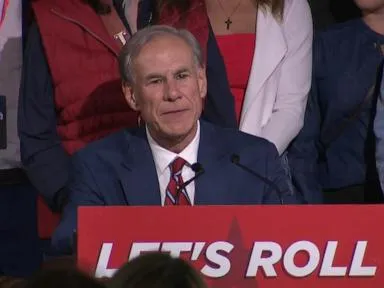
Republican Governor Greg Abbott addressed his supporters after ABC News projected a victory for Democrat Gina Hinojosa in the Texas gubernatorial contest. The projection follows a high-stakes election cycle that has fundamentally altered the political landscape of one of the United States' most influential states. Abbott's concession marks the end of his tenure as the state's chief executive, as the electoral results indicate a decisive shift in voter preference toward the Democratic platform.
The announcement comes at a time when the Texas political environment is undergoing rapid transformation. While Texas has traditionally been a stronghold for the Republican Party, the 2026 results suggest that the state is becoming increasingly competitive. The victory for Hinojosa is not an isolated event but part of a larger movement seen across various southern states during this midterm cycle.
The context of the concession
Governor Abbott's decision to address his supporters immediately following the projection signals an acknowledgment of the electoral reality. In high-profile races, such concessions are critical for the stability of the transition of power. The shift in Texas is particularly notable given the state's historical role in shaping national Republican strategy. The transition from Abbott to Hinojosa will likely bring significant changes to state-level policy, particularly regarding social issues, economic management, and border security, which have been central themes in recent Texas political discourse.
Who is Gina Hinojosa and what does her win signify?
Gina Hinojosa is the projected winner of the Texas governor's race, representing a significant win for the Democratic Party in a traditionally conservative state. Her victory is being interpreted by analysts as a cornerstone of a broader "blue wave" that has swept through several regions of the country during the 2026 midterms. The win signifies a growing appetite among Texas voters for different approaches to governance and policy implementation.
The implications of Hinojosa's win extend beyond Texas borders. As the state grows in population and economic influence, the political direction of Texas heavily influences national trends. Her election suggests that Democratic messaging on key issues—such as the economy and cost of living, which were cited as top concerns for voters—has resonated with a broad coalition of Texans, including suburban and urban voters.
How do the 2026 midterm results affect the US political landscape?
The 2026 midterm elections have resulted in a major shift in federal power, with Democrats projected to take control of both the House of Representatives and the Senate. This national trend is characterized by significant victories in several key states, including Georgia, which has turned blue, and notable wins in Ohio and North Carolina. The overall result indicates a realignment where Democrats have successfully flipped several southern and midwestern strongholds.
This shift in congressional control will have profound effects on the legislative agenda for the next two years. With a Democratic-controlled Congress, the political landscape will likely see a push for different priorities compared to the previous administration. The ability of the Democratic Party to capture both chambers of Congress suggests a successful mobilization of their base and an effective response to voter concerns regarding economic stability and social issues.
National trends and regional shifts
The midterm results highlight several key regional shifts. In the South, the Democratic Party has made significant inroads, as evidenced by the wins in Georgia and the changing dynamics in Texas. In the Midwest, candidates like Sherrod Brown in Ohio have secured vital Senate seats, further strengthening the Democratic position. These wins collectively suggest that the political map is becoming more fluid, with traditional partisan boundaries being tested by changing demographics and voter priorities.
What were the key drivers of the 2026 election outcomes?
Economic concerns and the cost of living were identified as the primary drivers for voters during the 2026 midterm elections. According to reports surrounding the election, these issues sat at the top of the minds for a significant portion of the electorate. This focus on economic stability likely played a decisive role in the outcomes in both state-level races, such as the Texas governorship, and federal races for the House and Senate.
Beyond economics, the election has been marked by several historic milestones. The midterms saw various candidates making history, including the election of Black candidates to significant positions and the projection of Dr. Abdul El-Sayed as the first Muslim elected to the US Senate. These shifts reflect a diversifying electorate and a changing social fabric within the American political system. The combination of economic anxiety and a desire for diverse representation appears to have shaped the final vote counts across the country.
FAQ: Texas governor's race 2026
Who won the Texas governor's race in 2026?
Democrat Gina Hinojosa is projected to be the winner of the Texas governor's race. This follows the concession by the Republican incumbent, Greg Abbott, after ABC News projected her victory in the election. Her win represents a major political shift for the state of Texas.
What did Greg Abbott say after the election?
Governor Greg Abbott addressed his supporters following the projection that Democrat Gina Hinojosa would win the race. While the specific details of his speech were part of a live broadcast, the primary action was his acknowledgment of the electoral results and the concession of the governorship.
How did the 2026 midterms affect the US Congress?
The 2026 midterms resulted in a significant shift in federal power, with Democrats projected to take control of both the House of Representatives and the Senate. This change will fundamentally alter the legislative landscape and the ability of the current administration to pass its agenda.
What were the main issues for voters in 2026?
The economy and the cost of living were the most prominent issues for voters during the 2026 midterm elections. These concerns were central to the campaign strategies of various candidates and were cited as the primary factors influencing voter decisions across the country.
Are there other notable wins in the 2026 midterms?
Yes, the 2026 midterms saw several historic wins, including Democrats taking control in Georgia and significant Senate victories in states like Ohio and North Carolina. Additionally, the elections featured several historic firsts regarding the racial and religious backgrounds of the winning candidates.
Key takeaways
- Democrat Gina Hinojosa is projected to win the Texas governor's race, defeating incumbent Greg Abbott.
- The 2026 midterms saw Democrats projected to take control of both the US House and Senate.
- Economic concerns and the cost of living were the primary drivers for voters during this election cycle.
- The election results indicate a significant political shift in several Southern states, including Texas and Georgia.
The changing face of American politics
The 2026 midterm elections, highlighted by the shift in Texas leadership and the change in congressional control, signal a transformative period in American politics. The move from Republican dominance in Texas to a projected Democratic victory under Gina Hinojosa, combined with a national "blue wave," suggests that traditional political strongholds are no longer guaranteed. As voters continue to prioritize economic stability and social representation, the political map will likely continue to evolve, demanding new strategies from both major parties in the years to come.



