
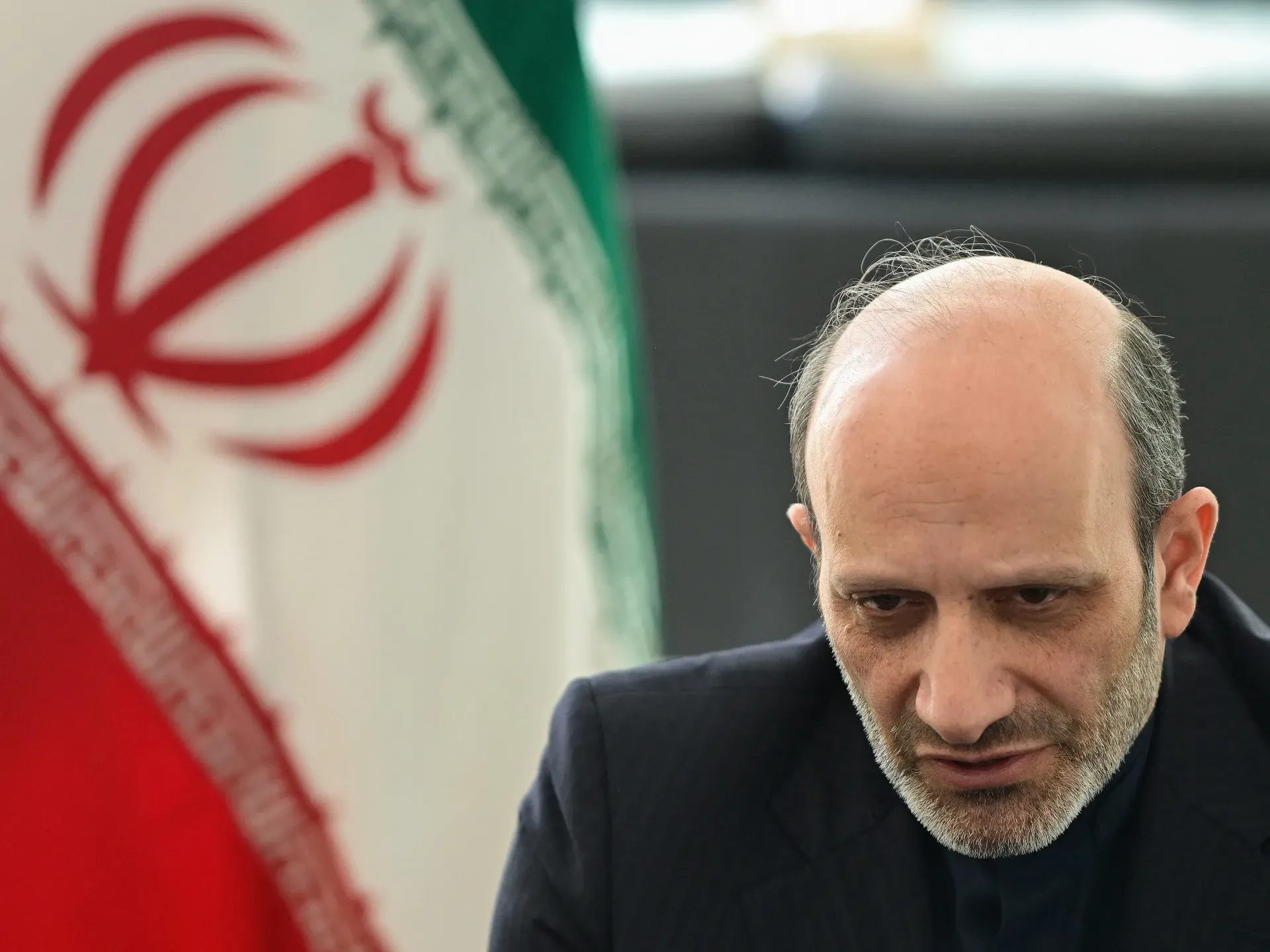
Tehran rejects assassination plot allegations: Germany tensions
Tehran rejects assassination plot allegations involving the attempted targeting of prominent Jewish community leaders in Germany. Following a Hamburg court conviction of two men for orchestrating terrorist activities at the behest of Iranian intelligence, a diplomatic standoff has emerged between Berlin and Tehran. The Iranian Ministry of Foreign Affairs has summoned Germany's ambassador, Axel Dittmann, in response to Germany's summons of Iranian envoy Majid Nili Ahmadabadi. This escalation follows the sentencing of a Danish and an Afghan national for planning attacks on Josef Schuster and Volker Beck. This article examines the judicial findings in Hamburg, the diplomatic retaliations, and the official positions of both governments.
October 27, 2026
5 min read
Source: ASHENVOW
What led to the Hamburg court conviction?
A Hamburg court convicted two men on Thursday for orchestrating terrorist activities aimed at assassinating high-profile leaders of the Jewish community in Germany. The judicial proceedings determined that the individuals were acting under the direction of Iranian intelligence services to target specific pro-Israel figures.
The targets of the alleged plot were identified as Josef Schuster, the president of Germany’s primary representative body for the Jewish community, and Volker Beck, the head of the German-Israeli society. The court found that the planned attacks were intended to disrupt Jewish life and the stability of German society.
The two defendants involved in the plot were a Danish national and an Afghan national. According to the court's findings, the Danish national, partially identified as Ali Hassan S, received a prison sentence of eight-and-a-half years. His accomplice, the Afghan national, was sentenced to four-and-a-half years in prison. The legal process concluded after the pair were arrested in Denmark last year and subsequently extradited to face charges in Germany.
The judicial reasoning behind the sentences
During the sentencing, the presiding judge explicitly linked the actions of the defendants to state-sponsored terrorism. The court ruled that the individuals were guilty of "terrorist activities orchestrated by Iran," emphasizing the gravity of the threat posed to public safety and religious freedom within Germany. The conviction serves as a formal legal recognition by the German judiciary that the plot was not an isolated criminal act but a coordinated effort directed by a foreign intelligence entity.
How has the diplomatic situation between Berlin and Tehran escalated?
Diplomatic relations between Germany and Iran have entered a cycle of "tit-for-tat" summons following the court's decision. The tension intensified after the German Foreign Ministry summoned the Iranian ambassador, Majid Nili Ahmadabadi, to address the allegations that Tehran was the architect of the assassination plot.
In a direct response to this move, Iran’s Ministry of Foreign Affairs summoned the German ambassador, Axel Dittmann. This reciprocal action highlights the rapid breakdown in communication between the two nations. The exchange of summonses is a significant diplomatic escalation, signaling that both states view the recent judicial developments as a matter of high-level political confrontation rather than a standard criminal matter.
The German Foreign Ministry has maintained a firm stance, stating via social media that Tehran will not be permitted to "threaten our free society." The ministry emphasized that the attempted assassinations against Schuster and Beck carry serious legal consequences and that Germany maintains a zero-tolerance policy regarding attacks on Jewish life and its defenders.
What is Iran's official response to the allegations?
Tehran rejects assassination plot allegations, labeling them as baseless political maneuvers designed to damage the country's international standing. The Iranian Ministry of Foreign Affairs, through the official news agency IRNA, issued a statement characterizing the accusations as part of a broader tactic used by Western nations and the "Zionist regime."
The Iranian government's position rests on several key arguments:
- Lack of Credibility: Tehran claims that the security-related accusations are unfounded and lack empirical evidence.
- Political Motivation: The Ministry argues that these allegations are being used as a tool for political warfare rather than genuine judicial inquiry.
- Judicial Integrity: Iran has suggested that by providing a "judicial face" to these claims, Germany is undermining the actual credibility and standing of its own legal system.
This rejection was not a new development; the Iranian embassy in Berlin had previously released a statement during the initial charging phase, describing the claims as "unfounded allegations made at the behest of Iran’s enemies." This consistent denial suggests a deeply entrenched diplomatic rift regarding the legitimacy of German intelligence and judicial findings.
What are the implications for Jewish security in Germany?
The conviction of the two men underscores the ongoing security concerns facing Jewish institutions and leaders within Germany. The plot specifically targeted the highest levels of Jewish communal leadership, indicating an intent to strike at the heart of the community's organizational structure.
The German government's reaction reflects a heightened state of vigilance. By stating that it will not tolerate attacks on those who defend Jewish life, Berlin is signaling a commitment to protecting religious minorities against state-sponsored threats. The legal consequences faced by the Danish and Afghan nationals serve as a deterrent, yet the involvement of a foreign intelligence service suggests that the threat landscape remains complex and potentially persistent.
The case highlights the intersection of domestic security and international geopolitics. For the Jewish community in Germany, the legal victory in Hamburg provides a measure of justice, but the diplomatic fallout between Berlin and Tehran demonstrates that the underlying geopolitical tensions continue to pose a direct threat to local security environments.
Frequently asked questions
Who were the primary targets of the assassination plot?
The targets were Josef Schuster, the president of Germany's main Jewish community representative group, and Volker Beck, the head of the German-Israeli society. Both are prominent pro-Israel public figures within the German social and political landscape.
What were the sentences handed down by the Hamburg court?
The Danish national, identified as Ali Hassan S, was sentenced to eight-and-a-half years in prison. His accomplice, an Afghan national, received a sentence of four-and-a-half years for their roles in the orchestrated terrorist activities.
How did Iran respond to the German summons?
Iran responded by summoning the German ambassador, Axel Dittmann. The Iranian Ministry of Foreign Affairs claimed the allegations were baseless political accusations and part of a tactic used by Western nations and the "Zionist regime" to target Iran.
Where were the suspects originally arrested?
The two men, a Danish national and an Afghan national, were originally arrested in Denmark last year. Following their arrest, they were extradited to Germany to face trial in the Hamburg court system.
What is the current status of German-Iranian diplomacy?
Diplomatic relations are currently characterized by a "tit-for-tat" escalation. Both nations have summoned each other's ambassadors following the conviction of the two men, reflecting a significant breakdown in bilateral relations and mutual trust.
Key takeaways
- A Hamburg court convicted two men for an Iran-orchestrated plot to kill German Jewish leaders.
- The targets included Josef Schuster and Volker Beck, leaders of major Jewish organizations.
- The Danish defendant received eight-and-a-half years, while the Afghan accomplice received four-and-a-half years.
- Tehran has officially rejected all allegations, calling them baseless political claims.
- Diplomatic tensions have escalated following reciprocal summons of ambassadors by both nations.
Synthesis and perspective
The Hamburg court's conviction of two individuals for plotting against Jewish leaders marks a significant moment in the ongoing friction between Germany and Iran. While the judicial system has successfully processed the criminal aspect of the case, the diplomatic fallout remains unresolved. The tension between Germany's commitment to protecting its Jewish community and Iran's categorical rejection of the evidence creates a volatile geopolitical environment. As both nations engage in retaliatory diplomatic maneuvers, the case serves as a stark reminder of how state-sponsored intelligence operations can directly impact domestic security and international relations.



