
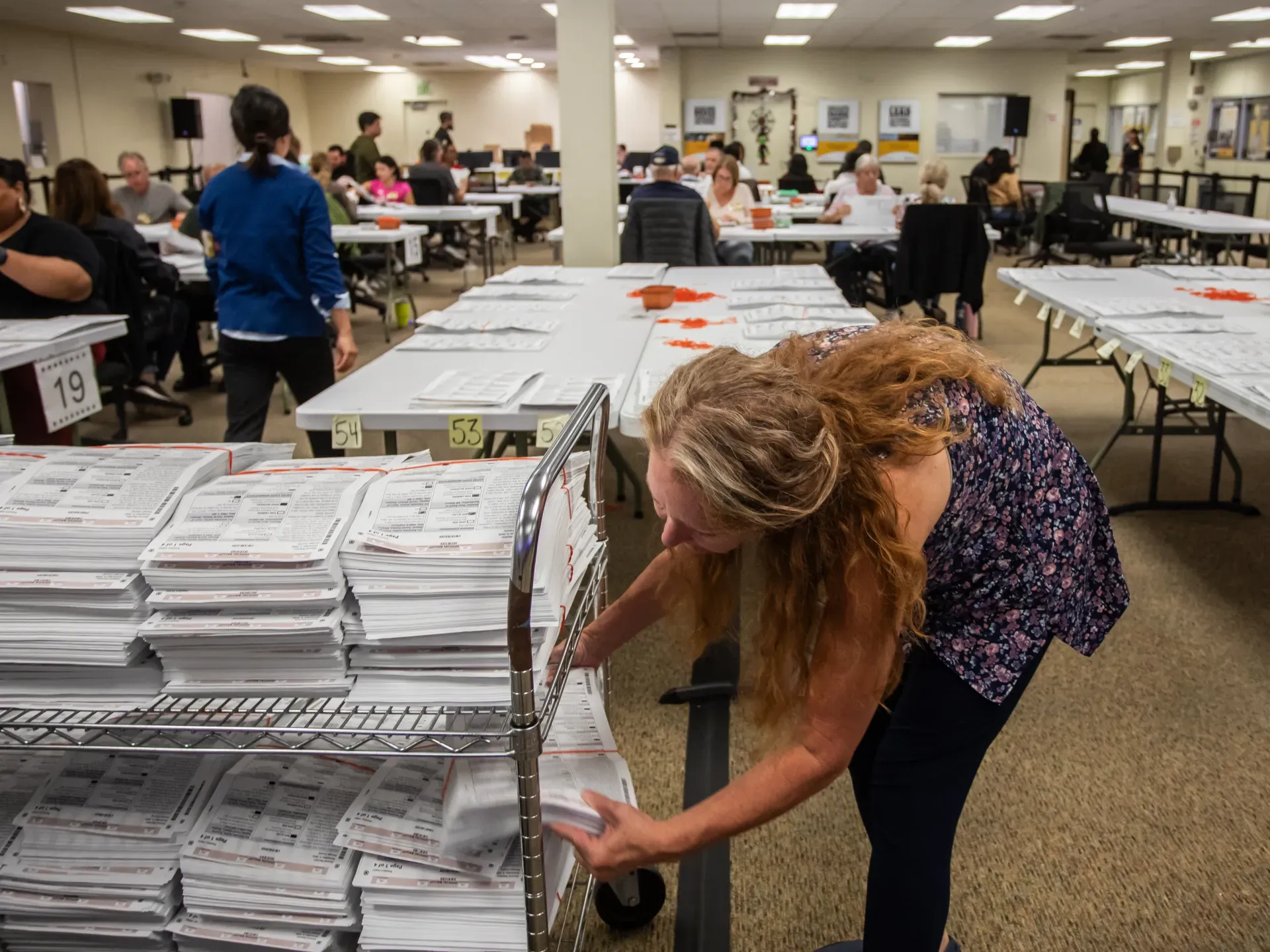
Supreme Court rejects Trump request to block California ballots
The Supreme Court rejects Trump request to intervene in a legal dispute regarding the counting of approximately 20,000 ballots in California. The US Supreme Court declined an emergency filing by the Department of Justice aimed at forcing California to set aside ballots from individuals the administration claims are not US citizens. This decision comes just one day before the 2026 US midterm elections. The ruling prevents a last-minute freeze on ballot processing in the nation's most populous state. This article examines the legal arguments from the Department of Justice and California, the previous judicial rulings, and the broader implications for the midterm elections.
November 8, 2026
5 min read
Source: ASHENVOW
Why did the Supreme Court refuse to intervene in the California ballot dispute?
The United States Supreme Court declined to grant an emergency request from the Trump administration to prevent California from counting a specific subset of ballots. The Department of Justice (DOJ) sought immediate intervention to force the state to isolate ballots from more than 20,000 voters whom the administration alleges are not US citizens. By refusing to step in, the highest court allows California to proceed with its standard counting processes despite the administration's objections.
The legal battle centers on a list compiled by the Department of Homeland Security (DHS) that identifies potential non-citizens. The DOJ argued that if these ballots are integrated into the general pool of processed votes, it would become technically impossible to identify and remove them later if their citizenship status is officially disproven. This concern regarding the 'irreversibility' of the counting process was a central pillar of the administration's emergency filing.
The administration's core legal argument
The Department of Justice maintains that the integrity of the election depends on the ability to verify every voter's eligibility before their vote is finalized. According to the administration's filings, once a ballot is mixed with the hundreds of thousands of other votes already being processed in California, the chain of custody and identification is broken. They contend that the risk of non-citizen voting, even if statistically small, necessitates a preventative measure to set these specific ballots aside until verification is complete.
How did California and state officials respond to the DOJ's claims?
California officials have countered that the administration's request poses a direct threat of mass voter disenfranchisement. The state, a major Democratic stronghold, argues that the DHS list is fundamentally unreliable and likely contains thousands of legitimate US citizens. Because voting has been underway since early October, with approximately 23 million registered voters receiving mail-in ballots, state officials emphasize the logistical impossibility of separating the contested votes without disrupting the entire electoral process.
State officials point out that hundreds of thousands of ballots have already been processed. Attempting to retroactively filter ballots based on a contested list would create significant delays and confusion. California's position is that the administration is attempting to use unproven allegations to interfere with an ongoing election, potentially stripping eligible citizens of their constitutional right to vote based on faulty data.
What was the judicial history leading to the Supreme Court decision?
The Supreme Court's refusal follows two previous legal setbacks for the Trump administration regarding this specific issue. On Friday, a federal appeals court rejected the administration's request to block the counting of the disputed ballots. Prior to that, a federal judge had also denied the request, specifically questioning the accuracy of the data provided by the Department of Homeland Security.
In his ruling, Judge David Carter expressed significant concern regarding the potential for executive overreach. He noted that allowing the executive branch to discount votes based on unverified information could pose a fundamental danger to democratic processes. The administration's decision to escalate the matter to the Supreme Court was seen as a final attempt to secure a nationwide or state-specific injunction before the Tuesday elections.
Previous Supreme Court precedents on voting
This dispute is not the first time the Supreme Court has been asked to rule on election-related restrictions. In September 2026, the Court rejected a separate effort by the administration to place restrictions on mail-in voting. This history suggests a pattern of the Court declining to implement last-minute changes to election procedures that could impact the mechanics of how citizens cast and count their votes.
What is the broader impact on the 2026 midterm elections?
The Supreme Court's decision ensures that the counting of ballots in California will proceed without the immediate threat of a judicial freeze, though the political tension remains high. As Republicans fight to retain control of the US Congress in the Tuesday elections, the dispute over California's ballots adds a layer of legal uncertainty to an already high-stakes environment. The outcome in California, the most populous state, could significantly influence the national balance of power in Congress.
While the administration has frequently cited voter fraud as a primary concern, it is important to note the context of these claims. Although President Trump has repeatedly alleged widespread fraud, various studies and state-level audits have consistently shown that ineligible voting, including by non-citizens, remains an extremely rare occurrence. The legal challenge in California represents a concentrated effort to target this specific, though statistically infrequent, issue at a critical juncture in the election cycle.
Frequently asked questions
Why is the Department of Homeland Security list being contested?
California officials argue the DHS list is unreliable and could incorrectly flag legitimate US citizens as non-citizens. They maintain that relying on this data to set aside ballots risks disenfranchising thousands of eligible voters who have a legal right to participate in the election.
What was the DOJ's main concern regarding the counting process?
The Department of Justice argued that once contested ballots are mixed with the general pool of votes, they cannot be easily identified or removed. They claimed that this integration would make it impossible to rectify the count if the voters were later found to be ineligible.
How many voters are affected by this specific dispute?
The administration's request specifically targeted the ballots of more than 20,000 voters. These are individuals who appear on a list compiled by the Department of Homeland Security as potentially being non-citizens, though California disputes the accuracy of this list.
Did lower courts rule on this matter before the Supreme Court?
Yes, both a federal judge and a federal appeals court rejected the administration's requests. Judge David Carter specifically raised concerns about the reliability of the DHS data and warned that using unproven allegations to threaten an election could endanger democracy.
How does this affect the 2026 midterm elections?
The decision allows California to continue counting its millions of ballots without a last-minute freeze. However, it occurs amidst a high-stakes battle for control of the US Congress, where the results in large states like California are crucial for determining the political landscape.
Key takeaways
- The Supreme Court declined an emergency request to stop California from counting 20,000 contested ballots.
- The Department of Justice claims these voters may not be US citizens based on DHS data.
- California argues the DHS list is unreliable and could disenfranchise many eligible citizens.
- A federal judge previously rejected the request, citing concerns over the data's accuracy.
- The ruling comes just one day before the 2026 US midterm elections.
Conclusion
The Supreme Court's refusal to intervene provides a definitive, albeit controversial, path forward for California's election officials as they prepare for the 2026 midterms. By allowing the state to proceed with its counting processes, the Court has prioritized the continuity of the election over the administration's concerns regarding potential non-citizen voting. While the legal battle highlights deep divisions regarding election integrity and the reliability of federal data, the immediate impact is the prevention of a mass disenfranchisement event in the nation's most populous state. The focus now shifts to the actual results of the Tuesday vote and their implications for Congressional control.



