
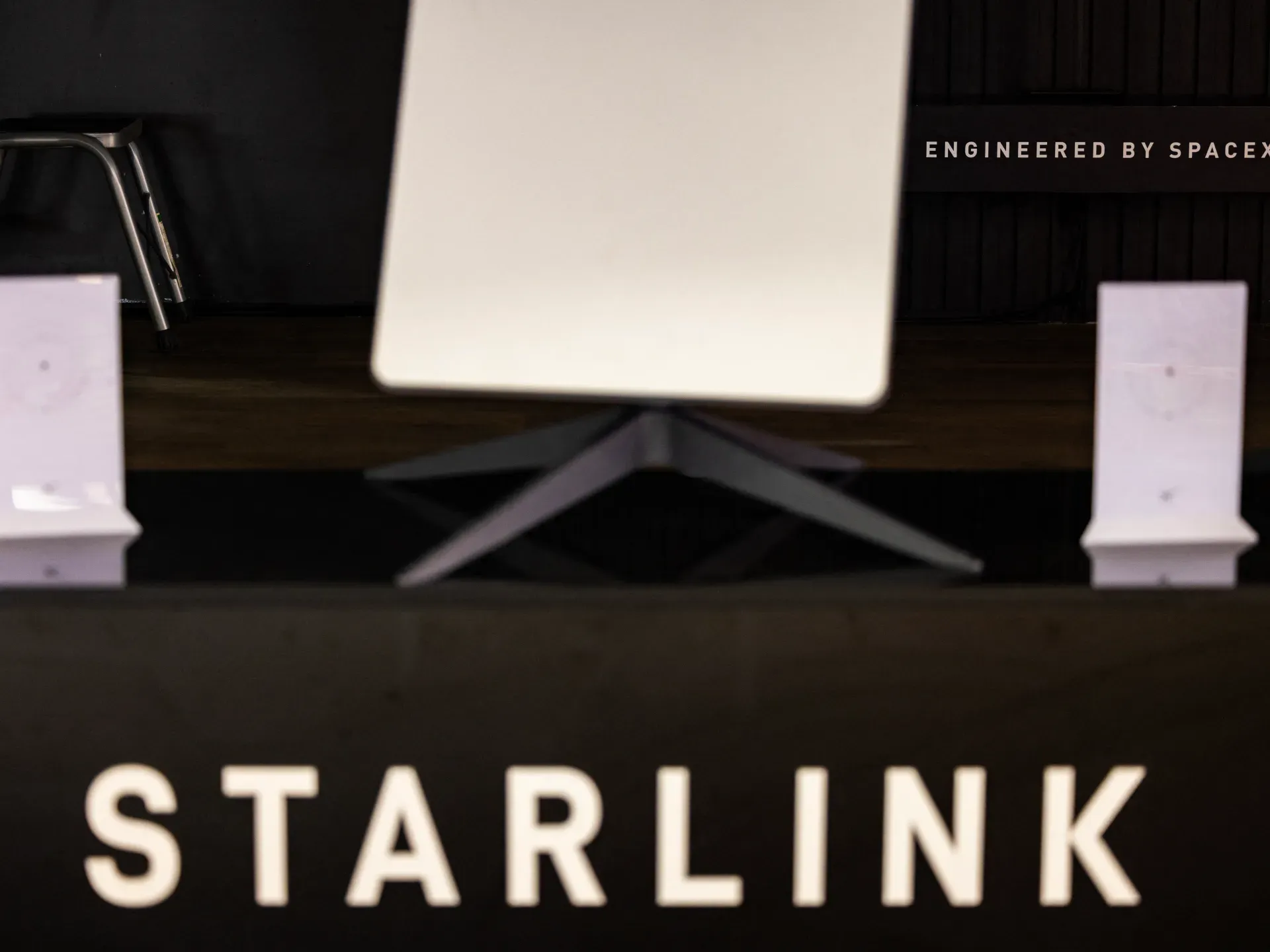
Starlink access in Ukraine: Trump and Musk respond to restoration
Starlink access in Ukraine has reportedly returned to normal levels following a period of connectivity restrictions that hampered Kyiv's military operations. US President Donald Trump stated that Elon Musk has restored the satellite internet service, which remains vital for Ukraine's air defences and military coordination. While reports suggest a direct presidential intervention led to this change, the administration has offered conflicting accounts regarding the decision-making process. This article examines the dispute over Starlink's control, the distinction between commercial and military services, and the political implications for the ongoing conflict.
October 27, 2026
6 min read
Source: ASHENVOW
How was Starlink access in Ukraine restored?
President Donald Trump has claimed that Elon Musk has reinstated the full functionality of Starlink services for Ukraine. This follows a period of reported speed caps and access limitations that left Ukrainian military units struggling to maintain reliable communications. According to reports from The Wall Street Journal, the restoration occurred after a direct communication between the US President and the SpaceX CEO.
When questioned about whether he personally instructed Musk to lift the restrictions, Trump declined to provide specific details regarding the nature of their conversation. He told reporters that the method of restoration was secondary to the outcome, stating, “I don’t want to comment on it, whether I called or whether somebody else called, doesn’t make any difference, I guess. The bottom line, he put it back.”
Despite these claims of restoration, the situation on the ground remains complex. Ukrainian officials have previously noted that while the system may be online, connectivity has remained inconsistent or "spotty" at various intervals. This technical volatility has significant consequences for the battlefield, where real-time data is essential for air defence and tactical movements.
The discrepancy in official accounts
A central point of contention remains who actually ordered the initial restrictions. While some media outlets suggest presidential pressure was the catalyst for the change, the Trump administration has officially distanced itself from the decision to limit service. Trump has denied being the architect of the restrictions, suggesting that neither he nor Musk were responsible for the initial slowdowns. He remarked that, as far as he understands, the service is operating as it has historically.
Who controls the speed and usage of Starlink?
The debate over Starlink's functionality involves a complex distinction between commercial satellite internet and military-grade hardware. US Secretary of State Marco Rubio has maintained that the parameters of the service are dictated by private business agreements rather than government mandates. Rubio stated that decisions regarding connectivity speeds and access levels are governed by private commercial contracts between SpaceX and its users.
However, Elon Musk has presented a different perspective regarding the governance of high-level military applications. Musk has pointed to Starshield—the specialized, military-grade version of the Starlink network—as being under different jurisdiction. According to a social media post by Musk on October 14, Starshield is owned and controlled by the US government.
Musk's position is that any limitations placed on the speed or usage of these specific military capabilities are determined by the US military and ultimately by the President of the United States (POTUS). This distinction creates a significant policy grey area: if the service is commercial, the provider holds the power; if it is military, the US government holds the power. This ambiguity has fueled speculation regarding how much influence the White House exerts over private technology used in active war zones.
What are the political implications for the Ukraine war?
The fluctuations in Starlink access have raised alarms among international observers regarding the potential use of technology as diplomatic leverage. There are concerns that the Trump administration, or its allies, could use the control of vital communication infrastructure to pressure Kyiv into accepting specific peace terms. This concern is amplified by President Trump's historically contentious relationship with Ukrainian President Volodymyr Zelenskyy.
Trump has frequently criticized Zelenskyy, labeling him "difficult" and suggesting that the Ukrainian leadership bears responsibility for the continuation of the conflict. In 2025, Trump attributed the start of the war to Ukraine's pursuit of NATO membership. More recently, he has used social media to claim that Zelenskyy is unwilling to bring the war to an end.
The geopolitical landscape is further complicated by the administration's shifting stance on Russian energy and sanctions. Critics, including members of both the Democratic and Republican parties, have accused the administration of easing pressure on Moscow. Recent policy moves include the purchase of Russian diesel and the relaxation of certain restrictions within the Russian energy sector. These developments occur as the administration manages domestic economic pressures, including high fuel prices resulting from US involvement in the conflict in Iran.
Potential for trilateral diplomacy
Beyond the immediate technical disputes, the administration has signaled a desire for a new diplomatic framework. Trump has expressed openness to a trilateral meeting involving himself, Russian President Vladimir Putin, and Chinese President Xi Jinping. Such a meeting would represent a significant shift in global diplomacy, potentially attempting to bypass traditional European-led mediation in favor of a direct superpower negotiation to resolve the conflict in Ukraine.
How does Starshield differ from standard Starlink?
Understanding the technical dispute requires a clear view of the two distinct service tiers available to users in conflict zones. While Starlink is a commercial product designed for broad civilian and enterprise use, Starshield is a purpose-built iteration intended for government and defense applications. This distinction is critical because it changes the legal and operational framework under which the service operates.
- Starlink: Operates under commercial contracts. Decisions regarding bandwidth, latency, and geographic availability are largely at the discretion of SpaceX as a private entity.
- Starshield: Operates under government oversight. The US military maintains control over its deployment, usage protocols, and technical limitations.
The tension arises when the lines between these two services blur during active combat. If a military unit relies on a service that is technically "commercial" but functionally essential for defense, the provider's decision to throttle speeds can have the same impact as a military command. This creates a scenario where a private corporation becomes a de facto participant in the strategic decision-making of a sovereign nation's defense.
Frequently asked questions
What is the current status of Starlink in Ukraine?
Starlink services in Ukraine have reportedly returned to normal following recent restrictions. However, Ukrainian officials have noted that connectivity remains occasionally inconsistent. While President Trump claims the service was restored following discussions with Elon Musk, the technical reliability of the connection continues to be a vital concern for military operations.
Does the US government control Starlink?
The level of control depends on the specific service being used. Standard Starlink is a commercial product governed by private contracts with SpaceX. However, the Starshield version is a military-grade service that Elon Musk states is owned and controlled by the US government and the US military.
Why did Starlink access become restricted?
The exact reasons for the recent speed and access restrictions remain a subject of dispute. While some reports suggest political influence, the US Secretary of State has stated that such limitations are governed by private commercial contracts. Elon Musk has also suggested that military-grade limits are decided by the US government.
How does Trump view the war in Ukraine?
President Trump has expressed a critical view of the Ukrainian leadership's role in the conflict. He has previously blamed Ukraine's NATO ambitions for the start of the war and has suggested that President Zelenskyy has not done enough to end the hostilities. He has also proposed trilateral talks with Russia and China.
What is the impact of Starlink on Ukraine's defense?
Starlink is a critical tool for Ukraine's military, providing essential connectivity for air defense systems and battlefield coordination. Any disruption in service, such as the recent speed caps, can leave military units scrambling and significantly impact their ability to respond to Russian threats in real time.
Key takeaways
- Starlink access in Ukraine has reportedly been restored following claims of intervention by President Trump.
- Elon Musk distinguishes between commercial Starlink and the US-controlled military version, Starshield.
- The Trump administration has denied ordering the initial connectivity restrictions on Ukraine.
- Political concerns exist regarding the use of satellite technology as leverage in peace negotiations.
Conclusion
The restoration of Starlink access in Ukraine highlights the growing intersection of private technology and global geopolitics. As satellite internet becomes a fundamental pillar of modern warfare, the control over these networks shifts from purely technical management to a significant instrument of foreign policy. The conflicting accounts from the Trump administration, Elon Musk, and the US State Department underscore the ambiguity surrounding the governance of dual-use technologies. Whether through commercial contracts or military oversight, the ability to provide or restrict connectivity will remain a decisive factor in the ongoing struggle for Ukrainian sovereignty and the eventual path toward a peace settlement.



