
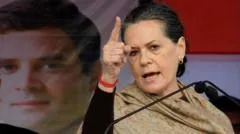
Sonia Gandhi memoir: Navigating India's political turmoil
Sonia Gandhi's new memoir, 'Belonging: A Journey of Love', provides an intimate account of her transition from a private citizen to a central figure in Indian politics. The book details the personal devastation caused by the assassinations of her mother-in-law, Indira Gandhi, in 1984, and her husband, Rajiv Gandhi, in 1991. Through these tragedies, Gandhi explores her reluctant entry into the Congress party, her leadership during critical election cycles, and her ideological struggle against the rising tide of Hindu nationalism in India. She reflects on the immense weight of her political legacy.
November 18, 2026
4 min read
Source: ASHENVOW
The personal impact of the Gandhi family assassinations
The memoir recounts the immediate and visceral trauma of the 1984 assassination of Prime Minister Indira Gandhi. On October 31, 1984, Sonia Gandhi was at the prime minister's residence in Delhi when shots rang out in the garden. She describes finding Indira Gandhi in a white Ambassador car, covered in blood, with a look of surprise on her face. This event was a retaliation for the Indian army's storming of the Golden Temple in Amritsar earlier that year.
The loss was compounded by the political pressures that followed immediately. Her husband, Rajiv Gandhi, was summoned from a rally in West Bengal to take over as prime minister. Gandhi recalls her terror during this period, pleading with Rajiv that the political environment was too dangerous and that "they will kill you; they will kill you, too!" Rajiv's response, "They will kill me anyway," preceded his swearing-in that same evening. This cycle of violence repeated in 1991 when Rajiv himself was assassinated, forcing Sonia Gandhi into a period of deep personal retreat.
Navigating grief and public expectation
Following Rajiv's death, Gandhi struggled to balance her private mourning with the public duties required by the memorial trusts she headed. She describes the difficulty of making public appearances, noting that she often feared being overwhelmed by tears during speeches. Even as she found a way to live with the loss, describing Rajiv as "a presence within me rather than a piercing absence," major family milestones remained painful. She recalls the emotional weight of her son Rahul's Cambridge graduation in 1995, marked by the profound sense of what Rajiv would have felt.
The reluctant ascent to Congress party leadership
Sonia Gandhi's entry into formal politics was driven by the decline of the Congress party rather than personal ambition. After years of avoiding the political sphere—which she viewed through the lens of her husband's experience as a place of "ambition and greed, hypocrisy and treachery"—the party faced significant instability. Senior leaders were defecting, and the political vehicle of the Gandhi family was losing both cohesion and electoral strength.
The decision to lead was framed by a sense of duty to protect India's secular and pluralistic ethos. Gandhi felt a personal responsibility to defend the vision held by Indira and Rajiv against the rising tide of Hindu nationalism. She believed the Gandhi family name possessed a unique appeal that could transcend religious, caste, and regional divisions. This sense of duty was eventually solidified through her study of the Bhagavad Gita, which helped her resolve the inner conflict between her desire for privacy and her perceived obligation to step into the political arena.
The 2004 election and the decision to appoint Manmohan Singh
A pivotal moment in her political career occurred following the Congress-led alliance's victory in the 2004 general election. Although she had led the campaign, Gandhi initially intended to refuse the prime ministership. The memoir describes a high-pressure confrontation where party workers and senior colleagues demanded she take office, with one leader insisting, "We will not take no for an answer."
Despite the intense pressure from within her own party, Gandhi remained committed to her decision to decline the role. Her choice was influenced by several factors, including the potential for her foreign birth to be exploited by the opposition Bharatiya Janata Party (BJP) to create national instability. Ultimately, she chose Manmohan Singh to lead the government, describing him as a man "above reproach" with a "deep and consummate understanding of governance."
| Key Political Milestones | Year | Context |
|---|---|---|
| Assassination of Indira Gandhi | 1984 | Retaliation for the Golden Temple operation. |
| Assassination of Rajiv Gandhi | 1991 | Followed the period of initial political retreat. |
| Rahul Gandhi's Graduation | 1995 | A milestone marked by the absence of Rajiv. |
| Entry into formal politics | 1997 | Guided by the concept of 'dharma' from the Bhagavad Gita. |
| 2004 Election Victory | 2004 | Led to the appointment of Manmohan Singh. |
Ideological shifts and the critique of modern Indian politics
In her memoir, Gandhi contrasts the political landscape of her early career with the contemporary era. She observes a shift from a period characterized by "a certain decency and decorum in parliamentary politics" to a modern environment marked by an appetite to "belittle and torment those who differ from them." She views this trend as part of a global movement toward the heartlessness associated with authoritarian regimes.
The book offers a direct critique of the current political direction under Prime Minister Narendra Modi. While noting they have had "practically no real contact," Gandhi describes a fundamental ideological divide. She characterizes Modi's vision as one shaped by the Rashtriya Swayamsevak Sangh (RSS), emphasizing hierarchy, order, and a fundamentalism where his specific faith and culture supersede others. In contrast, she defines her own political stance as being "against hegemony," advocating for inclusiveness, secularism, and social justice.
The perception of the ruling elite
Gandhi also reflects on her own position within the political establishment. She admits to feeling a sense of unease within the privileged social circles of Delhi, noting that political discourse in those settings often felt disconnected from the lived realities of the broader Indian population. This perspective informs her critique of the current administration's approach to governance and its impact on the country's pluralistic fabric.



