
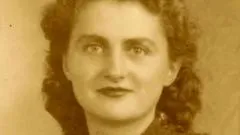
Solange Alexandre dies aged 104: French Resistance heroine's legacy
Solange Alexandre, a prominent figure of the French Resistance during World War Two, has died at the age of 104. The Resistance heroine, who founded and commanded the Pas-de-Boeuf network, passed away in a nursing home in Le Mans. Alexandre was a rare female commander who led a unit of approximately 30 fighters to conduct sabotage and shelter Allied airmen. Her service spanned from her early days as a courier in 1941 to her role as a sub-lieutenant in the French Interior Forces following the liberation of Tours in 1944.
November 17, 2026
4 min read
Source: ASHENVOW
The military leadership of the Pas-de-Boeuf network
Solange Alexandre transitioned from a courier to a commander after founding the Pas-de-Boeuf network near Ruillé-sur-Loir in 1944. While many women served in support roles, Alexandre was part of a rare group of women who commanded their own units of anti-German fighters alongside their partners. Her leadership was characterized by direct combat operations and strategic coordination within the French countryside.
The network she established was composed of diverse elements, including survivors from previously destroyed Resistance groups and individuals fleeing German forced labour programmes. Under her command, the unit managed several critical wartime functions:
- Organising targeted sabotage operations against occupying forces.
- Providing clandestine shelter to Allied airmen, including American and Canadian personnel.
- Engaging in active combat following the Allied landings in Normandy on D-Day in 1944.
By the end of the conflict, Alexandre had risen to the rank of sub-lieutenant within the French Interior Forces (FFI), marking her significant contribution to the liberation of French territory.
Early resistance and the role of the courier
Before assuming command of a full unit, Alexandre operated under the code-name Corlay, serving as a vital link in the intelligence chain. Her recruitment into the Resistance began in 1941, following an appeal from General Charles de Gaulle in London that prompted her to join the struggle against German occupation. She was recruited by Saïd Belhaffaf, a Tunisian-born French army veteran and acquaintance of her father.
As a courier, Alexandre's mobility was limited by the wartime scarcity of resources. In an interview two years ago, she noted that due to the lack of petrol and the absence of private cars, "the bicycle was king." This mode of transport allowed her to criss-cross the region around Le Mans to gather and pass on essential information, a task that required navigating high-risk environments without modern communication tools.
The risks of clandestine movement
Operating as a courier required constant vigilance against detection by occupying forces. Alexandre later recalled the narrow escapes she experienced during her service, stating, "Twice the Gestapo came for me, and twice I slipped through their hands." This highlights the extreme personal danger faced by Resistance members who operated in plain sight using rudimentary transport like bicycles to maintain communication networks.
Personal motivations and wartime origins
Alexandre's commitment to the French cause was rooted in her family history and the trauma of previous conflicts. Born in 1922 in the Sarthe department of western France, she was raised in a household where patriotism was a central value. Her family had been directly impacted by the First World War, which shaped her early worldview and sense of duty.
In her memoirs, she reflected on the influence of her parents, noting that her mother had lost her first husband in the war and her father had been wounded in 1917. She wrote, "The words homeland and honour were very important to us. They were in my blood." This familial background provided the psychological foundation for her decision to join the Resistance immediately after hearing De Gaulle's broadcast in June 1940.
The formation of the maquis and partnership with Guy Déliot
The evolution of Alexandre's resistance work was closely tied to her relationship with Guy Déliot, whom she met in 1943. Déliot had become a resistance figure after deserting from the French gendarmerie on principle, refusing to participate in the arrest of Jewish individuals. Their partnership led to a transition from mobile intelligence gathering to living as members of the 'maquis'—clandestine fighters living in forested areas.
The lifestyle of the maquis was one of constant evasion and reliance on local support networks. The following table outlines the composition and support structure of the unit Alexandre and Déliot commanded:
| Group Component | Description/Origin |
|---|---|
| Core Leadership | Solange Alexandre and Guy Déliot |
| Personnel | Deserters from German forced labour and survivors from destroyed Resistance units |
| Allied Support | One American airman and one Canadian airman |
| Logistical Support | Local farmers providing food to the forested units |
Post-war life and recognition of service
Following the liberation of Tours in September 1944, Alexandre transitioned into civilian life, working as a teacher. Her life remained connected to the military through her husband's career; she followed him during his various postings as an officer of the gendarmerie in French overseas territories. Her husband, Guy Déliot, was killed in Martinique in 1960. Alexandre later remarried in 1981.
Throughout her later years, Alexandre maintained a humble stance regarding her wartime achievements. She famously declined the Légion d'Honneur on two separate occasions, asserting that she had simply performed her duty and that others were more deserving of such accolades. It was not until 2024 that she accepted the prestigious award. Upon receiving it, she remarked, "It is a great pleasure and a great honour. I am very proud – even if it is only a few weeks, or a few months, before I die."
President Emmanuel Macron paid tribute to her legacy following the announcement of her death, emphasizing the significance of her service to the nation. In a statement on social media, Macron said, "She said she only ever did her duty. But her duty was our freedom. France will never forget. Thank you."



