
Serbia election: Student-led movement challenges Vucic
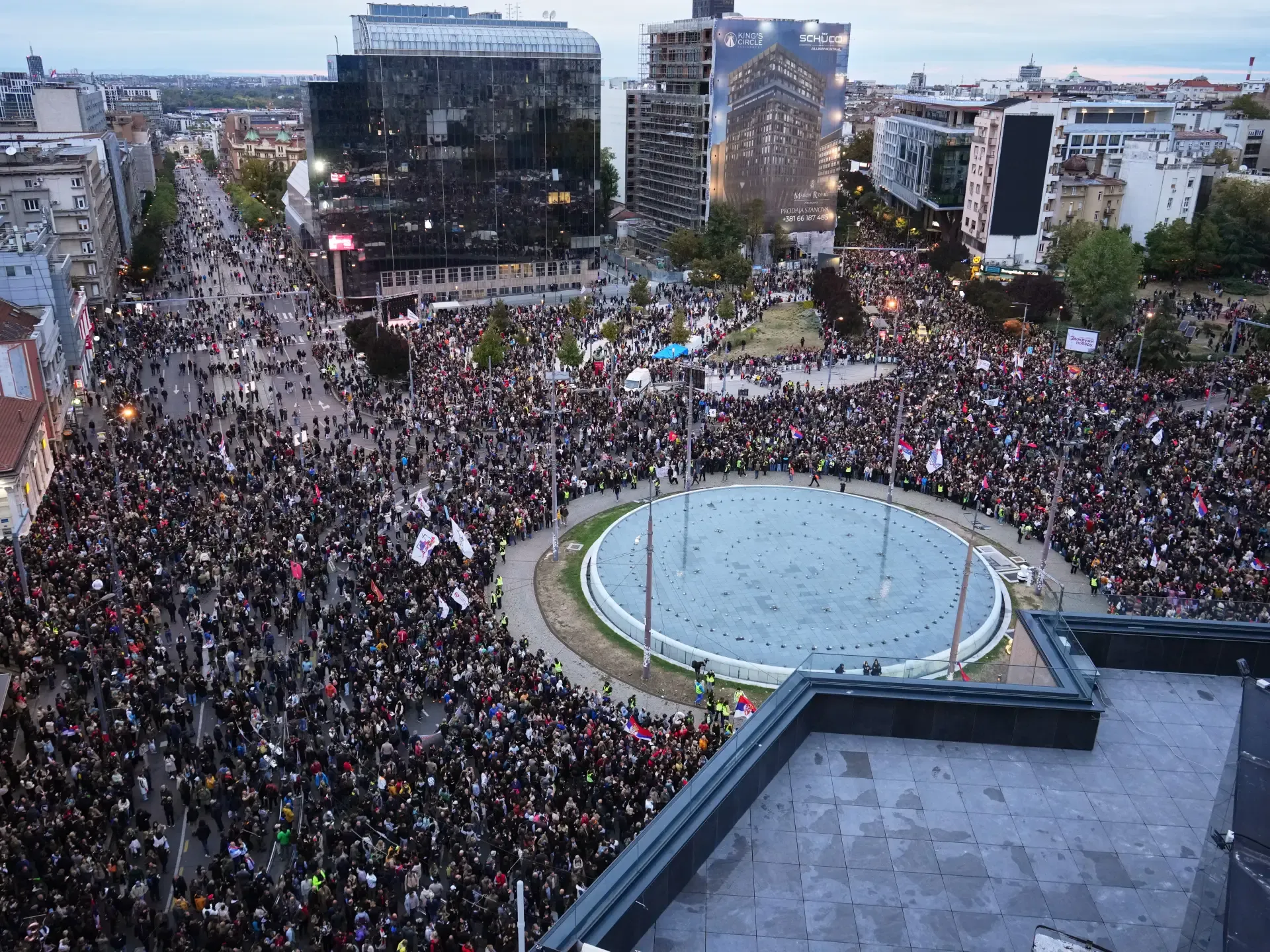
The upcoming Serbia election on Sunday features a massive confrontation between the student-led 'Student List' and President Aleksandar Vucic’s Serbian Progressive Party (SNS). Tens of thousands of protesters gathered in central Belgrade on Thursday for a final rally, signaling a significant challenge to the 14-year rule of the SNS. This election is viewed as a pivotal moment for Serbian democracy, with the opposition seeking to replace long-standing corruption with transparency. This article examines the drivers of the student movement, Vucic's defensive strategy, and the risks facing the electoral process.
October 27, 2026
6 min read
Source: ASHENVOW
What is driving the surge in student-led opposition?
The student-led movement, organized under the 'Student List – Students Win' banner, is fueled by deep-seated public anger regarding government corruption and systemic negligence. The primary catalyst for this political shift was the 2024 collapse of a canopy at a newly renovated railway station in Novi Sad, an event that resulted in the deaths of 16 individuals. This tragedy transformed localized grief into a nationwide demand for accountability and early elections.
The movement has successfully bridged the gap between urban student activists and the broader electorate. By focusing on the consequences of corruption, the Student List has managed to tap into a sense of national frustration that transcends traditional political divides. The movement is characterized as being leaderless, relying instead on a platform of student-backed candidates, many of whom are academics or political outsiders rather than career politicians.
The impact of the Novi Sad disaster
The Novi Sad railway station tragedy serves as the emotional and political cornerstone of the current opposition. For many voters, the structural failure of the canopy was not merely an engineering error but a visible manifestation of the corruption and lack of transparency within the ruling administration. This sentiment has unified various segments of the population, leading to some of the largest demonstrations in Serbia since the fall of Slobodan Milosevic in 2000. The disaster provided a clear, tragic narrative that the Student List has used to argue for a complete overhaul of the political system.
How is the 'Student List' preparing for the parliamentary vote?
The Student List is contesting all 250 seats in the Serbian parliament with a diverse slate of 250 candidates. Their strategy involves running individuals who are perceived as untainted by the current political establishment, including university professors and other professionals. By presenting a wide array of candidates, the movement aims to project an image of competence and integrity, contrasting itself with the long-standing rule of the Serbian Progressive Party (SNS).
The campaign's central message focuses on ending what they describe as 14 years of 'humiliation, chaos, and betrayal.' During the final rally in Belgrade, candidates emphasized that the movement is fighting for the interests of the citizens rather than the interests of a specific party. This approach seeks to capitalize on the desire for a 'normal country,' a sentiment expressed by supporters who see the youth as the drivers of democratic renewal.
| Feature | Student List | Serbian Progressive Party (SNS) |
|---|---|---|
| Leadership Style | Leaderless, student-backed | Veteran leadership under Vucic |
| Core Platform | Anti-corruption and transparency | Populist stability and continuity |
| Candidate Profile | Academics and political outsiders | Established party members |
| Primary Base | Youth and urban professionals | Rural strongholds and party loyalists |
What is Aleksandar Vucic's strategy to maintain power?
Aleksandar Vucic is attempting to consolidate his support by positioning himself as the defender of national stability against what he characterizes as external interference. Having resigned from the presidency in September to run for Prime Minister, Vucic is utilizing his political machinery to frame the student movement as a 'foreign-funded coup attempt.' This narrative is designed to delegitimize the opposition and rally his core supporters against a perceived threat to Serbian sovereignty.
During the campaign week, Vucic has held rival rallies, including a significant gathering at a sports hall in Belgrade on Thursday. His rhetoric focuses on the need for a decisive defeat of the opposition movement. By characterizing the protests as an organized attempt to destabilize the country, he aims to shift the conversation from domestic issues like corruption to themes of national security and resistance to foreign influence.
Vucic's transition from President to Prime Minister candidate
The decision by Vucic to step down from the presidency to pursue the premiership is a strategic maneuver intended to navigate the current political volatility. By running for the office that holds significant executive power, he seeks to maintain control over the state apparatus while directly engaging in the parliamentary contest. This move allows him to lead his party's campaign from the front, reinforcing his image as the primary figure capable of navigating Serbia through its current period of unrest.
What are the risks to the fairness of the upcoming election?
The integrity of the upcoming vote is under significant scrutiny from civil society and international observers. Twenty-four Serbian civil society groups have issued warnings that the necessary conditions for 'free and fair elections' are currently absent. These concerns are bolstered by reports of campaign volatility and potential interference with the democratic process.
A monitoring group has already cited more than 100 violent incidents occurring during the campaign period. Furthermore, the legal system has been active in addressing potential unrest; on Wednesday, prosecutors questioned six individuals arrested on suspicion of planning violence, riots, or attacks on election day. These factors contribute to a tense atmosphere where the outcome of the vote could be contested by either side.
Polling uncertainty and the threat of instability
One of the most significant challenges in assessing the election's outcome is the lack of reliable, independent polling in Serbia. This vacuum of data creates a high degree of uncertainty and increases the risk of post-election instability. Political scientist Dusan Vucicevic has suggested that the Student List could secure more than 40 percent of the vote, a figure that would represent the strongest opposition performance since the SNS took power in 2012. However, without official data, any claim of victory by either the Student List or the SNS could lead to immediate civil unrest, especially if the results are perceived as manipulated.
Frequently asked questions
Why is the student movement so influential in this election?
The movement is influential because it is driven by the 2024 Novi Sad railway disaster, which acted as a catalyst for widespread anger over corruption. This event unified students and the general public under a common demand for government accountability and transparency.
Who is leading the Serbian Progressive Party (SNS)?
The SNS is led by Aleksandar Vucic, who has been a central figure in Serbian politics for over 14 years. Although he resigned the presidency in September, he is currently running for Prime Minister to maintain his political influence.
What is the 'Student List' platform?
The Student List focuses on fighting corruption and ending what they describe as years of political mismanagement. Their platform is built on the idea of bringing academics and political outsiders into parliament to restore democratic norms.
Is there evidence of foreign involvement in the protests?
Aleksandar Vucic has accused the student movement of being a foreign-funded coup attempt. However, the movement describes itself as a grassroots, leaderless response to domestic issues such as the Novi Sad railway station tragedy.
How safe is the election process?
The safety of the election is a major concern, with civil society groups warning that conditions for free and fair voting are lacking. Reports of over 100 violent incidents during the campaign and recent arrests for plotting riots add to the tension.
Key takeaways
- The Student List is challenging the 14-year rule of the SNS in the upcoming parliamentary election.
- The 2024 Novi Sad railway station disaster is the primary driver of the current opposition movement.
- Aleksandar Vucic is running for Prime Minister after resigning from the presidency in September.
- Civil society groups have warned that the conditions for free and fair elections are currently insufficient.
Conclusion
The upcoming Serbian election represents a high-stakes confrontation between a long-standing political establishment and a burgeoning grassroots movement. While Aleksandar Vucic seeks to maintain control through a narrative of national stability and resistance to foreign influence, the Student List has successfully channeled public grief and anger into a potent political force. The lack of independent polling and the reported history of campaign violence create a volatile environment. Ultimately, the result of Sunday's vote will determine whether Serbia continues its current political trajectory or undergoes a significant shift toward the transparency demanded by its youth.



