
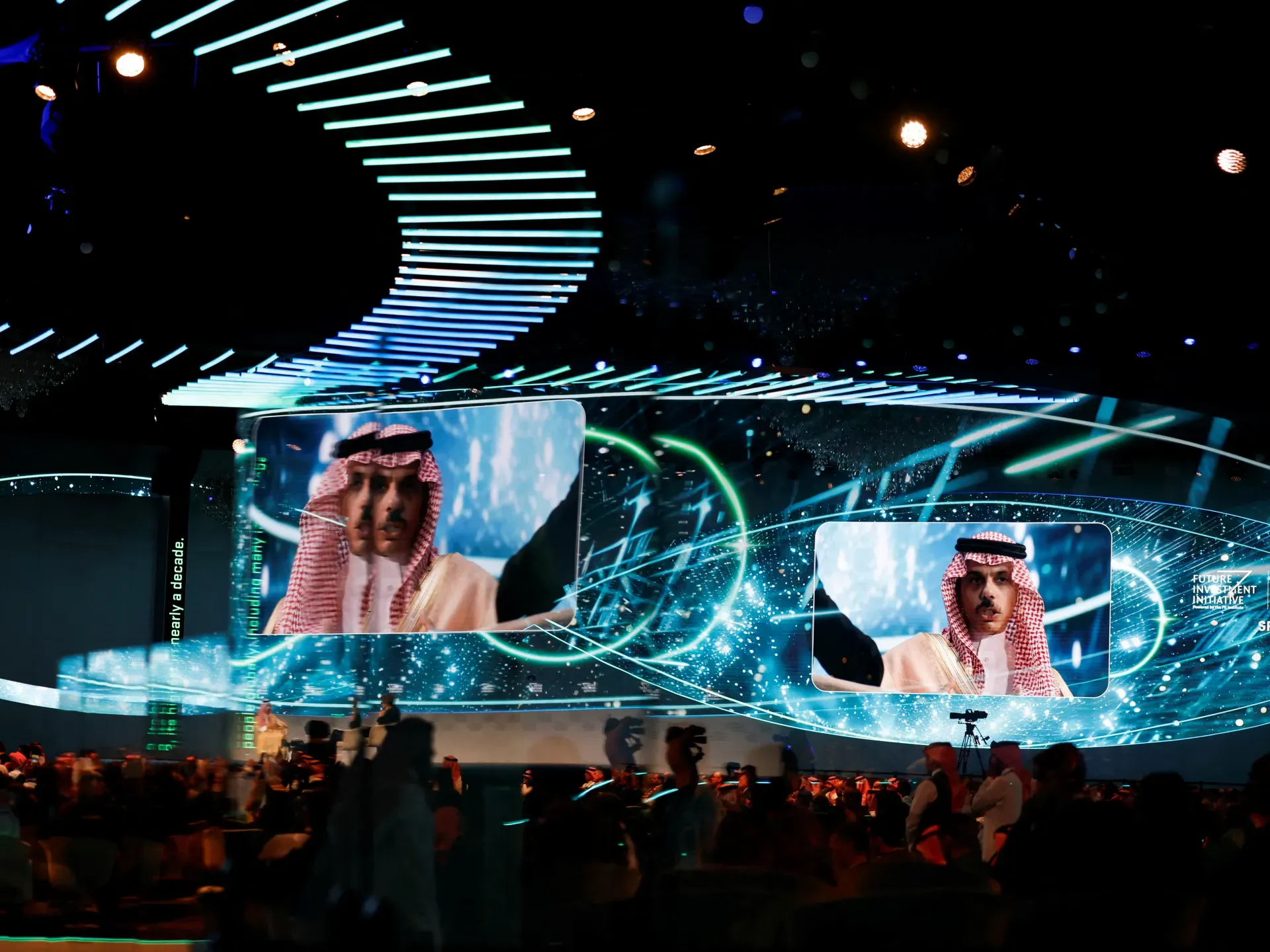
Future Investment Initiative postponement due to Houthi attacks
Saudi Arabia has officially announced a Future Investment Initiative postponement, moving the prestigious 'Davos in the Desert' conference from its scheduled 2026 date to 2027. This strategic delay comes as the kingdom faces heightened security concerns following a series of deadly Houthi strikes targeting Riyadh and critical national infrastructure. In response to the escalating regional instability, the government has issued urgent directives for many state employees to transition to remote work immediately to ensure public safety during this period of heightened tension.
October 27, 2026
6 min read
Source: ASHENVOW
Why was the 2026 FII conference postponed?
The Future Investment Initiative (FII) conference, a cornerstone of Saudi Arabia's economic outreach, was originally scheduled to take place from 26 to 29 October 2026. However, an official statement released on Tuesday, 20 October 2026, announced that the event has been postponed until next year. While the move shifts the event to 2027, the specific dates for the rescheduled gathering have not yet been finalized, though the FII Institute stated they would be announced "very soon."
Dr. Maha Bint Mishari Al Saud, the Chief Executive Officer of the FII Institute, framed the decision as a strategic choice rather than a mere cancellation. She noted that the postponement "comes from a deep commitment to our partners, members, speakers and delegates." Given that this upcoming event was intended to be the landmark tenth edition of the conference, the Institute emphasized a desire to maintain its prestige. According to Al Saud, the goal is to ensure the tenth edition delivers the "full scale, extraordinary quality, and unforgettable impact" that the global investment community has come to expect and deserves.
What security incidents prompted the decision?
The postponement follows a period of heightened volatility and escalating violence involving the Iran-backed Houthi forces, also known as Ansar Allah. In recent weeks, fighting between a Saudi-led coalition—which supports Yemen’s internationally recognised government—and the Houthis has intensified significantly. This escalation has moved beyond traditional battlefields in Yemen and has increasingly targeted the territory of the Kingdom of Saudi Arabia.
The Houthis have targeted a wide array of infrastructure, including military, energy, and civilian sites. One of the most significant recent incidents occurred on 8 October 2026, when the Houthis claimed responsibility for an attack on King Khalid International Airport in Riyadh. Social media footage captured smoke and flames rising from the airport following the strike. These ongoing attacks have had a heavy human toll; reports indicate that at least 18 people have been killed and hundreds more have been injured as a result of the Houthi strikes across the Kingdom.
Impact on daily operations in Riyadh
The security situation has moved beyond large-scale international events and is now actively dictating the daily rhythm of life in the Saudi capital. As Riyadh comes under repeated attack, government agencies have implemented emergency measures to protect personnel. According to reports from the AFP news agency, workers and consultants have confirmed that government agencies in Riyadh have instructed employees to work from home.
One specific instance of this directive was seen on a Sunday, when a government employee received a message stating: "It has been decided to implement remote work from Monday to Thursday this week." Despite the shift in location, the message encouraged staff to "continue their activities as normal." This move toward remote operations is not limited to the public sector; companies based in the King Abdullah Financial District—a major hub that hosts the offices of several prominent United States firms—have also requested that their employees work from home.
Furthermore, the Kingdom Centre, a prominent 99-storey tower in downtown Riyadh, has taken similar precautions. The tower houses the regional office of the International Monetary Fund (IMF), and management has requested that workers stay away from the building until further notice. This widespread shift to remote work underscores the immediate pressure the Houthi strikes are placing on the city's commercial and administrative functions.
What is the Future Investment Initiative?
Informally referred to as "Davos in the Desert," the Future Investment Initiative is a state-backed conference designed to serve as a global stage for Saudi Arabia’s economic ambitions. The name is a nod to the World Economic Forum's annual meeting in Switzerland, reflecting the scale and international significance the Kingdom aims to achieve. The conference is a vital component of the country's broader strategy to drive economic transformation.
The primary objective of the FII is to showcase and fund the Kingdom's ambitious plans to diversify its economy away from its traditional reliance on hydrocarbons. By attracting billions of dollars in foreign investment, Saudi Arabia seeks to build new sectors in tourism, sport, and technology. The conference acts as a bridge between the Kingdom's long-term economic goals and the global capital required to realize them, positioning Riyadh as a central node in the future global economy.
Which speakers were expected at the 2026 edition?
The 2026 edition was expected to be a high-profile gathering of the world's most influential financial and technological leaders. The FII website had listed several heavyweight participants who were slated to attend the event before the postponement was announced. These included Ruth Porat, the President and Chief Information Officer of Alphabet and Google, representing the technology sector's interests.
The financial sector was also heavily represented in the expected lineup, with David Solomon, the Chairman and CEO of Goldman Sachs Group, and Laurence Fink, the Chairman and CEO of BlackRock, both listed as expected speakers. The presence of such high-ranking executives highlights the conference's role as a critical meeting point for global decision-makers. With the event moved to 2027, the participation of these leaders will now depend on the security landscape and the rescheduled timeline.
How have Houthi attacks affected Saudi infrastructure?
The Houthi campaign has demonstrated a capacity to strike diverse and critical infrastructure, creating significant operational challenges for the Kingdom. By targeting military, energy, and civilian sites, the attacks strike at the heart of both national security and economic stability. The strike on King Khalid International Airport is a prime example of how transport hubs—essential for both civilian travel and international business—are being caught in the crossfire.
Beyond the immediate physical damage and the disruption of airport operations, the strikes have forced a defensive posture in the capital. The necessity for government agencies and major financial districts to implement remote work protocols is a direct consequence of the threat to civilian and commercial infrastructure. While the initial reports confirmed 18 deaths and hundreds of injuries, the ongoing nature of the conflict means the full impact on Saudi infrastructure and the long-term economic costs of these disruptions remain a developing story.
Frequently asked questions
When will the FII conference now take place?
The event has been moved from its original October 2026 dates to 2027. The FII Institute has stated that a specific date will be announced "very soon."
Are foreign executives still expected to attend?
While major figures from Alphabet, Google, Goldman Sachs, and BlackRock were expected for the 2026 edition, their attendance is now tied to the rescheduled 2027 event.
Is travel to Riyadh currently restricted?
There is no mention of a formal travel ban, but the city is experiencing significant operational changes. Government employees and workers in the King Abdullah Financial District and the Kingdom Centre have been directed to work remotely due to the ongoing Houthi attacks.
What is the stated reason for the postponement?
The FII Institute cited a commitment to its partners and the need to ensure that the landmark tenth edition delivers the high scale and quality that its community expects.
Have any other Saudi events been affected?
The current reports specifically focus on the postponement of the Future Investment Initiative and the remote-work mandates in Riyadh.
Key takeaways
The Future Investment Initiative 2026 has been postponed to 2027 due to ongoing Houthi attacks on Saudi Arabia.
At least 18 people have been killed and hundreds injured in recent strikes, including an attack on Riyadh's King Khalid International Airport.
Riyadh has seen a shift toward remote work, with government agencies and firms in the King Abdullah Financial District instructing staff to work from home.
The FII Institute emphasized that the postponement ensures the tenth edition will maintain its expected quality and impact.
High-profile speakers, including executives from Alphabet, Google, Goldman Sachs, and BlackRock, were originally scheduled for the 2026 event.
The conference remains a central pillar of Saudi Arabia's plan to diversify its economy into technology, tourism, and sport.
Conclusion
The postponement of the Future Investment Initiative reflects the direct and disruptive effect of renewed Houthi attacks on Saudi Arabia's strategic planning. The decision to shift this flagship economic event to 2027, combined with the implementation of remote work in Riyadh, demonstrates how security concerns are now actively shaping both daily administrative operations and the Kingdom's long-term economic initiatives. As the conflict between the Saudi-led coalition and the Houthis continues to escalate, the ability of the Kingdom to host such high-stakes international gatherings will depend heavily on the evolving security environment.



