How has the RTX 4090 maintained its relevance four years later?
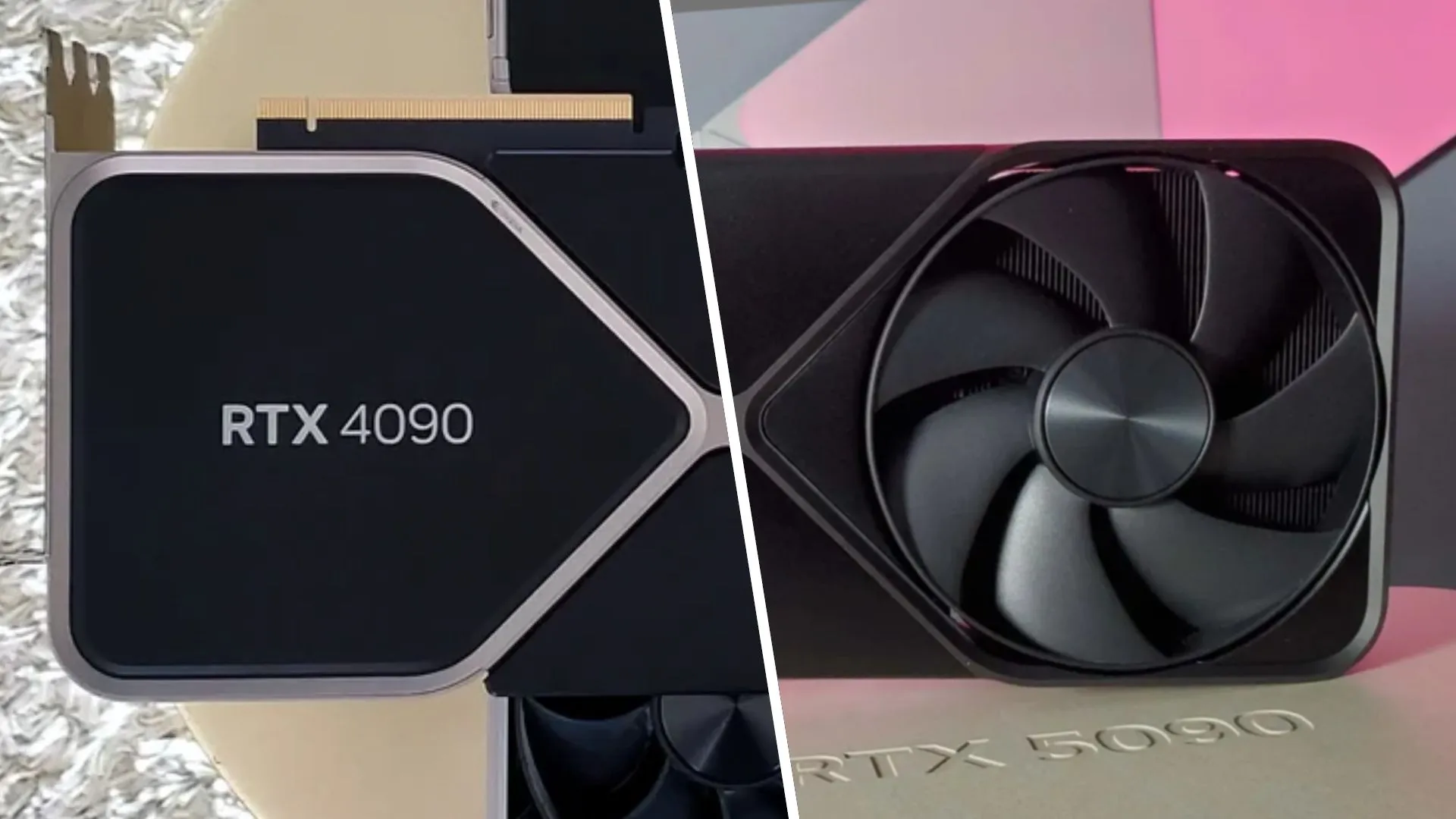
The RTX 4090 remains a formidable powerhouse in 2026 due to its immense technical specifications and the longevity provided by its architectural design. Even years after its initial release, the card's hardware profile continues to compete with modern standards. It features 24 GB of GDDR6X memory and a massive transistor count of 76.3 billion, providing a foundation for high-resolution gaming that few other cards can match.
Beyond raw memory and transistor density, the internal architecture of the 4090 offers significant compute capabilities. The card is equipped with 16,384 CUDA cores, which represented a 56% increase over the previous generation RTX 3090. Furthermore, the inclusion of 128 shader modules, 128 ray tracing cores, and 512 Tensor cores allows it to handle complex lighting and AI-driven tasks effectively. For many enthusiasts who invested in the card at its original $1,499 price point, the 'monstrous power' has translated into a long-term, high-performance experience.
The impact of early DLSS Frame Generation
A critical component of the 4090's longevity was its role as the debut platform for DLSS Frame Generation. In its early 2x implementation, this technology provided a vital boost to frame rates, allowing the card to stay ahead of demanding software updates. This combination of heavy-duty hardware and early-stage AI assistance created a product that, while expensive at launch, offered a level of 'futureproofing' that is increasingly rare in the current market.
Why is the current GPU market so much more expensive?
The economic landscape for graphics cards has shifted significantly since the RTX 4090 first hit shelves. While the 4090 was considered to have an 'eye-watering' MSRP of $1,499 in 2022, today's mid-to-high-tier cards often exceed that threshold. For instance, current listings for the RTX 5080, such as the Asus Prime variant, are priced around $1,640. This indicates that the 'second-from-top' tier of Nvidia's lineup is now more expensive than the flagship launch price of the previous generation.
This upward trend in pricing has created a widening gap between enthusiast hardware and consumer accessibility. The premium nature of the current generation is further evidenced by the RTX 5090, which launched with a $1,999 MSRP and quickly saw prices soar even higher in retail listings. The increasing cost of silicon and the shift in market focus toward high-margin enthusiast products have fundamentally altered what gamers can expect to pay for high-end performance.
What is happening with the RTX 5090 availability?
Rumors regarding the RTX 5090 suggest a significant shift in Nvidia's production priorities, potentially moving away from the consumer market. Current reports indicate that Nvidia may have halted the production of RTX 5090 chips for consumer use, opting instead to redirect the GB202 silicon toward data center and professional GPU applications. This shift has turned the RTX 5090 into a product of 'near-unobtanium' status for the average gamer.
The scarcity of the 5090 is reflected in the retail market, where available listings are often found through third-party sellers at 'ludicrous' price points. This lack of availability, combined with the high MSRP, makes the 5090 a controversial centerpiece of the current generation. While it offers considerable performance advantages over the 4090, the price-to-performance metric remains difficult for many consumers to justify, especially when compared to the established utility of the 40-series.
The debate over Multi Frame Generation
The introduction of Multi Frame Generation in the 50-series has also become a polarizing topic within the gaming community. While it significantly boosts the number of frames displayed on screen, it has reignited the debate regarding 'fake frames'—AI-generated frames that supplement the actual rendered output. This technological divide has split opinion among enthusiasts, with some embracing the efficiency and others questioning the authenticity of the performance gains.
Will neural rendering define the future of GPUs?
The trajectory of Nvidia's hardware development suggests a move toward neural rendering and AI-driven performance rather than purely raw hardware scaling. As the industry moves toward the potential RTX 60-series, the focus appears to be shifting toward increasing the density of Tensor cores to support more advanced iterations of DLSS, such as a projected DLSS 5. This strategy prioritizes software-assisted throughput over traditional brute-force graphical processing.
This evolution marks a departure from the era where GPUs were viewed primarily as 'raw graphics-crunching monsters.' The future of the enthusiast market likely lies in hardware specifically designed to facilitate complex AI algorithms. While this approach promises higher frame rates and improved visual fidelity through neural processes, it also moves the industry further away from the straightforward performance metrics that consumers have traditionally used to evaluate hardware value.
Frequently asked questions
What was the launch price of the RTX 4090?
The RTX 4090 launched with an MSRP of $1,499. While this was considered an expensive price point at the time of its release, it has proven to be a high-value investment for those seeking long-term performance and futureproofing through the 40-series architecture.
Is the RTX 5090 available for consumers?
The availability of the RTX 5090 is currently highly uncertain. Recent rumors suggest that Nvidia may be redirecting GB202 silicon to data centers and professional sectors, making consumer-grade 5090s extremely difficult to find outside of overpriced third-party listings.
How does the RTX 5080 compare in price to the 4090?
The RTX 5080 is generally more expensive than the original launch price of the RTX 4090. For example, certain RTX 5080 models are currently retailing for approximately $1,640, illustrating the significant increase in enthusiast-level GPU pricing over the last four years.
What is the difference between 2x and Multi Frame Generation?
2x Frame Generation was the early implementation found in the 40-series, providing a foundational boost to frame rates. Multi Frame Generation is the more advanced version found in the 50-series, offering higher frame counts but sparking more debate regarding the use of AI-generated 'fake frames.'
Why is the RTX 4090 considered a 'legendary' card?
The RTX 4090 is considered legendary because it combined massive raw compute power, such as 16,384 CUDA cores, with the transformative impact of DLSS Frame Generation. This combination allowed it to remain highly relevant and powerful even as newer, more expensive generations were released.
Key takeaways
- The RTX 4090 launched in October 2022 with a $1,499 MSRP.
- Current RTX 5080 models can cost upwards of $1,640, exceeding the 4090's launch price.
- Rumors suggest the RTX 5090 may be redirected toward data center and professional use.
- Nvidia's future strategy appears focused on neural rendering and increased Tensor core density.
The shifting paradigm of GPU value
Reflecting on the four-year journey of the RTX 4090 reveals a profound shift in the graphics card industry. What began as a high-priced but highly capable consumer flagship has become a benchmark for a bygone era of more predictable hardware value. As Nvidia pivots toward a future defined by neural rendering and professional-grade silicon redirection, the era of the 'straightforward' enthusiast GPU seems to be fading. For those who secured a 4090, the investment has paid off, but for the broader market, the path forward looks increasingly expensive and complex.