
Rising Antisemitism in Europe: Lessons from Auschwitz
Holocaust survivor Regina Sluszny commemorates the victims of Auschwitz as Jewish communities across Europe face growing hostility. What does the promise of "Never Again" mean for Jewish life in Europe today? Following the October 7 attacks, monitoring groups have documented a sharp spike in hate speech and physical threats. This atmosphere of fear is reshaping how families practice their faith and navigate public spaces. As antisemitic incidents rise, the historical memory of the Shoah serves as a vital, yet increasingly strained, shield against modern intolerance.
November 16, 2026
4 min read
Source: ASHENVOW
Holocaust survivor Regina Sluszny commemorates the victims of Auschwitz as Jewish communities across Europe face growing hostility. What does the promise of "Never Again" mean for Jewish life in Europe today? Following the October 7 attacks, monitoring groups have documented a sharp spike in hate speech and physical threats. This atmosphere of fear is reshaping how families practice their faith and navigate public spaces. As antisemitic incidents rise, the historical memory of the Shoah serves as a vital, yet increasingly strained, shield against modern intolerance.
Statistical trends of antisemitic incidents across Europe
The frequency of antisemitic crimes has seen a marked upward trajectory in major European nations over the last three years. Monitoring organizations and local authorities have noted that the escalation often correlates with geopolitical tensions, particularly following the events of October 7, 2023. The statistical landscape reveals a widening gap between historical norms and current realities in several key countries.
| Country | 2022 Incidents | 2024 Incidents | 2025 Incidents |
|---|---|---|---|
| Germany | 2,641 | 6,236 | 6,548 |
| France | ~440 | Not specified | 1,320 |
In Germany, the rise is particularly pronounced. According to police and monitoring data, the number of recorded antisemitic crimes jumped from 2,641 in 2022 to 6,236 in 2024, eventually reaching 6,548 in 2025. In France, although the 1,320 incidents recorded in 2025 represented a decrease from the previous year, they still stand at approximately three times the volume seen in 2022.
Regional variations and the impact of October 7
Authorities across the continent have reported that the October 7, 2023, attacks in Israel served as a major catalyst for the current surge. This period has seen a shift in how antisemitism manifests, moving from isolated incidents to a broader atmosphere of hostility that affects the daily lives of Jewish populations in Western and Central Europe.
The Hamas-led attack on October 7, which resulted in the deaths of around 1,200 people in Israel and the abduction of over 250 hostages to the Gaza Strip, has fundamentally altered the social climate. Since the start of the subsequent military offensive in the Gaza Strip—where conservative estimates suggest more than 75,000 Palestinians have been killed—Jewish communities have reported a significant increase in incidents. This geopolitical conflict has directly translated into local hostility toward Jewish citizens across the European continent.
The psychological and physical impact on Jewish communities
Jewish residents in several European countries report a fundamental shift in their sense of safety and belonging. For many, the fear of hostility has transitioned from an abstract concern to a constant requirement for physical security. This shift is often characterized by the necessity of living behind high walls and under continuous security measures.
Ellen van Praagh, chair of the Interprovincial Rabbinate in the Netherlands, describes a dramatic change in the Dutch atmosphere since the October 7 attacks. Having lost a family member in the Hamas-led attack, van Praagh notes that Jewish people are increasingly being held responsible for the actions of the Israeli state. "My family has lived in the Netherlands since the 16th century. And now I'm being told to leave," she says, adding that she no longer feels safe there as a Jew.
The physical reality for many is a life of restriction. Van Praagh explains that constant security measures now restrict daily life, a situation she finds undesirable. "That is not what we want. We want to live in freedom," she states, expressing a growing loss of faith in politicians to address these fundamental concerns.
The erosion of social integration and political responsibility
The feeling of being held accountable for distant geopolitical conflicts is leading to a profound sense of alienation. Rabbi Menachem Margolin, chairman of the European Jewish Association (EJA), has called on European political leaders to take greater responsibility for the safety of their Jewish citizens. While expressing gratitude for existing support, he notes that the practical enforcement of protective laws is often lacking.
Margolin points to a trend where officials may hesitate to explicitly name antisemitism when doing so becomes politically inconvenient. He warns that the process of marginalization often begins subtly: "But Auschwitz did not begin with gas chambers. It began with words," he cautioned. This sentiment echoes the fears of many attendees at the EJA symposium in Krakow, who argue that the phrase "Never Again" is becoming an empty slogan with little relevance to the lived experience of modern European Jews.
Commemorating the past to secure the future
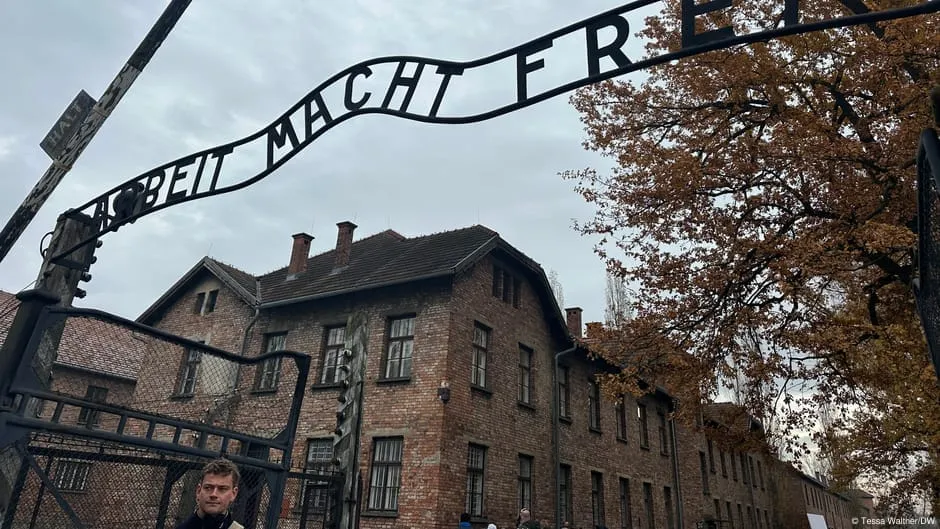
The European Jewish Association recently organized a delegation to Krakow and Auschwitz on November 9 and 10, deliberately coinciding with the anniversary of the November Pogroms of 1938. This watershed moment in history saw Nazis set synagogues on fire, ransack Jewish businesses, and murder Jews, leading to the deportation of approximately 30,000 Jewish men to concentration camps.
For survivors like 87-year-old Regina Sluszny, these commemorations are a heavy emotional burden. Visiting the former Auschwitz concentration camp, she recalls the loss of her husband's family, noting that seven of his loved ones were sent straight to the gas chambers. As survivors become increasingly rare, there is a growing fear among the community that the horrors of the Shoah are fading from Europe's collective memory.
The symposium also highlighted international ties, honoring Reza Pahlavi, the exiled son of Iran's last shah, for his efforts to combat antisemitism. Pahlavi noted the historic ties between Persian and Jewish peoples, calling for democratic nations to unite against ideological extremism. However, for the participants, the immediate priority remains the rising tide of local hostility and the preservation of Jewish life in a changing Europe.



