
Republican party shifts: Trump's policy pivots for 2026
Republican party shifts are becoming increasingly evident as Donald Trump moves away from the core MAGA principles that defined his earlier campaigns. While the 'America First' movement was built on anti-interventionism and anti-elitism, recent actions regarding the Epstein files and the conflict with Iran suggest a significant ideological pivot. According to strategist Rina Shah, these shifts are already influencing midterm election dynamics, forcing some candidates to distance themselves from the administration. This article examines the tension between the current administration and its traditional base over three critical policy areas.
October 27, 2026
6 min read
Source: ASHENVOW
Why are Republican lawmakers breaking with Trump over the Epstein files?
The tension within the Republican party stems from a perceived betrayal regarding the promised transparency of the Jeffrey Epstein investigation. During his 2024 campaign, Donald Trump pledged to declassify FBI files concerning Epstein's global network, a stance supported by key figures like current FBI head Kash Patel. However, since taking office, the administration has transitioned from a promise of total transparency to labeling the investigation a 'hoax,' leading to a significant rift with the MAGA base.
While Congress eventually mandated the release of certain documents, the administration has released only heavily redacted batches and continues to withhold specific information. This has resulted in a political crackdown on Republican members who supported the Epstein Files Transparency Act. The cost of insubordination has been high for several high-profile figures:
- Marjorie Taylor Greene: The Georgia Representative left her seat in January 2026 following public clashes with Trump over the files.
- Nancy Mace: The South Carolina Republican lost her party's nomination after failing to secure Trump's endorsement.
- Lauren Boebert: The Colorado lawmaker barely survived her primary after supporting transparency efforts led by Thomas Massie.
- Thomas Massie: The Kentucky Representative faced significant backlash from the President, impacting his primary prospects.
How is the conflict with Iran reshaping the MAGA platform?
The shift toward active military engagement in the US-Israel war against Iran represents a major departure from the non-interventionist 'America First' doctrine. Many influential MAGA voices, including commentator Tucker Carlson, have criticized the conflict, arguing that the war serves interests other than those of the United States. This ideological pivot has created a narrative among disgruntled supporters that the administration is using foreign conflict as a distraction from domestic controversies, such as the Epstein files.
Former Congressman Thomas Massie highlighted this sentiment, noting that international military action does not resolve the transparency issues surrounding the Epstein investigation. Despite this internal criticism, the political repercussions for those who oppose the war are severe. President Trump has actively targeted Republican lawmakers who attempt to curtail military spending or pass anti-war resolutions.
The political cost of anti-war stances
In the legislative arena, support for anti-war measures has become a litmus test for loyalty to the President. In September, only seven Republican House members joined Democrats in passing an anti-war bill, and similar support in the Senate remains minimal. Trump has publicly labeled these dissenters as 'unpatriotic.' A notable example of this political retribution occurred in Louisiana, where Senator Bill Cassidy lost his primary after voting in favor of an anti-war bill, following Trump's decision to back a rival candidate against him.
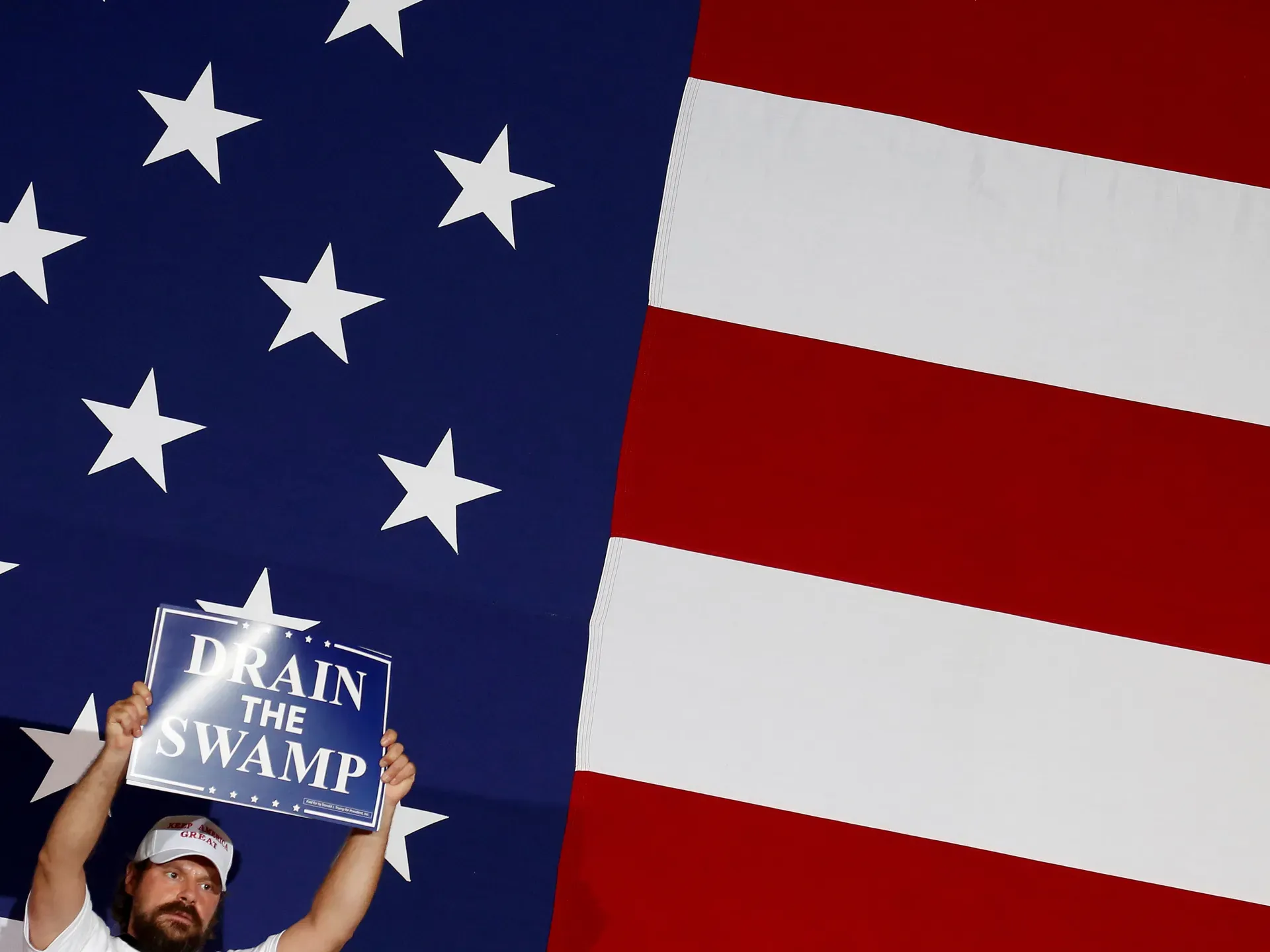
What has happened to the promise to 'drain the swamp'?
The administration's approach to 'draining the swamp' has been characterized by a massive restructuring of the federal bureaucracy, yet critics argue it has merely replaced one elite with another. On one hand, the Department of Government Efficiency (DOGE) has successfully dismantled significant portions of the federal government, including the US Agency for International Development (USAID), and removed tens of thousands of workers. The administration has also aggressively targeted diversity-focused institutional norms in universities and the Smithsonian Institution.
On the other hand, the definition of the 'swamp' appears to have shifted. While the administration has targeted the traditional 'deep state,' it has simultaneously empowered a new circle of influence composed of the ultra-wealthy. Strategist Rina Shah notes that while traditional institutions were dismantled, ethics rules and regulatory watchdogs have been weakened, potentially giving lobbying groups—including those representing foreign interests—unprecedented access to the executive branch.
The rise of the donor class in the administration
The inauguration of Donald Trump was marked by the presence of many of the world's wealthiest individuals, some of whom have transitioned into roles within the administration. This proximity to extreme wealth has led to accusations that the administration is more focused on the interests of billionaire donors than on the populist goals of the MAGA movement. This perceived shift toward the global elite contradicts the 'outsider' persona that originally propelled Trump to power.
How are these shifts impacting the upcoming midterm elections?
The ideological volatility within the Republican party is creating a complex environment for candidates running in the upcoming November midterm elections. As the administration's actions on Iran and the Epstein files become central themes in political attack ads, many Republicans are finding it difficult to maintain the support of both the party leadership and the MAGA base. According to Rina Shah, this has led to a strategy of 'quiet distancing' among candidates in competitive districts.
Instead of defending controversial administration policies, many GOP candidates are pivoting their messaging toward localized issues. By focusing on gas prices, local economic concerns, or strictly district-level matters, they hope to avoid the political fallout of the national debates surrounding the President's policy reversals. This tactical retreat suggests a party that is internally divided on what its core identity should be in the post-2024 era.
FAQ: Republican Party Shifts
Why is the MAGA movement angry with Donald Trump?
The MAGA movement is frustrated because many of the President's core campaign promises appear to have been abandoned. Specifically, supporters are concerned about his reluctance to release the Epstein files and his move toward military intervention in Iran, which contradicts his 'America First' non-interventionist stance.
Which Republicans lost their positions due to Epstein file disputes?
Several Republicans have faced political consequences for supporting transparency. Marjorie Taylor Greene lost her Georgia seat after clashing with Trump, while Nancy Mace lost her primary bid. Additionally, Thomas Massie and Lauren Boebert faced significant political pressure and primary challenges for their support of the transparency movement.
How has the 'Drain the Swamp' policy been implemented?
The administration implemented this through the Department of Government Efficiency (DOGE), which dismantled institutions like USAID and removed tens of thousands of federal employees. However, critics argue that the weakening of ethics watchdogs has allowed wealthy lobbyists to gain more influence over the government.
What is the Republican stance on the war with Iran?
The official party line, driven by President Trump, supports continued engagement and military action. However, a vocal segment of the MAGA base and some Republican lawmakers view the conflict as a distraction and an unnecessary foreign entanglement that violates the 'America First' principle.
How are candidates handling these shifts in the midterms?
In competitive election cycles, many Republican candidates are distancing themselves from the administration's controversial national issues. They are focusing their campaigns on local concerns, such as gas prices and district-specific problems, to avoid being targeted by the political fallout of the Iran war or the Epstein investigation.
Key takeaways
- Trump's pivot toward the Iran war contradicts his original 'America First' non-interventionist campaign promises.
- The refusal to fully release the Epstein files has caused significant fractures within the MAGA movement.
- Republican lawmakers who support transparency or anti-war measures face severe political retaliation from the administration.
- The 'Drain the Swamp' initiative has replaced some federal workers but has also increased the influence of wealthy donors.
- Midterm candidates are increasingly using 'local issue' messaging to distance themselves from national GOP volatility.
Synthesis of Republican Ideological Tension
The Republican Party currently finds itself in a state of profound ideological flux. The tension between the populist, anti-establishment roots of the MAGA movement and the current administration's actions—ranging from military intervention to increased proximity to the ultra-wealthy—has created a significant political rift. As the midterm elections approach, the party must navigate a landscape where traditional supporters feel betrayed by policy reversals, while the leadership maintains a strict disciplinary line against dissenters. This struggle over the party's true direction remains the defining challenge for Republican candidates in 2026.



