
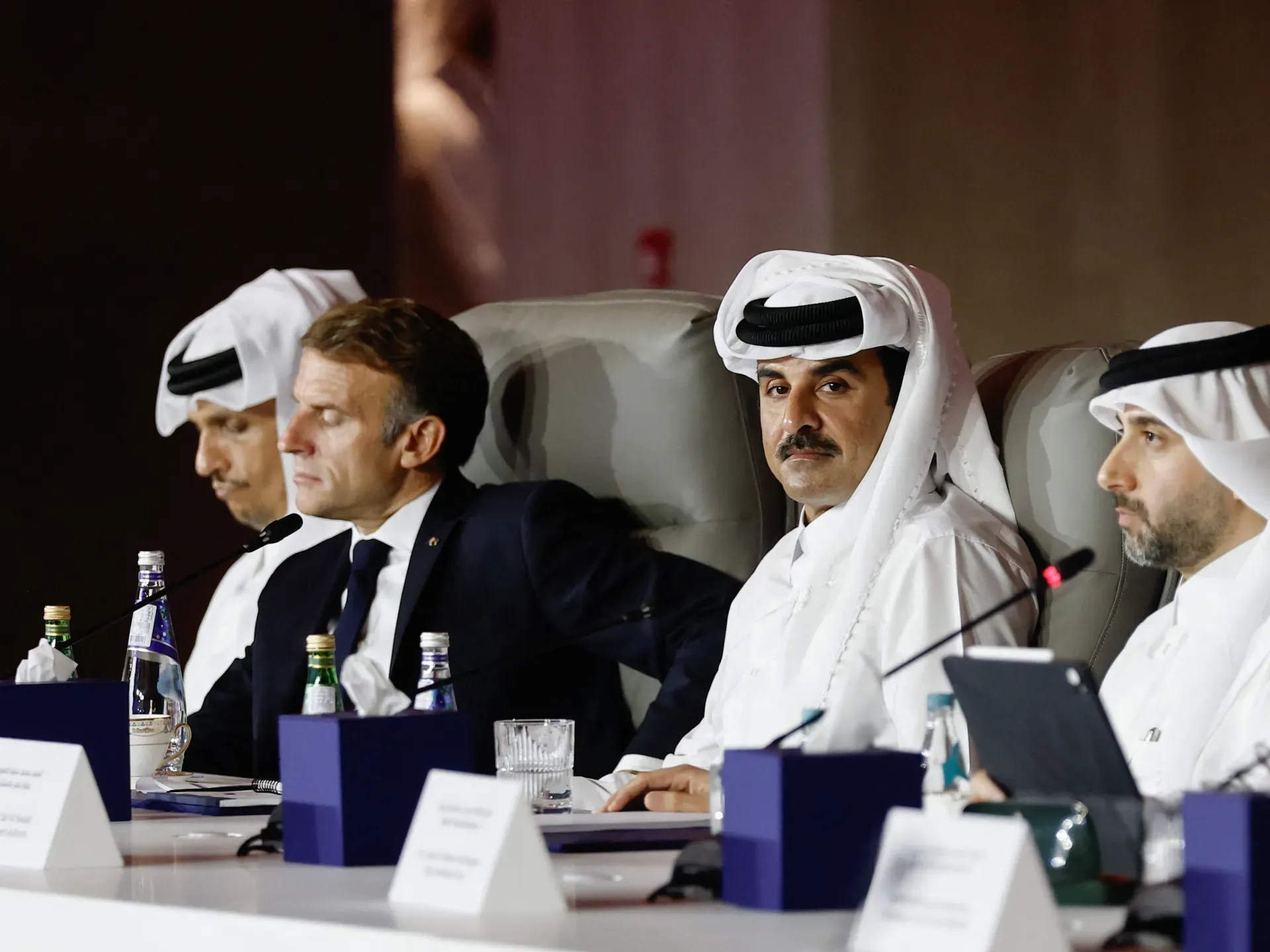
Qatar and France diplomatic meeting: Focus on Hormuz and Gaza
The Qatar and France diplomatic meeting in Doha on October 21, 2026, resulted in a joint call for freedom of navigation in the Strait of Hormuz and the immediate implementation of a ceasefire in Gaza. Following discussions between Emir Sheikh Tamim bin Hamad Al Thani and President Emmanuel Macron, the two nations demanded an end to Iranian military attacks in the region and the unhindered delivery of humanitarian aid. This meeting occurred amidst a broader regional tour by President Macron to strengthen strategic partnerships. This article examines the outcomes regarding maritime security, the humanitarian crisis in Gaza, and stability in Lebanon and Syria.
October 27, 2026
5 min read
Source: ASHENVOW
What were the key outcomes of the Qatar and France diplomatic meeting?
The primary focus of the high-level discussions between Emir Sheikh Tamim bin Hamad Al Thani and President Emmanuel Macron was the restoration of regional stability through maritime security and conflict resolution. A central pillar of the joint statement released on Wednesday was the demand for freedom of navigation in the Strait of Hormuz, specifically calling for passage "without constraints or fees." This follows growing concerns regarding regional tensions that threaten global trade routes.
The leaders also addressed the ongoing humanitarian crisis in Gaza, advocating for a ceasefire and the withdrawal of Israeli forces based on established "agreed arrangements." Beyond these immediate conflicts, the meeting served as a platform to expand bilateral cooperation in defense, security, and economic sectors. This strategic alignment aims to position Qatar and France as key mediators and partners in a volatile geopolitical landscape.
Strengthening bilateral strategic partnerships
The meeting was not limited to crisis management but also focused on long-term structural cooperation. Both nations agreed to expand their existing frameworks for defense and economic engagement. This expansion is intended to create a more resilient partnership that can withstand the shifting political currents of the Middle East. By aligning their security interests, Qatar and France aim to bolster their influence in regional stability efforts.
How does the situation in the Strait of Hormuz affect maritime security?
The Strait of Hormuz remains a critical maritime chokepoint, and the call for freedom of navigation "without constraints or fees" highlights the vulnerability of international shipping to regional military actions. The joint statement from Doha explicitly condemned Iranian military attacks against regional countries, labeling them a "serious breach of international law." This diplomatic stance underscores the international community's concern over potential disruptions to global energy and goods transport.
Diplomatic efforts to de-escalate these tensions are currently active. According to Qatari mediator Ibrahim bin Sultan Al Hashmi, ongoing diplomatic channels are working to reopen the Strait and reduce regional friction. This is complemented by statements from Iranian officials; Foreign Minister Abbas Araghchi stated on Wednesday that "Iran is prepared to give diplomacy another chance." However, the requirement for unhindered navigation remains a non-negotiable point for the Qatari and French leadership.
What is the status of the Gaza ceasefire and humanitarian aid?
The implementation of a ceasefire in Gaza and the unhindered delivery of humanitarian aid were prioritized during the meeting. Qatar and France called for the urgent, safe, and unhindered distribution of aid "without conditions or restrictions." This demand is driven by the catastrophic humanitarian situation currently unfolding in the territory.
The scale of the crisis is underscored by data from the United Nations World Food Programme (WFP). According to the WFP, as of October 2026, approximately 1.4 million people in Gaza—roughly two-thirds of the total population—are facing acute food insecurity at crisis levels or worse. The two leaders emphasized that any resolution must include the withdrawal of Israeli forces in accordance with previously agreed arrangements to ensure long-term stability.
Opposition to West Bank annexation
In addition to the Gaza crisis, the joint statement expressed strong opposition to any potential annexation of the West Bank. The leaders called for an immediate end to Israeli settlement policies and a halt to settler violence. This stance reflects a broader diplomatic effort to prevent further territorial fragmentation in the region, which they view as a barrier to lasting peace.
What are the diplomatic priorities for Lebanon and Syria?
Stability in the Levant was a significant component of the bilateral talks, with specific focus on Lebanon and Syria. Regarding Lebanon, Qatar and France expressed their support for the full implementation of the Trilateral Framework Agreement. This agreement is designed to restore Lebanese sovereignty through three main objectives: the disarmament of Hezbollah, the securing of a complete Israeli withdrawal, and the strengthening of state institutions.
The leaders also issued a warning regarding the potential for a security vacuum. This concern follows the end of the UN peacekeeping mission’s mandate. To prevent instability, they called for continued international support for both the Lebanese authorities and the national armed forces. This proactive approach aims to ensure that the state can maintain order and prevent non-state actors from filling the void.
In Syria, the dialogue shifted toward long-term recovery and stabilization. Both Qatar and France indicated their readiness to jointly support economic recovery and stabilization projects. Crucially, they noted that such efforts would be conducted in coordination with the Syrian authorities. This signifies a willingness to engage in reconstruction efforts that could potentially alleviate the long-standing humanitarian and economic struggles within the country.
Frequently asked questions
What is the main goal of the Qatar and France meeting?
The meeting aimed to coordinate diplomatic responses to regional instability, specifically focusing on securing the Strait of Hormuz, implementing a Gaza ceasefire, and supporting sovereignty in Lebanon. It also sought to expand bilateral cooperation in defense, security, and economic sectors between the two nations.
Why is the Strait of Hormuz a point of concern?
The Strait of Hormuz is a vital maritime passage for global trade and energy. The leaders expressed concern over potential "constraints or fees" and military attacks that breach international law, which could disrupt the freedom of navigation essential for global economic stability.
How severe is the food crisis in Gaza?
The humanitarian situation is critical. According to the UN World Food Programme, about 1.4 million people in Gaza, representing two-thirds of the population, are experiencing acute food insecurity at crisis levels or worse, necessitating unhindered aid delivery.
What is the position of Qatar and France on Lebanon?
They support the Trilateral Framework Agreement to restore Lebanese sovereignty. This includes disarming Hezbollah, ensuring Israeli withdrawal, and preventing a security vacuum by supporting Lebanese authorities and the military following the end of the UN peacekeeping mandate.
What did the leaders say about the West Bank?
The two leaders reiterated their opposition to any annexation of the West Bank. They specifically called for an end to Israeli settlement policies and a cessation of violence involving settlers in the territory.
Key takeaways
- Qatar and France demand freedom of navigation in the Strait of Hormuz without fees or constraints.
- The WFP reports 1.4 million people in Gaza face acute food insecurity at crisis levels.
- Both nations called for the withdrawal of Israeli forces from Gaza per agreed arrangements.
- Diplomatic support was pledged for Lebanese sovereignty and Syrian economic recovery projects.
- Bilateral cooperation will expand into the defense, security, and economic sectors.
The future of regional diplomacy
The meeting in Doha underscores a concerted effort by Qatar and France to act as stabilizing forces in a highly volatile Middle East. By addressing maritime security, the humanitarian catastrophe in Gaza, and the sovereignty of Lebanon, the two nations are attempting to create a multi-layered diplomatic approach. While the willingness of regional actors like Iran to engage in diplomacy offers a potential opening, the success of these efforts depends on the actual implementation of ceasefire agreements and the protection of international maritime laws. The expansion of bilateral defense and economic ties suggests that this partnership is intended to be a long-term pillar of regional engagement.



