
Protests in Germany and France: Halloween weekend unrest 2026
Protests in Germany and France are expected to escalate over the Halloween weekend as youth-led demonstrations respond to economic instability. In Germany, approximately 150,000 people have registered to protest across 30 cities, including Berlin and Frankfurt. Meanwhile, France is preparing for a "very high risk" of disorder, deploying 70,000 police officers to manage potential violence. These movements are driven by rising costs of living and perceived political neglect of younger generations. This article examines the scale of the demonstrations, the specific grievances of the protesters, and the security measures taken by European authorities.
November 8, 2026
5 min read
Source: ASHENVOW
Protests in Germany and France are expected to escalate over the Halloween weekend as youth-led demonstrations respond to economic instability. In Germany, approximately 150,000 people have registered to protest across 30 cities, including Berlin and Frankfurt. Meanwhile, France is preparing for a "very high risk" of disorder, deploying 70,000 police officers to manage potential violence. These movements are driven by rising costs of living and perceived political neglect of younger generations. This article examines the scale of the demonstrations, the specific grievances of the protesters, and the security measures taken by European authorities.
Why are protests in Germany and France occurring simultaneously?
The simultaneous unrest in Germany and France is driven by a broader wave of youth-led dissatisfaction sweeping across the European continent. Demonstrators in both nations are primarily targeting the rising cost of living and a perceived lack of future prospects. This sentiment is not isolated to a single country but reflects a wider trend of social friction regarding economic stability and educational standards.
In Germany, the movement is being spearheaded by a group known as "GenZ regelt!" (Gen Z has got this!). Their platform focuses on several core issues: the escalating cost of daily life, the deterioration of school infrastructure, and significant government spending cuts. Furthermore, there is a growing sense of disenfranchisement among young citizens who feel that political decision-making frequently ignores the long-term interests of the younger generation.
France is experiencing a similar pattern of unrest. The country has faced three consecutive weekends of protests that have recently descended into looting and riots. The French demonstrations mirror the German grievances, specifically focusing on the cost of living and the declining conditions within the national school system. This shared economic anxiety has created a synchronized period of instability across two of Europe's largest economies.
What is the scale of the planned demonstrations in Germany?
Approximately 150,000 individuals have registered to participate in protests across roughly 30 German cities. The scale of the mobilization is significant, with major urban centers such as Berlin, Frankfurt, and Cologne serving as primary hubs for the demonstrations scheduled for Saturday.
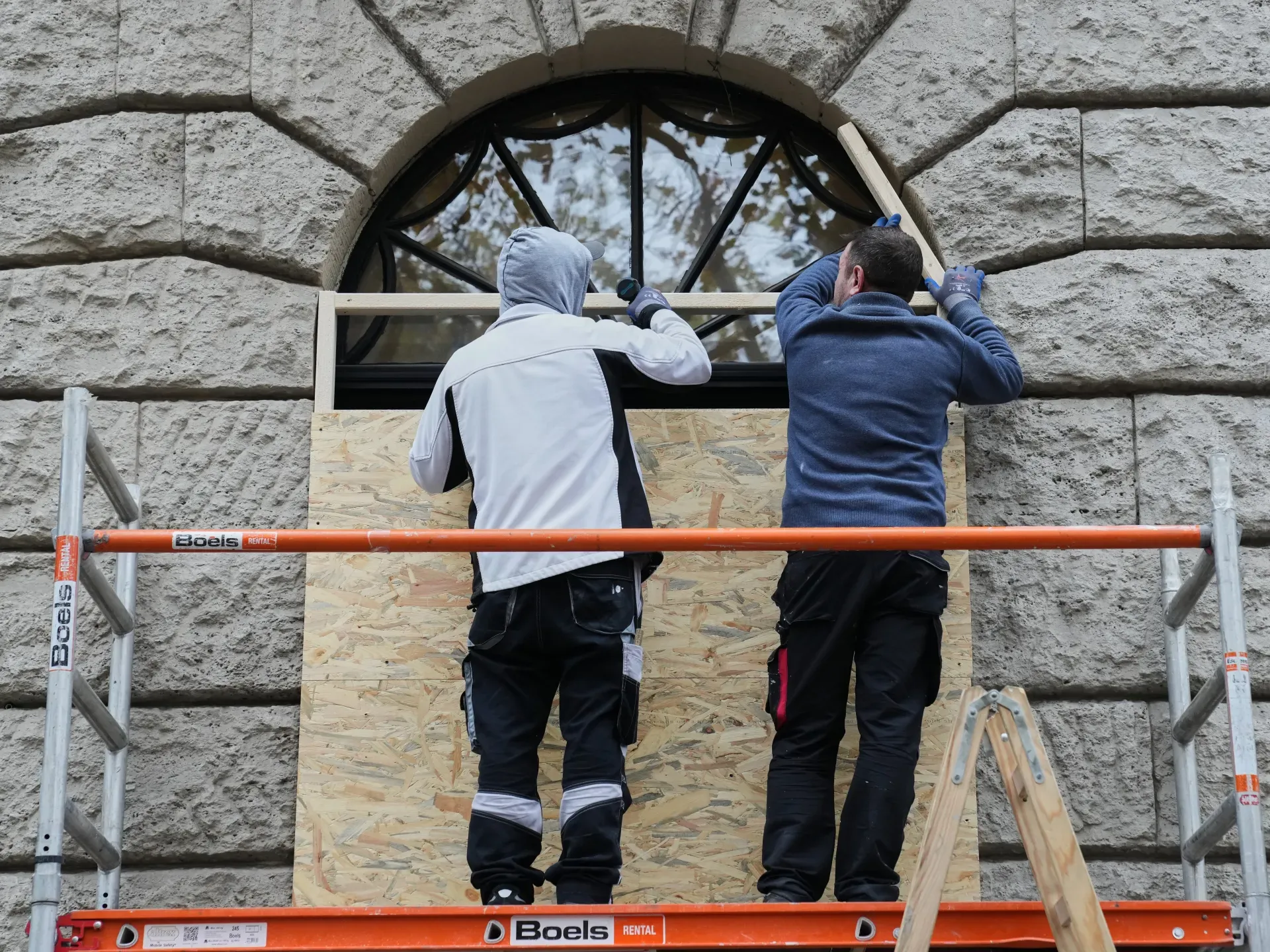
The organized nature of these protests has led to preemptive security measures by local businesses. In Berlin, workers have been observed installing wooden boards over the windows of luxury boutiques to safeguard against potential looting or property damage. This defensive posture by the retail sector highlights the heightened tension and the potential for the demonstrations to shift from peaceful assembly to civil disorder.
German urban centers at risk
The concentration of protesters in major economic hubs like Frankfurt and Cologne suggests that the impact of the demonstrations could disrupt significant commercial and transport networks. The involvement of the "GenZ regelt!" group indicates a highly organized, digitally native movement capable of rapid mobilization.
How is France responding to the "very high risk" of disorder?
French authorities are bracing for significant volatility, with the Interior Minister warning of a "very high risk" of disorder during the Halloween weekend. To mitigate this, the government is deploying a massive security presence, including 70,000 police officers nationwide.
The response in France is particularly intensive due to the recent history of violence. Two weeks prior to this weekend, widespread unrest in various French cities and towns escalated into large-scale looting and riots, fueled by anger over economic conditions and school environments. Since then, the state has attempted to clamp down on violent elements, but clashes between police and demonstrators have remained intermittent.
To manage the specific risks associated with the Halloween period, authorities have implemented several restrictive measures:
- Metro Closures: More than 40 metro stations in Paris are scheduled to close to prevent congestion and facilitate police movement.
- Mask Bans: Authorities have explicitly stated that face-covering masks will not be permitted during the demonstrations.
- Commercial Protection: Similar to Germany, businesses in Paris and other major cities have begun boarding up windows to protect against property damage.
The Interior Minister noted that the Halloween holiday complicates security efforts, as the tradition of wearing masks provides a potential cover for individuals intending to engage in criminal activity or avoid identification during unrest.
What are the core grievances driving European youth protests?
The primary drivers of these protests are economic insecurity and the perceived failure of state institutions to provide for the future of the younger population. While the specific political contexts in Germany and France differ, the underlying socio-economic frustrations are remarkably consistent.
Key grievances identified by protesters include:
- Inflation and Cost of Living: The rising prices of essential goods and services are making it increasingly difficult for young people to achieve financial independence.
- Educational Decline: Both German and French protesters have highlighted poorly maintained schools and declining educational facilities as a major concern.
- Fiscal Policy: In Germany, government spending cuts have become a central point of contention for the "GenZ regelt!" movement.
- Political Disenfranchisement: There is a widespread belief among the youth that current political structures are unresponsive to the needs of the next generation, focusing instead on short-term interests.
This combination of economic pressure and institutional distrust has created a volatile environment where traditional methods of political engagement are being replaced by mass street demonstrations.
Frequently asked questions
How many people are expected to protest in Germany?
Approximately 150,000 people have registered for the protests in Germany. These demonstrations are expected to take place across about 30 different cities, with major activity anticipated in Berlin, Frankfurt, and Cologne on Saturday.
What security measures are being taken in France?
France is deploying 70,000 police officers nationwide to manage the risk of disorder. Additionally, over 40 metro stations in Paris will be closed, and authorities have banned the use of face-covering masks during the demonstrations.
Who is leading the protests in Germany?
The German protests are being led by a group called "GenZ regelt!", which translates to "Gen Z has got this!". The group focuses on issues relevant to the younger generation, such as education and economic prospects.
Why is Halloween a concern for French authorities?
French authorities are concerned that Halloween festivities may facilitate unrest because the holiday involves people wearing masks. This could allow individuals to engage in violence or looting while concealing their identities from the police.
What are the main reasons for the unrest in both countries?
The protests are primarily driven by the rising cost of living, declining educational standards, and a general sense among young people that they lack viable future prospects due to current government policies and economic trends.
Key takeaways
- 150,000 protesters are registered for demonstrations across 30 German cities.
- France is deploying 70,000 police officers to manage a "very high risk" of disorder.
- The "GenZ regelt!" movement in Germany is protesting spending cuts and school conditions.
- French authorities have banned face masks during protests to prevent unidentified disorder.
- Rising costs of living and educational decline are the primary drivers of European unrest.
The intersection of economic anxiety and social unrest
The current wave of protests in Germany and France represents more than just localized civil disobedience; it is a symptom of a deeper structural tension within European society. As the cost of living continues to rise and educational infrastructure struggles to keep pace, the younger generation is increasingly turning to the streets to demand accountability. The preemptive security measures—from the deployment of 70,000 officers in France to the boarding up of luxury shops in Berlin—underscore the very real threat of widespread instability. Whether these demonstrations lead to policy shifts or further cycles of violence remains to be seen, but the underlying grievances of economic and social disenfranchisement are clearly intensifying.



