
Portugal cost-of-living protests: Why camps are returning
Portugal cost-of-living protests have intensified as thousands of demonstrators returned to central squares in Lisbon and Porto following police evictions. On October 21, 2026, activists attempted to rebuild camps in Rossio Square and Dom Joao I Square after 55 people were arrested during coordinated police operations. The unrest stems from a severe housing affordability crisis where purchase prices have more than doubled since 2017. This article examines the legislative triggers for the demonstrations, the scale of the urban housing shortage, and the broader European context of economic discontent.
October 27, 2026
5 min read
Source: ASHENVOW
Why are protesters returning to the cleared camps in Lisbon and Porto?
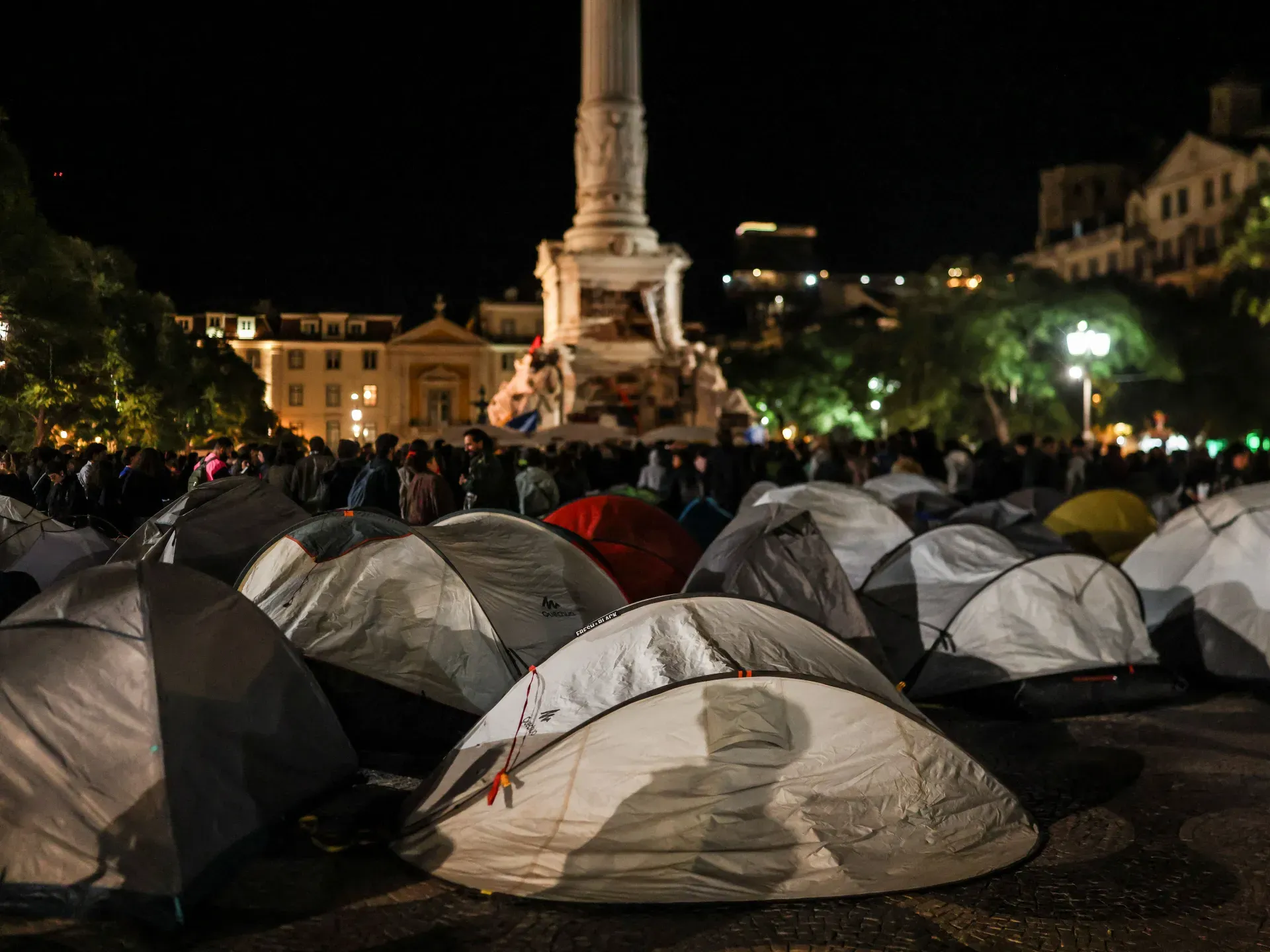
Demonstrators are re-occupying urban spaces to protest a legislative shift that threatens tenant protections and housing stability. Following police operations that cleared sites in both the capital and the northern city, organizers reported that more than 1,000 people gathered at each major protest site on Tuesday.
In Lisbon, activists have focused their efforts on rebuilding the sit-in camp at Rossio Square, which had been occupied by approximately 200 tents since the previous Saturday. In Porto, protesters returned to Dom Joao I Square, a site that had seen continuous occupation for roughly 10 days prior to the police intervention. The return to these locations serves as a direct challenge to the government's decision to dismantle the camps.
The nature of the police intervention
The recent police actions, which took place shortly before 6:00 AM, were characterized by differing accounts from officials and activists. In Porto, demonstrators reportedly complied with orders to dismantle their own tents. However, the situation in Lisbon was described by Carla Valadao, a spokesperson for the Rossio Square camp, as "very aggressive." Conversely, Public Security Police superintendent Sergio Soares maintained that the eviction was conducted in a "calm, proportionate and appropriate" manner, asserting that no police charge occurred. Regardless of the tactical descriptions, the operation resulted in 55 detainees, all of whom were released pending court appearances in Lisbon on October 21, 2026.
What specific legislation is driving the unrest?
The primary catalyst for the demonstrations is a bill passed in its first parliamentary reading that aims to deregulate the rental market and ease eviction processes. Activists are demanding that the centre-right government withdraw this legislation, which they argue will exacerbate the existing housing shortage.
The controversial bill targets two critical areas of housing security: the implementation of rent caps and the ease of tenant removal. Specifically, the proposed changes would end existing rent caps on new leases, potentially allowing landlords to set prices far beyond the reach of average earners. Furthermore, the legislation seeks to make the legal process for evictions more streamlined, a move that protesters claim will leave vulnerable populations without recourse.
How severe is the housing crisis in Portugal?
Portugal is currently experiencing one of the most acute housing affordability crises in Europe, characterized by a massive decoupling of property costs from local wages. Since 2017, housing purchase prices in the country have more than doubled, creating a significant barrier to entry for younger generations.
The rental market has faced similar upward pressure. According to the reported data, rents for new leases have nearly doubled in the same period. This economic squeeze is most visible in major urban centers, where the competition for space is driven by several converging factors:
- Excessive Tourism: The proliferation of short-term holiday rentals has reduced the available stock for long-term residents.
- Digital Nomads: An influx of remote workers with higher international purchasing power has driven up local prices.
- Generational Disparity: Younger citizens, such as students, report an inability to live with dignity or plan for families due to the lack of affordable housing.
This environment has created what some demonstrators describe as a "societal crisis," where the basic necessity of shelter is increasingly viewed as a luxury.
How does this situation relate to broader European trends?
The unrest in Portugal is not an isolated phenomenon but rather part of a wider wave of cost-of-living discontent sweeping across the continent. The housing protests in Lisbon and Porto mirror similar movements seen in neighboring Spain and other European nations.
Recent months have seen significant social tension regarding inflation and living costs in several major economies. Countries such as France, Belgium, and Italy have all experienced various forms of protests as citizens struggle with the rising costs of essentials. In France, for example, the "yellow vest" movement has historically signaled deep-seated economic frustration, a sentiment that appears to be finding a new outlet in the Portuguese housing struggle.
A shared European struggle
While the specific drivers—such as the Portuguese housing bill—may differ from the grievances in Belgium or Italy, the underlying theme remains the same: a perceived gap between economic policy and the lived reality of the working and middle classes. The convergence of these protests suggests that housing affordability and general inflation are becoming central pillars of political instability across the European Union.
Frequently asked questions
What were the main reasons for the police arrests in Lisbon and Porto?
The 55 arrests occurred during coordinated police operations aimed at clearing illegal protest camps in Rossio Square and Dom Joao I Square. While police stated the evictions were necessary and proportionate, activists described the tactics in Lisbon as aggressive. The detainees were released pending court appearances.
Which legislative changes are protesters opposing?
Protesters are targeting a bill that has passed its first parliamentary reading. This legislation would end rent caps on new leases and make it easier for landlords to conduct evictions. Activists are calling for the centre-right government to withdraw the bill entirely to protect tenants.
How much have housing costs increased in Portugal?
Since 2017, the cost of housing in Portugal has risen dramatically. Data indicates that property purchase prices have more than doubled, while rents for new lease agreements have nearly doubled during the same timeframe, contributing to a severe affordability crisis.
Who is most affected by the current housing crisis?
The crisis most acutely affects younger generations and residents of major cities. Students and young professionals have expressed concerns regarding their ability to live with dignity, start families, and maintain a stable presence in urban centers due to soaring costs.
What role do digital nomads play in the housing shortage?
Digital nomads—individuals who travel while working remotely—are cited as a contributing factor to the housing squeeze in major Portuguese cities. Their presence, alongside excessive tourism, increases competition for housing and contributes to the upward pressure on rents and property prices.
Key takeaways
- Portugal's housing purchase prices have more than doubled since 2017.
- Rents for new leases in Portugal have nearly doubled over the same period.
- Protesters are demanding the withdrawal of a bill that ends rent caps.
- Police arrested 55 people during recent evictions in Lisbon and Porto.
- The unrest is part of a broader trend of cost-of-living protests across Europe.
The future of social stability in Portugal
The escalation of protests in Lisbon and Porto highlights a deepening rift between the Portuguese government's legislative agenda and the economic realities of its citizens. As the housing crisis continues to drive up costs, the demand for systemic change is likely to intensify. The government's ability to address the dual pressures of housing affordability and rising living costs will be critical in preventing further social unrest. With the movement drawing inspiration from broader European discontent, the outcome of these protests may serve as a bellwether for social stability across the region.



