
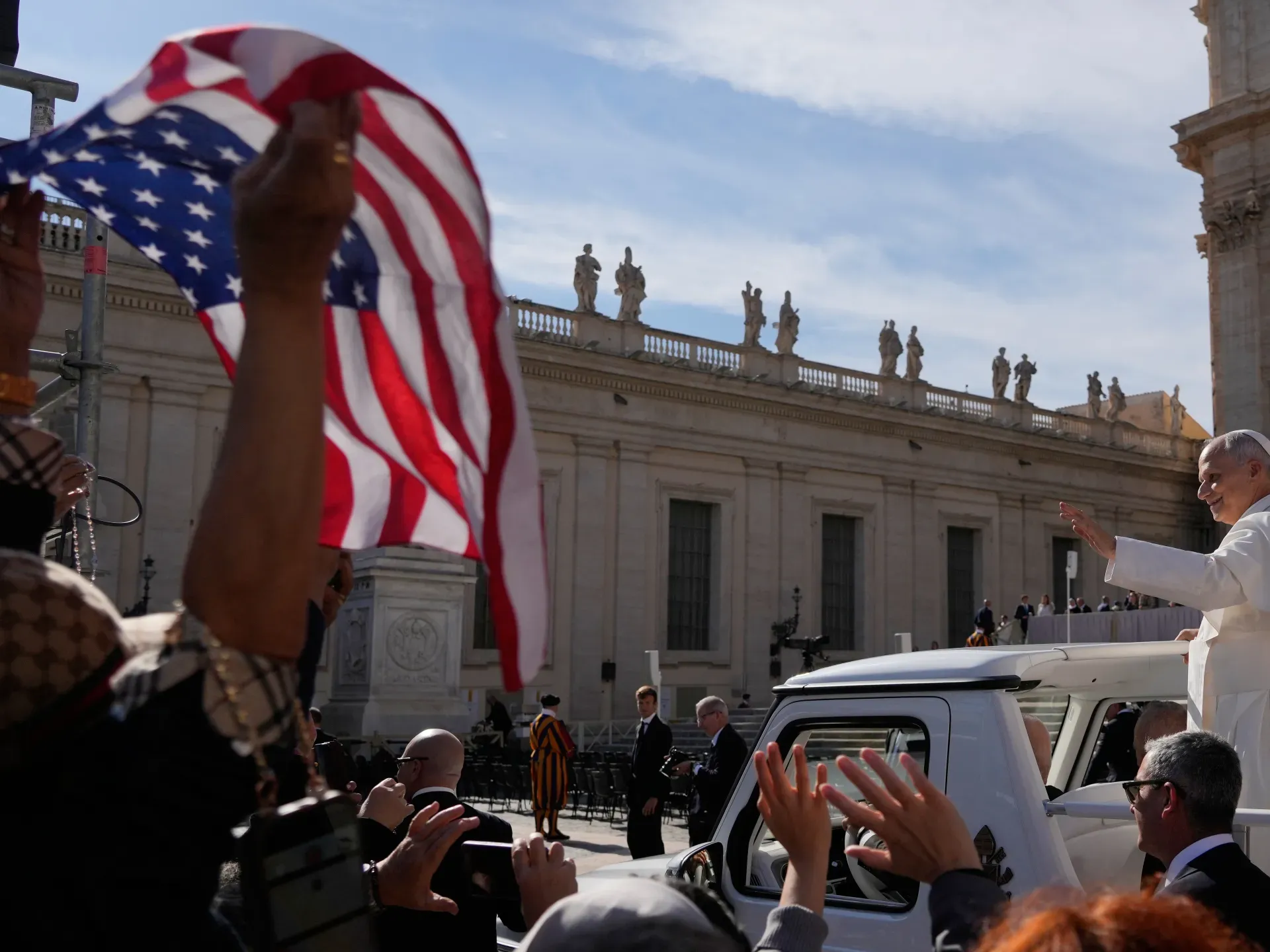
Pope Leo XIV US election: First pontiff to cast US vote
Pope Leo XIV has become the first pontiff to vote in a United States general election after submitting a mail-in ballot in his birthplace of Chicago. The Vatican confirmed on October 31, 2026, that the Holy Father cast his vote ahead of the November 3 midterm elections. This historic act follows his longstanding commitment to civic participation as a US citizen. While the Vatican did not disclose his candidate choices, the move highlights the intersection of religious leadership and democratic duty. This article examines his voting history, the legalities of his citizenship, and the political tensions surrounding his papacy.
November 8, 2026
6 min read
Source: ASHENVOW
How did Pope Leo XIV participate in the US midterm elections?
Pope Leo XIV exercised his right to vote by submitting a mail-in ballot in Chicago, the city where he was born, ahead of the November 3 midterm elections. The Vatican’s press office confirmed the decision on Friday, stating that the pontiff has consistently participated in democratic processes whenever he was eligible to do so as a United States citizen.
The Pope, formerly known as Robert Prevost, requested his mail-in ballot on October 3. This request occurred just ten days before he underwent surgery to remove a cancerous tumor from his right lung. Since his release from the hospital on October 17, he has been gradually returning to his official duties at the Vatican.
In the state of Illinois, where Chicago is located, the upcoming midterm elections involve several key contests. Voters in this solidly Democratic state will decide on a successor to the retiring Senator Dick Durbin and will also vote on whether to re-elect Governor JB Pritzker. Although the Pope's vote is a matter of public record, the specific candidates he supported remain undisclosed by the Vatican.
What is the voting history of Robert Prevost?
Records from the Illinois State Board of Elections indicate that the Pope has a history of active participation in primary elections dating back to 2000. Since that time, he has participated in five primary elections under his former name, Robert Prevost, demonstrating a pattern of engagement with the American electoral system.
Because Illinois requires voters to declare a party preference to receive a primary ballot, his requests reflect his residential history in the state. His voting pattern shows a transition between different political environments:
- 2008 and 2010: While registered in the heavily Democratic Cook County, he requested Democratic primary ballots.
- 2012, 2014, and 2016: After moving to the more conservative Will County, he requested Republican primary ballots.
While these records show his party preference for the primary process, they do not reveal which specific candidates he endorsed during those cycles. His current action in the general election marks the first time a sitting Pope has engaged in a US general election cycle.
What are the legal implications of the Pope's dual citizenship?
Pope Leo XIV holds multiple citizenships, which creates a complex legal profile as both a religious leader and a private citizen. In addition to his United States citizenship, he is a citizen of Peru, where he served as a priest and bishop for over two decades, and he is a citizen of the Vatican, where he serves as the head of state.
Navigating citizenship and foreign service
The intersection of US citizenship and the role of a head of state involves specific federal considerations. Under US law, citizens living abroad are permitted to vote via absentee or mail-in ballots, even if they are employed by foreign governments. This allows the Pope to maintain his civic rights despite his residency in the Vatican.
However, the US State Department maintains certain oversight regarding citizens in high-level foreign roles. According to the State Department's website, the government may "actively review" the citizenship status of Americans who serve in prominent capacities, such as a foreign head of state, foreign head of government, or a foreign minister. While the Pope's role is unique, the legal framework for such reviews exists within the US system.
How has the US Conference of Catholic Bishops responded?
The US Conference of Catholic Bishops (USCCB) responded to the news by emphasizing the distinction between religious faith and political affiliation. In a statement regarding the Pope's vote, the conference urged the Catholic community to prioritize spiritual values over partisan politics.
Chieko Noguchi, the director of public affairs for the USCCB, noted that the Holy Father’s actions serve as an encouragement for civic engagement. According to Noguchi, the Pope's vote sets an example that encourages every citizen to fulfill their civic responsibilities. The conference's broader message emphasized that Catholics should "uphold human dignity and the common good" while putting "faith before politics."
What is the political context between the Pope and the Trump administration?
The Pope's decision to vote comes amid a period of significant tension between the Vatican and the administration of US President Donald Trump. Since Leo ascended to the papacy in May 2025, the two leaders have engaged in several high-profile disagreements regarding international and domestic policy.
The friction between the White House and the Vatican has centered on several key issues:
- Conflict in the Middle East: President Trump has criticized the Pope for his repeated condemnations of the US-Israel war on Iran.
- Immigration Policy: The Pope has challenged the Trump administration’s approach to immigration enforcement.
- Political Rhetoric: Earlier this year, President Trump characterized the Pope as "weak" and a captive of the "radical left."
Pope Leo XIV has not shied away from these confrontations. In response to the President's criticisms, the Pope told reporters that he is not afraid of the Trump administration. He stated that he is not afraid of speaking loudly about the message of the Gospel, which he identified as the primary mission of the Church.
Frequently asked questions
Is the Pope allowed to vote in US elections?
Yes, Pope Leo XIV is a United States citizen by birth. Under US federal law, American citizens living abroad are entitled to vote using absentee or mail-in ballots, regardless of their residence in the Vatican or their role as a head of state.
Did the Pope vote for a Democrat or a Republican?
The Vatican has not disclosed which candidates Pope Leo XIV voted for in the 2026 midterm elections. While his past primary requests in Illinois showed shifts between Democratic and Republican ballots, his specific choice for this general election remains private.
What are the risks to his US citizenship?
While Americans working for foreign governments do not automatically lose their citizenship, the US State Department may review the status of citizens serving as foreign heads of state. This is a standard regulatory possibility for Americans in high-level foreign government positions.
Why is his vote considered historic?
This is considered historic because Pope Leo XIV is the first reigning pontiff to cast a ballot in a United States general election. While previous popes have had American origins, this marks the first time a sitting Pope has actively participated in the US electoral process.
How has his health affected his recent activities?
The Pope recently underwent surgery to remove a cancerous tumor from his right lung. He requested his mail-in ballot on October 3, shortly before the procedure, and has been gradually returning to his Vatican duties since his release from the hospital on October 17.
Key takeaways
- Pope Leo XIV is the first pontiff to vote in a US general election.
- He cast his vote via a mail-in ballot in his native Chicago.
- The Pope holds US, Peruvian, and Vatican citizenship.
- His voting history in Illinois shows past participation in both Democratic and Republican primaries.
- The vote follows a period of tension between the Pope and President Trump.
The intersection of faith and citizenship
The decision by Pope Leo XIV to participate in the US midterm elections represents a significant moment in the relationship between the Holy See and the United States. By exercising his right as a citizen, the Pope has bridged the gap between his role as a global spiritual leader and his identity as an American. While the political climate remains charged—particularly given the existing friction with the Trump administration—the Vatican's emphasis on civic duty suggests a desire to model engagement rather than partisan alignment. As the results of the midterms emerge, the Pope's actions will likely remain a point of discussion regarding the role of religious figures in democratic societies.



