
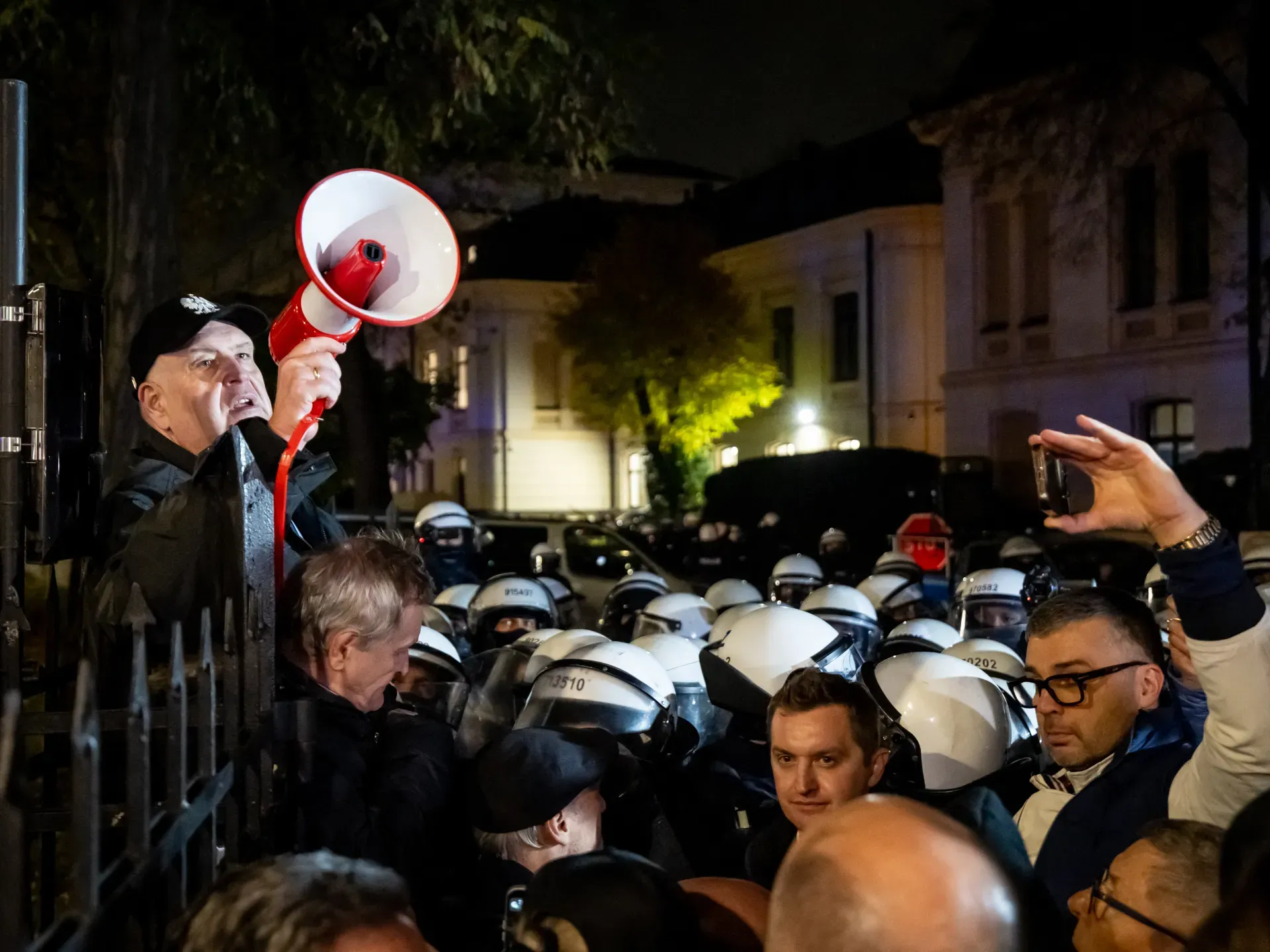
Constitutional Tribunal suspension sparks Warsaw police deployment
The Constitutional Tribunal suspension of head judge Bogdan Swieczkowski has triggered a major security operation and widespread protests in Warsaw. On October 30, 2026, Polish police were deployed to the Tribunal premises following violent clashes and the throwing of projectiles at officers by demonstrators. This escalation follows a request by Justice Minister Waldemar Zurek to lift judicial immunity for Swieczkowski and his deputy. This article examines the security situation, the legal motivations behind the suspension, and the broader political conflict involving the Tusk administration and the PiS-aligned presidency.
November 8, 2026
5 min read
Source: ASHENVOW
Why was the Constitutional Tribunal head suspended?
Bogdan Swieczkowski was suspended from his position as president of the Constitutional Tribunal following a formal request by Justice Minister Waldemar Zurek to lift his judicial immunity. The Minister's decision was based on allegations that Swieczkowski and his deputy failed to fulfill their constitutional duties. According to reports on October 30, 2026, the Ministry of Justice argued that the leadership had actively prevented newly elected judges from performing their legal functions.
The suspension is the culmination of a six-month period of institutional paralysis. During this time, Swieczkowski reportedly used his authority as the head of the court to block judges who had been elected by the current parliamentary majority from assuming their posts. This obstructionism has effectively halted the normal operations of Poland's highest court, creating a deadlock between the legislative majority and the judicial leadership.
The legal basis for immunity lifting
The lifting of immunity is a critical procedural step in Poland's legal system, required to hold high-ranking judicial officials accountable for alleged professional misconduct or dereliction of duty. By requesting this, Minister Zurek has signaled that the government views the court's leadership not merely as political opponents, but as actors violating the constitutional order through the active prevention of judicial duties.
How did the suspension trigger police deployment in Warsaw?
Polish police entered the premises of the Constitutional Tribunal in Warsaw after demonstrators gathered to protest the suspension and launched objects at security forces. The deployment was necessitated by incidents of violence outside the court building, where protesters clashed with law enforcement. On October 30, 2026, police confirmed that they had to intervene following the use of "dangerous projectiles" by members of the crowd.
The tension on the ground resulted in several immediate consequences:
- Detentions: Police reported the detention of at least three individuals following the unrest.
- Security Perimeter: Officers were stationed behind fences to manage the crowds of PiS supporters gathered at the gates.
- Public Unrest: The protests reflected a deep societal divide regarding the legitimacy of the court's leadership and the government's reform attempts.
The presence of heavy police units underscores the volatility of the situation, as the Constitutional Tribunal has become a physical flashpoint for the country's wider political struggle.
What is the role of the presidency in this judicial crisis?
President Karol Nawrocki has played a central role in the ongoing deadlock by refusing to swear in several judges nominated by the Polish parliament. Since his election in mid-2025, Nawrocki has declined to swear in three out of the six judges selected by the legislative majority. This refusal has been a primary driver of the current institutional paralysis.
The President's actions have created a significant barrier to the pro-European government's efforts to restructure the judiciary. On the day of the suspension, Nawrocki demonstrated his alignment with the opposition by cutting short a trip to Senegal to return to Poland, stating that the country required his presence during such a critical moment. This stance highlights the friction between the executive branch led by Prime Minister Donald Tusk and the presidency.
The impact of presidential vetoes
The conflict is exacerbated by the fact that previous attempts to restore judicial independence have been blocked by PiS-aligned presidents. This pattern of vetoing judicial appointments has prevented the current administration from implementing its reform agenda, leading to the current state of legal uncertainty and institutional confrontation.
How does this conflict relate to the history of the PiS government?
The current crisis is rooted in the period between 2015 and 2023, when the Law and Justice (PiS) party held power and was accused by the European Union and domestic critics of politicising the judiciary. Critics argue that the PiS administration systematically installed judges friendly to the party's interests to ensure political control over the court system.
The current government, led by Prime Minister Donald Tusk and the Civic Coalition, has made the restoration of the rule of law a central pillar of its mandate. However, the transition has been fraught with legal obstacles. Following the suspension of Swieczkowski, Anna Korwin-Piotrowska—one of the judges previously refused a swearing-in by President Nawrocki—has been placed in charge of the Constitutional Tribunal. This leadership change is viewed through two starkly different lenses:
- The Government View: Prime Minister Tusk has described the process as a necessary, albeit difficult and painful, step to end years of "lawlessness" and restore constitutional order.
- The Opposition View: Former Justice Minister Zbigniew Ziobro has characterized the suspension and the subsequent leadership change as a "blatant, criminal attack on the constitutional order."
Frequently asked questions
Who is currently in charge of the Constitutional Tribunal?
Anna Korwin-Piotrowska has been placed in charge of the Constitutional Tribunal. She is one of the judges whom President Karol Nawrocki had previously refused to swear in, citing alleged flaws in her selection process. Her appointment follows the suspension of the former president, Bogdan Swieczkowski.
Why did the Polish police enter the court premises?
Police entered the Constitutional Tribunal premises in Warsaw to respond to incidents of violence occurring outside the building. Demonstrators gathered to protest the suspension of Bogdan Swieczkowski and reportedly threw dangerous projectiles at the officers, necessitating a security intervention and the detention of three individuals.
What is the main cause of the judicial deadlock in Poland?
The deadlock is caused by a conflict between the current parliamentary majority and the judicial leadership. For six months, Bogdan Swieczkowski used his position to block the seating of judges elected by the current government, while the President has refused to swear in several parliament-nominated judges.
How has Prime Minister Tusk responded to the crisis?
Prime Minister Donald Tusk has defended the suspension as a necessary measure to restore the rule of law. He stated that after years of lawlessness under the previous PiS government, decisive and potentially painful actions are required to rectify the constitutional order and ensure judicial independence.
What is the position of President Karol Nawrocki?
President Karol Nawrocki has maintained a stance aligned with the PiS-affiliated opposition. He has refused to swear in three of the six judges nominated by parliament and has actively supported the legitimacy of the previous judicial structures, recently returning to Poland early to address the ongoing crisis.
Key takeaways
- The suspension of Bogdan Swieczkowski follows allegations of blocking newly elected judges from performing their duties.
- Polish police deployed to the Warsaw Constitutional Tribunal after protesters threw projectiles at officers.
- President Karol Nawrocki has refused to swear in three of six judges nominated by the Polish parliament.
- The government views the suspension as a necessary step to restore the rule of law after years of PiS influence.
Conclusion
The suspension of Bogdan Swieczkowski and the subsequent police deployment in Warsaw mark a critical escalation in Poland's ongoing struggle over judicial independence. The confrontation between the Tusk administration's reform efforts and the PiS-aligned presidency and judiciary has moved from legal debates to physical demonstrations and security interventions. As Anna Korwin-Piotrowska takes control of the Tribunal, the nation remains deeply divided. The resolution of this crisis will ultimately determine the stability of Poland's constitutional order and its standing within the European Union's legal framework.



