
Poland constitutional crisis: Tribunal standoff deepens
The Poland constitutional crisis intensified after the sudden suspension of Constitutional Tribunal chief judge Bogdan Swieczkowski on Friday. President Karol Nawrocki convened urgent crisis talks on Saturday with nationalist and far-right representatives to address what he termed a threat to internal security. However, Prime Minister Donald Tusk’s Civic Coalition boycotted the consultations, leaving the dispute between the presidency and the government unresolved. This article examines the political friction between the PiS-aligned opposition and the Tusk administration, and the implications for Poland's relationship with the European Union.
November 8, 2026
6 min read
Source: ASHENVOW
Why has the suspension of Bogdan Swieczkowski triggered a national crisis?
The suspension of Bogdan Swieczkowski, the head judge of Poland's Constitutional Tribunal, serves as the immediate catalyst for the current political instability. Swieczkowski, who was appointed during the Law and Justice (PiS) administration that governed from 2015 to 2023, faced accusations of abusing his authority to obstruct the parliamentary process. Specifically, the government alleged that he used his position to block the election of new judges to the court.
Prime Minister Donald Tusk has characterized the removal of Swieczkowski as a necessary, albeit difficult, measure intended to restore the rule of law. According to the Tusk administration, the court had undergone years of erosion under previous PiS rule, resulting in a body that lacks political neutrality. This move to remove the chief judge is viewed by the government as a corrective action against a judiciary that has become a tool for partisan interests.
Conversely, the Constitutional Tribunal has reacted with extreme hostility to the government's intervention. In a statement released on Friday via its official X account, the court described the government’s actions as a "coup d’etat." This rhetoric highlights the profound level of distrust between the executive branch and the highest judicial authority in the country.
The legal arguments regarding judicial independence
The core of the legal dispute rests on whether the executive branch has the authority to suspend a sitting judge to rectify perceived systemic corruption. Tusk’s supporters argue that the court's independence had already been compromised by the PiS government, making the suspension a defensive act for democracy. Opponents, however, view the suspension as an illegal overreach that undermines the separation of powers and sets a dangerous precedent for future administrations.
How did President Karol Nawrocki respond to the standoff?
President Karol Nawrocki responded to the escalating tension by convening emergency consultations at the presidential palace on Saturday. The President described the situation as an "urgent" matter, citing the potential threat to Poland's internal security caused by the sudden judicial vacancy and the subsequent political fallout. The talks were intended to bring various political factions together to find a resolution to the impasse.
The composition of these talks revealed the deep political divisions currently fracturing the Polish state. While representatives from nationalist and far-right parties, as well as some members of the governing coalition, attended the meeting, the primary governing force—Donald Tusk’s centrist Civic Coalition—opted to stay away. This boycott suggests that the President's attempt at mediation has yet to gain the broad-based legitimacy required to de-escalate the situation.
Nawrocki himself is a figure associated with right-wing politics and has faced criticism for his own role in the judicial dispute. Under his administration, he has also blocked several nominations to the court, mirroring the very tactics that the current government seeks to dismantle. This perceived inconsistency complicates his role as a potential mediator in the crisis.
What are the primary political drivers behind the conflict?
The conflict is a continuation of a years-long saga involving the politicization of the Polish judiciary, a process that the current government claims began under the Law and Justice (PiS) leadership. The tension is not merely about a single judge but about the fundamental direction of Polish law and its relationship with international standards.
A significant point of contention involves the hierarchy of legal authority. Tusk and his pro-European allies have frequently criticized the Constitutional Tribunal for issuing rulings that prioritize Polish national legislation over European Union law. This friction has placed the court at the center of a broader struggle between national sovereignty and EU legal integration.
The political landscape is further complicated by the active mobilization of supporters on both sides:
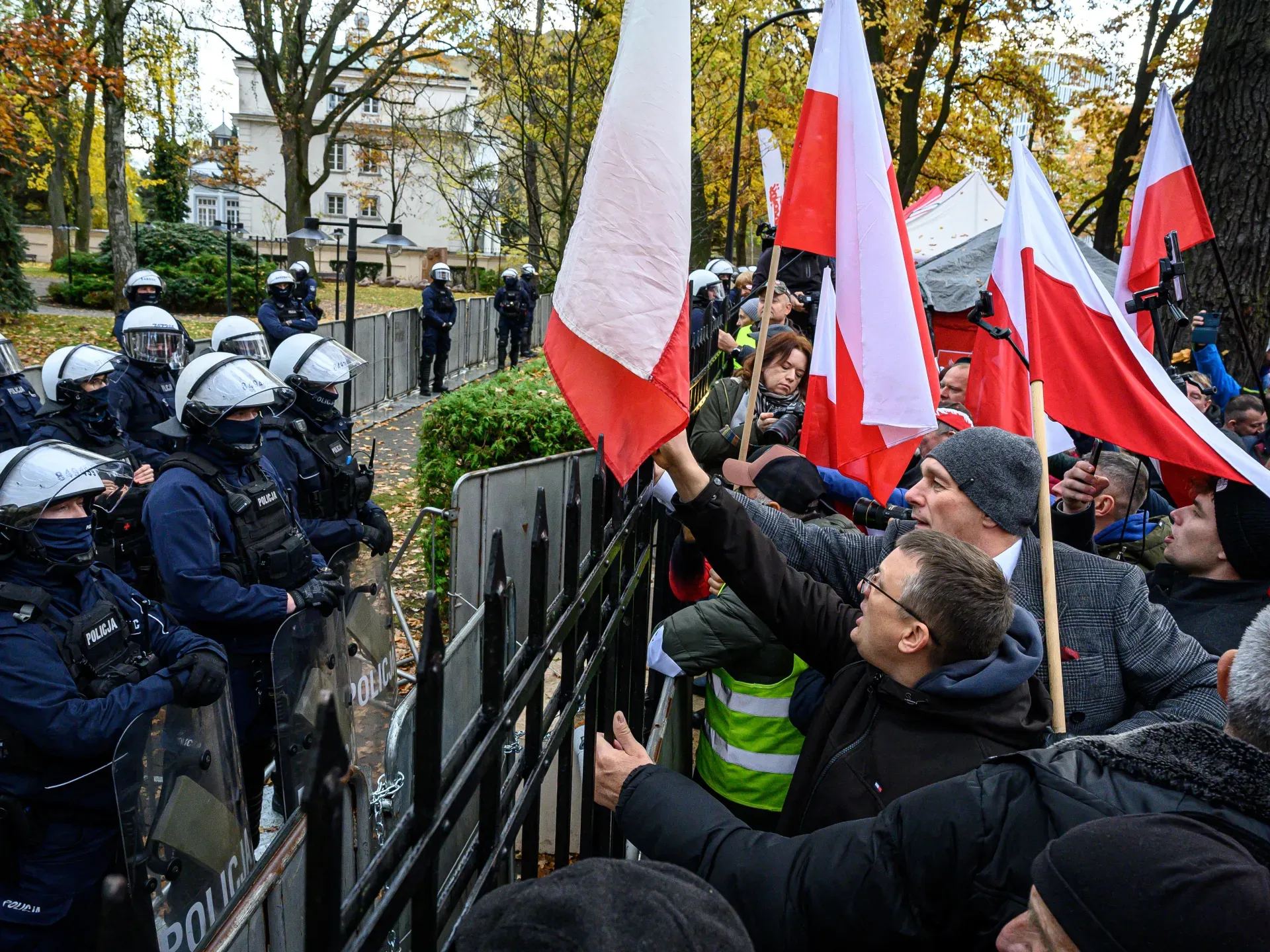
- PiS Supporters: Followers of the Law and Justice party have engaged in ongoing protests outside the Constitutional Tribunal, advocating for the protection of PiS-aligned judges.
- Government Supporters: The Civic Coalition maintains that the current actions are essential to dismantle the "politicized" structures left behind by the previous administration.
- Nationalist Factions: These groups, present in Nawrocki's talks, seek to maintain the influence of conservative judicial appointments.
What is the impact of this crisis on Poland's standing in the European Union?
The ongoing judicial standoff has drawn immediate attention and concern from Brussels, as the stability of the rule of law is a cornerstone of EU membership. The European Commission has stepped in to urge a peaceful resolution, emphasizing the need for political stability in Poland.
On Saturday, the European Commission, through official channels, urged President Nawrocki to accept the nominations of new judges to the Constitutional Tribunal. The goal is to resolve the vacancy and the resulting deadlock through legitimate, democratic processes rather than through unilateral executive actions or judicial suspensions. The Commission's intervention highlights the belief that the Polish crisis is not merely a domestic issue but one with significant implications for the integrity of the European legal framework.
The risk of a prolonged confrontation remains high. As the standoff continues, the potential for a spiral of retaliatory legal and political actions grows, which could further isolate Poland within the European community. The tension between national judicial autonomy and the supremacy of EU law remains the unresolved pivot upon which the entire crisis turns.
FAQ: Poland Constitutional Crisis
What caused the sudden suspension of Judge Swieczkowski?
Bogdan Swieczkowski was suspended by the government due to allegations that he used his position as head of the Constitutional Tribunal to block the election of new judges. The Tusk administration views this as a necessary step to restore judicial neutrality and the rule of law.
Why did Prime Minister Tusk's party boycott the President's talks?
The Civic Coalition, led by Donald Tusk, stayed away from President Nawrocki's crisis talks because the administration is currently in direct opposition to the President's political alignment and his previous actions regarding judicial nominations, which they view as part of the politicization problem.
How has the Constitutional Tribunal reacted to the government's move?
The Constitutional Tribunal has reacted very strongly, with its official social media presence labeling the government's decision to suspend the chief judge as a "coup d’etat." This indicates a total breakdown in communication and trust between the judiciary and the executive.
What role does the European Union play in this dispute?
The European Commission is actively monitoring the situation and has urged President Nawrocki to accept new judicial nominations. The EU is concerned that the crisis could undermine the rule of law and wants to prevent a confrontation that spirals into further instability.
Who are the main political actors involved in the standoff?
The main actors include Prime Minister Donald Tusk and the Civic Coalition, who seek to reform the court; President Karol Nawrocki and nationalist/far-right parties, who support the existing judicial structure; and the Law and Justice (PiS) party, whose previous appointments are at the heart of the dispute.
Key takeaways
- The suspension of Chief Judge Bogdan Swieczkowski has triggered a major constitutional standoff in Poland.
- President Nawrocki held talks with nationalist and far-right leaders, but the governing Civic Coalition boycotted.
- The Constitutional Tribunal has officially characterized the government's actions as a "coup d’etat."
- The European Commission is urging the acceptance of new judge nominations to prevent further escalation.
Conclusion
The constitutional crisis in Poland represents a profound struggle over the identity of the nation's judicial system and its adherence to democratic norms. With the suspension of Bogdan Swieczkowski, the divide between the Tusk government and the PiS-aligned judicial elements has reached a breaking point. The failure of President Nawrocki's recent crisis talks to include the governing coalition suggests that a political resolution remains elusive. As the European Union watches closely, the outcome of this standoff will determine whether Poland can successfully navigate its legal reforms or if it will descend into a deeper, more permanent cycle of institutional conflict.



