
House vote defeats Pete Hegseth impeachment effort today
The Pete Hegseth impeachment effort was effectively halted on Tuesday when the House of Representatives voted 211-204 to refer Republican Rep. Thomas Massie's resolution to the House Judiciary Committee. This procedural move prevents the impeachment measure from moving forward during the remainder of the Republican-controlled 119th Congress. The resolution, introduced by Massie, targeted Secretary of Defense Pete Hegseth over various military operations and alleged bypasses of congressional authority. While the vote was procedural, it represents a significant legislative setback for the proponents of the impeachment articles.
November 14, 2026
4 min read
Source: ASHENVOW
The House procedural vote and its legislative impact
The House of Representatives moved to sideline the impeachment articles against Secretary of Defense Pete Hegseth by a 211-204 vote on Tuesday. By referring the resolution introduced by Rep. Thomas Massie to the House Judiciary Committee, the House effectively ended the impeachment attempt for the duration of the current 119th Congress. The vote saw nearly all Republicans support the referral, with Massie being the sole Republican to vote against tabling the measure, alongside the entirety of the House Democratic caucus.
This outcome follows a period of rising tension within the GOP, where some members attributed recent midterm losses to the ongoing conflict with Iran. The impeachment resolution was officially brought to the House floor on Monday afternoon by Massie, who recently lost his primary to a candidate supported by President Donald Trump.
Breakdown of the House Vote
The voting pattern highlights a nearly unified Republican front against the resolution, despite the measure being introduced by a member of their own party. The following table summarizes the voting composition regarding the referral to the Judiciary Committee:
| Voting Group | Position on Referral |
|---|---|
| House Republicans (Majority) | In favor of referral (except Thomas Massie) |
| House Democrats | Against referral |
| Rep. Thomas Massie (R) | Against referral |
Hegseth's defense and characterization of the resolution
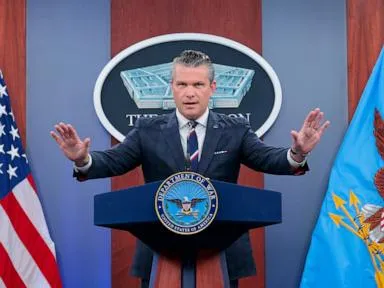
Secretary of Defense Pete Hegseth dismissed the impeachment attempt as a "political spectacle" during a news conference held at the Pentagon on November 10, 2026. Hegseth argued that the resolution, described as a "personal manifesto driven by ego and resentment" by the Secretary, did not constitute genuine oversight or accountability. He framed the eight articles of impeachment not as a critique of his administration, but as a direct indictment against U.S. military service members.
Hegseth maintained that the military operations cited in the articles—ranging from strikes in the Caribbean Sea to the war with Iran—were lawful actions conducted under the direction of the President. He emphasized that no Defense Secretary has previously faced impeachment for executing lawful military operations, particularly those he characterized as successful. Hegseth further argued that the resolution was an attempt to reverse his policy decisions rather than a response to any high crimes, misdemeanors, or treason.
The scope of the impeachment articles
The articles of impeachment introduced by Massie focused on several controversial military and administrative actions. These included:
- The conduct of military operations in the war against Iran.
- Unprecedented maritime strikes in the Caribbean and East Pacific seas targeting alleged drug-smuggling vessels.
- The circumvention of congressional approval for specific military engagements.
Political reactions and presidential support
President Donald Trump expressed strong support for Hegseth following the House vote, congratulating him and claiming that the attempt to impeach the Secretary had "miserably FAILED." In a social media post, Trump criticized Rep. Thomas Massie and asserted that the administration had achieved significant military milestones, including "the best recruitment numbers in the history of the military" and victories in Venezuela and Iran. Trump characterized the impeachment attempt as a continuation of what he described as the "weaponization" of the United States by Democrats.
The Pentagon's response was similarly celebratory. Spokesman Sean Parnell declared the referral a "total victory" for Hegseth and the Department of War on the social media platform X. Parnell stated that the effort was "devoid of merit, evidence, or seriousness" and argued that the resolution failed to account for Hegseth's record of restoring the "warrior ethos" within the military.
Diplomatic and leadership perspectives
Other high-ranking officials also weighed in on the legitimacy of the Secretary's actions. Secretary of State Marco Rubio, speaking from Paris, defended Hegseth's execution of orders. Rubio noted that the military actions taken against Iran, the Iran-backed Houthis in Yemen, and the capture of Venezuelan President Nicolas Maduro were direct executions of orders from the Commander-in-Chief. Rubio emphasized that these actions were carried out effectively across multiple fronts to ensure national security.
The context of military oversight and congressional authority
The impeachment effort highlights a deepening rift regarding the boundaries of executive military authority and congressional oversight. Rep. Thomas Massie's resolution centered on the premise that several military operations were conducted without the necessary approvals from Congress. This tension reflects a broader debate over the President's power to direct military force in various global theaters without explicit legislative authorization.
Hegseth attempted to contextualize the current political friction by comparing it to previous impeachment attempts against President Trump. He suggested that the current effort was a "third time" attempt to disrupt the administration, albeit targeting a Cabinet member this time. This comparison underscores the highly polarized nature of the current legislative environment regarding the Department of Defense and executive command.



