
Mahmoud Khalil deportation case reaches US Supreme Court
The Mahmoud Khalil deportation fight has escalated to the United States Supreme Court following an emergency application by his legal team. Mahmoud Khalil, a former Columbia University graduate student and pro-Palestine activist, is seeking to overturn a Philadelphia 3rd Circuit Court of Appeals decision that facilitates his potential removal. The legal battle centers on whether the judicial branch can intervene in immigration detentions involving protected speech. This case could establish a critical precedent regarding the First Amendment rights of noncitizens under US law. This article explores the legal arguments, the political context of the Trump administration's policies, and the implications for campus activism.
October 27, 2026
5 min read
Source: ASHENVOW
Why is the Mahmoud Khalil deportation case moving to the Supreme Court?
Mahmoud Khalil’s lawyers filed an emergency application with the US Supreme Court on Monday, October 20, 2026, to secure an immediate stay of a lower court's ruling. The legal challenge targets a decision by the 3rd Circuit Court of Appeals in Philadelphia, which ruled that federal law restricted the ability of district courts to order Khalil’s release from immigration detention.
The appeals court determined that Khalil's detention status should have been adjudicated within the immigration court system—which is under the control of the executive branch—rather than through the judicial branch's district courts. By taking the case to the highest court in the land, Khalil’s defense aims to challenge the jurisdictional boundaries that currently limit judicial oversight of immigration-related detentions.
The core legal dispute
The central question for the Supreme Court involves the intersection of administrative immigration authority and constitutional protections. Khalil’s legal team argues that noncitizens must possess the right to sue in federal court if they believe their detention is a direct reprisal for exercising First Amendment rights. This creates a significant tension between the executive branch's power to manage immigration and the judiciary's role in protecting civil liberties.
What is the impact of the Trump administration's immigration policies on activists?
The Trump administration has characterized pro-Palestinian activism as a threat to United States foreign policy interests, providing a political backdrop for the legal actions against Khalil. During his 2024 re-election campaign, President Donald Trump pledged to crack down on the student protest movements that gained momentum in 2023, particularly those centered around institutions like Columbia University.
According to the case details, Khalil became the first student protester known to be targeted for his pro-Palestinian views under the current administration. The government's stance is that it maintains the legal authority to deport noncitizens who participate in such protests. This policy approach has transformed individual immigration cases into broader debates regarding the limits of executive power and the targeting of political speech.
How did the legal proceedings against Mahmoud Khalil progress?
The legal trajectory for Mahmoud Khalil has involved multiple layers of the US court system, moving from immigration courts to federal district courts and eventually to the appellate level. Khalil, a permanent US resident, was initially arrested within the student housing complex where he resided with his US citizen wife.
Following his arrest, Khalil was transferred through various immigration detention centers, including facilities in New Jersey and Louisiana, where he remained in custody for over three months. The administrative process has been complex:
- In April 2025: The Board of Immigration Appeals denied his appeal and issued a final order of removal.
- In May 2026: The 3rd Circuit Court of Appeals narrowly voted 6-5 against reconsidering his case.
- Current Status: Khalil is pursuing a habeas corpus case in the federal district court system while simultaneously petitioning the Supreme Court.
If the current appellate rulings are upheld, Khalil faces potential deportation to either Syria or Algeria.
What are the implications for free speech and campus activism?
The Mahmoud Khalil deportation case is viewed as a landmark struggle for the future of First Amendment protections on American university campuses. The outcome could determine whether the US government can use immigration status as a tool to penalize noncitizens for political expression that would otherwise be protected for US citizens.
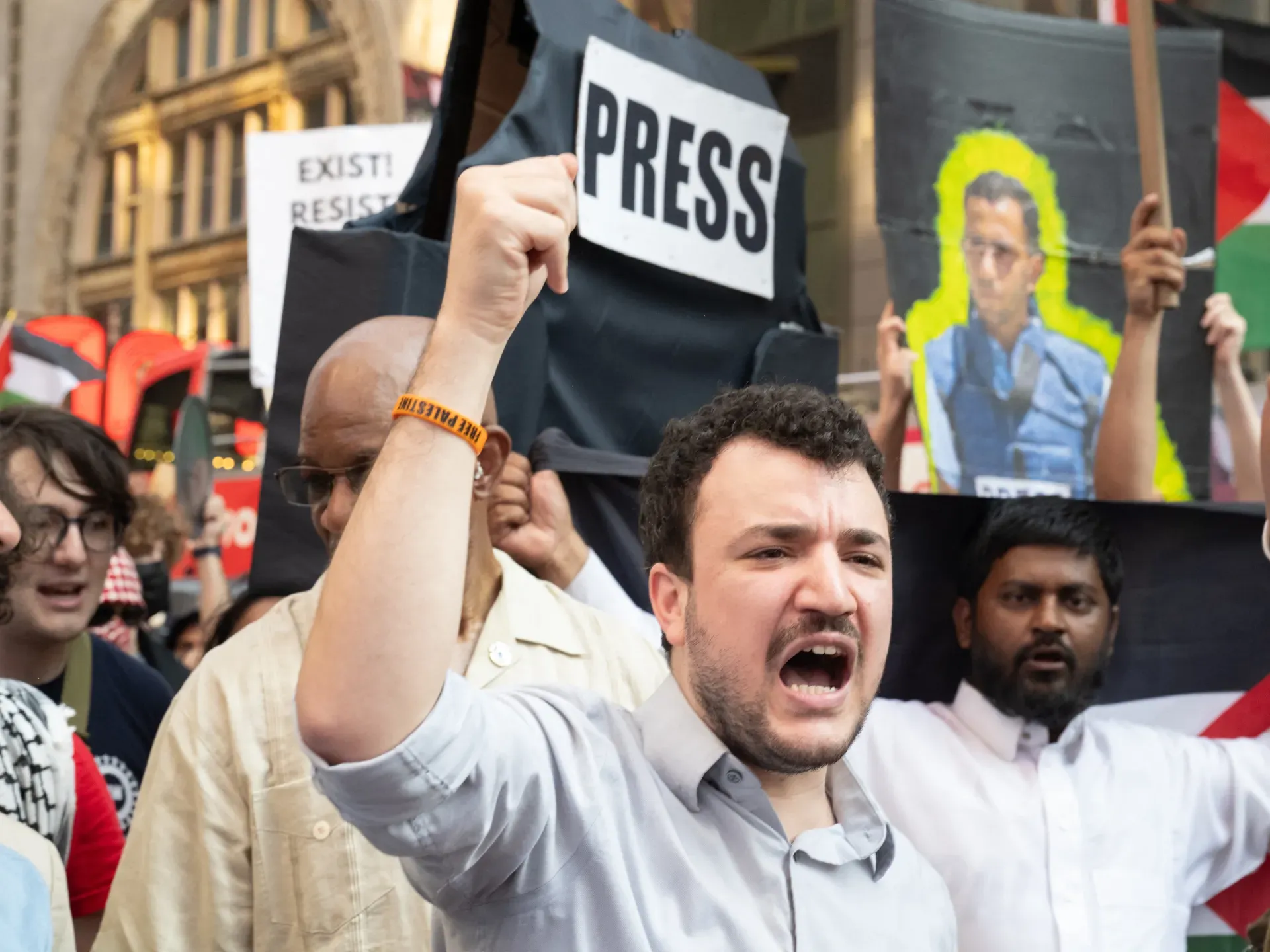
The social response to Khalil's situation has been significant, particularly at Columbia University. On Monday, faculty and staff organized a silent vigil to protest what they characterized as the "abduction" of students by Immigration and Customs Enforcement (ICE). Demonstrators utilized portraits of Khalil and other activists, such as Mohsen Mahdawi, to highlight the perceived targeting of the student body.
The debate over campus safety and speech
The protests at Columbia University have highlighted a rift between university administration and the activist community. While the administration has at times closed campus gates during periods of unrest, demonstrators have called for the reopening of these gates to the public, framing the current crackdown as an assault on the academic environment and the rights of the student population.
FAQ: Mahmoud Khalil deportation case
What is the primary legal question in the Supreme Court petition?
The primary question is whether noncitizens have the constitutional right to sue in federal court when they are detained by immigration officials as a form of retaliation for exercising their First Amendment right to free speech. The lawyers seek to prove that judicial oversight is necessary to prevent executive overreach.
Where does Mahmoud Khalil face deportation if he loses his case?
If the decisions from the 3rd Circuit Court of Appeals and the Board of Immigration Appeals are finalized, Khalil faces deportation to either Algeria or Syria. His legal team is working to prevent this through emergency stays and higher court appeals.
How has the Trump administration responded to pro-Palestinian protests?
The Trump administration has argued that pro-Palestinian activism constitutes a threat to the foreign policy interests of the United States. This stance has been used to justify the targeting and deportation of noncitizens involved in these protest movements, following campaign pledges to crack down on such activities.
What role did Columbia University play in this case?
Columbia University served as a central hub for the activism that led to Khalil's arrest. He was a graduate student at the university and a spokesperson for various protest groups. The university has also become a site of protest by faculty and staff regarding the detention of students.
What is the current status of the 3rd Circuit Court's decision?
The 3rd Circuit's decision to deny reconsideration of the case is currently pending the exhaustion of all legal appeals. Khalil is attempting to use the Supreme Court to stay the implementation of the ruling and prevent his immediate removal from the country.
Key takeaways
- Mahmoud Khalil has petitioned the US Supreme Court to halt his deportation and challenge the legality of his detention.
- The case examines whether noncitizens can use federal courts to protect themselves against retaliatory immigration enforcement.
- The Trump administration views pro-Palestinian activism as a threat to US foreign policy interests.
- Khalil faces potential removal to Syria or Algeria if his legal challenges fail.
Conclusion
The legal battle surrounding Mahmoud Khalil represents a critical juncture for US immigration law and constitutional rights. By elevating the case to the Supreme Court, the defense is not merely fighting an individual deportation but is challenging the executive branch's ability to use immigration enforcement as a mechanism for political censorship. As the court weighs the jurisdictional authority of the judicial branch against the administrative powers of the executive, the ruling will likely define the scope of First Amendment protections for noncitizens and influence the future of political expression on American campuses for years to come.



