
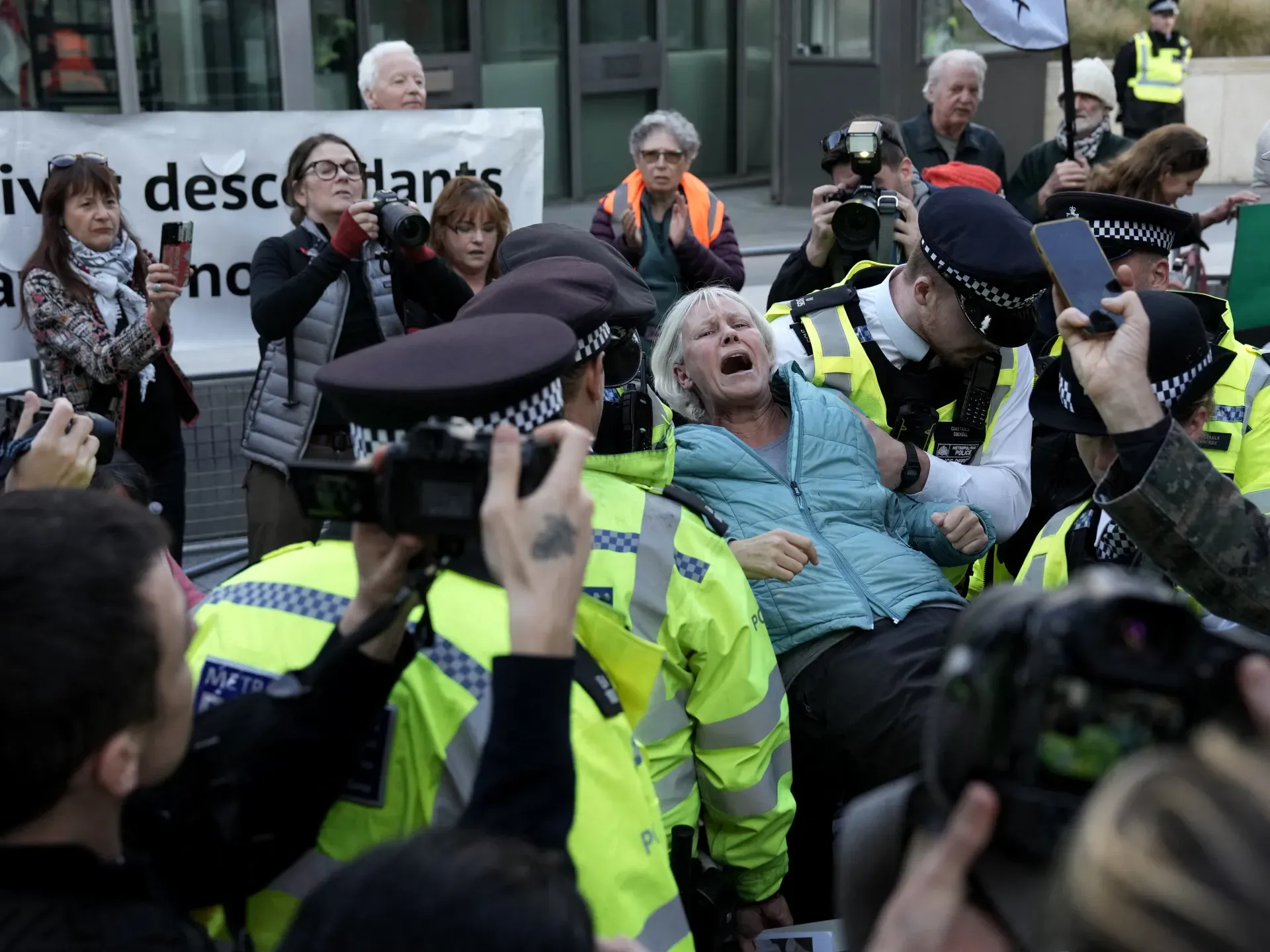
Palestine Action ban: 139 arrested during London protests
The Palestine Action ban has triggered significant civil unrest, resulting in at least 139 arrests by London police during demonstrations on Saturday. Protesters gathered outside the US embassy to oppose the group's classification as a "terrorist" organisation under United Kingdom law. This mass protest follows a period of escalating enforcement since the proscription took effect in July 2025. The arrests occur just days before a pivotal Supreme Court appeal regarding the legality of the group's designation. This article examines the recent arrests, the legal context of the proscription, and the growing debate over freedom of speech in the UK.
November 8, 2026
5 min read
Source: ASHENVOW
The Palestine Action ban has triggered significant civil unrest, resulting in at least 139 arrests by London police during demonstrations on Saturday. Protesters gathered outside the US embassy to oppose the group's classification as a "terrorist" organisation under United Kingdom law. This mass protest follows a period of escalating enforcement since the proscription took effect in July 2025. The arrests occur just days before a pivotal Supreme Court appeal regarding the legality of the group's designation. This article examines the recent arrests, the legal context of the proscription, and the growing debate over freedom of speech in the UK.
Why were 139 people arrested in London?
London police arrested at least 139 individuals on Saturday following demonstrations against the proscription of Palestine Action. The Metropolitan Police initially reported 48 detentions earlier in the day, but the figure rose significantly by Saturday evening. According to a statement released by the Metropolitan Police on X, the majority of these arrests were conducted for expressing support for a proscribed organisation.
The protests were concentrated outside the United States embassy in London, where hundreds of demonstrators gathered to voice their opposition to the government's decision. While the London demonstrations saw heavy police intervention, similar rallies took place outside the US consulate in Edinburgh, though no arrests were reported in the Scottish capital. Protesters utilized placards with messages such as "I oppose genocide. I support Palestine Action" to signal their intent.
The scale of police intervention
The surge in arrests highlights the intense scrutiny applied to those defying the ban. The Metropolitan Police have moved from initial detentions to a much larger scale of enforcement within a single day, reflecting the high-tension environment surrounding the group's legal status. This escalation underscores the government's strict stance on the enforcement of terrorism laws regarding proscribed entities.
What is the legal status of Palestine Action?
Palestine Action is currently classified as a "terrorist" organisation under United Kingdom law. This proscription, which came into effect in July 2025 under the government of former Prime Minister Keir Starmer, places the group on the same legal list as al-Qaeda and ISIL (ISIS). The designation means that any expression of support for the group can be treated as a criminal offence.
The proscription has become a central point of contention in British politics. Critics argue that the label is being used to suppress political dissent rather than to combat genuine security threats. The legal battle is set to intensify this week as a Supreme Court appeal is scheduled for Wednesday, which will specifically challenge the legality of the group's proscription. This appeal represents a critical moment for the UK's judicial interpretation of terrorism legislation and its application to activist groups.
How has the Palestine Action ban impacted protest numbers?
The enforcement of the Palestine Action ban has led to a massive increase in legal actions against activists. According to the organiser Defend Our Juries, more than 4,000 people have been detained for defying the ban since July 2025. The group describes the current situation as "dystopian," noting that many of these arrests stem from peaceful vigils and silent expressions of opposition.
The cumulative total of 4,000 arrests reflects a sustained period of tension between activist groups and the state. Organisers suggest that the crackdown is motivated by a desire to appease international interests, specifically citing US political influences and Israeli weapons companies. They argue that the disruption caused by Palestine Action to these industries was the true catalyst for the government's decision to designate them as terrorists.
What are the arguments regarding freedom of speech?
Critics and human rights organisations have condemned the arrests as an attack on fundamental civil liberties. Felix Jakens, the head of communications and campaigns at Amnesty International UK, described the sight of diverse age groups being taken into police custody for holding placards as a "disgraceful attack on freedom of speech." Amnesty International has called for the government to reverse the proscription and reform laws to protect the right to demonstrate.
Political figures have also weighed in on the legality of the arrests. Labour Party MP John McDonnell argued that protesting against a government decision to proscribe an organisation should not be automatically interpreted as supporting that organisation. McDonnell further expressed his belief that the government made an incorrect decision in designating Palestine Action as a terrorist entity. These arguments suggest a growing divide in how the UK balances national security laws with the democratic right to protest.
The intersection of politics and activism
The debate is not merely about the legality of a specific group, but about the broader direction of UK law. Many observers see the Palestine Action ban as part of a wider trend of increasing restrictions on pro-Palestine voices. This intersection of foreign policy, domestic security, and civil rights makes the upcoming Supreme Court ruling one of the most significant legal developments for activists in recent years.
Frequently asked questions
Why is Palestine Action considered a terrorist organisation?
Palestine Action was designated as a terrorist organisation by the UK government in July 2025. This classification places them on a list alongside groups like al-Qaeda. The government's decision has been heavily contested by activists who claim the label is used to silence political protest.
How many people have been arrested under the ban?
Since the proscription took effect in July 2025, the organiser Defend Our Juries reports that more than 4,000 people have been detained. This includes the 139 people arrested during the London protests on Saturday, October 31, 2026.
What is the significance of the upcoming Supreme Court appeal?
The Supreme Court appeal, scheduled for Wednesday, will specifically challenge the legal basis for proscribing Palestine Action. The outcome of this case could determine whether the government has the authority to classify such activist groups as terrorist organisations under current laws.
Where did the recent protests take place?
The most recent mass protests occurred on Saturday, October 31, 2026, in both London and Edinburgh. In London, demonstrators gathered outside the US embassy, while in Edinburgh, protesters met outside the US consulate. No arrests were reported in Edinburgh.
What is the main criticism of the proscription?
The primary criticism is that the ban is a tool to suppress freedom of speech and pro-Palestine activism. Critics, including Amnesty International and various MPs, argue that the government is using terrorism laws to protect weapons companies and appease international political interests.
Key takeaways
- At least 139 people were arrested in London on October 31, 2026, for protesting the Palestine Action ban.
- Palestine Action has been legally classified as a terrorist organisation in the UK since July 2025.
- Over 4,000 arrests have been recorded in connection with the ban since its implementation.
- A Supreme Court appeal challenging the proscription is scheduled to take place this Wednesday.
Conclusion
The recent arrests in London underscore the intense legal and social friction caused by the Palestine Action proscription. With over 4,000 detainees recorded since mid-2025, the tension between state security measures and the right to protest has reached a critical threshold. The upcoming Supreme Court appeal will serve as a definitive test for the UK's terrorism laws, potentially reshaping the boundaries of political activism and freedom of speech. As the judiciary deliberates, the debate remains split between those defending national security and those advocating for the protection of democratic dissent.



