
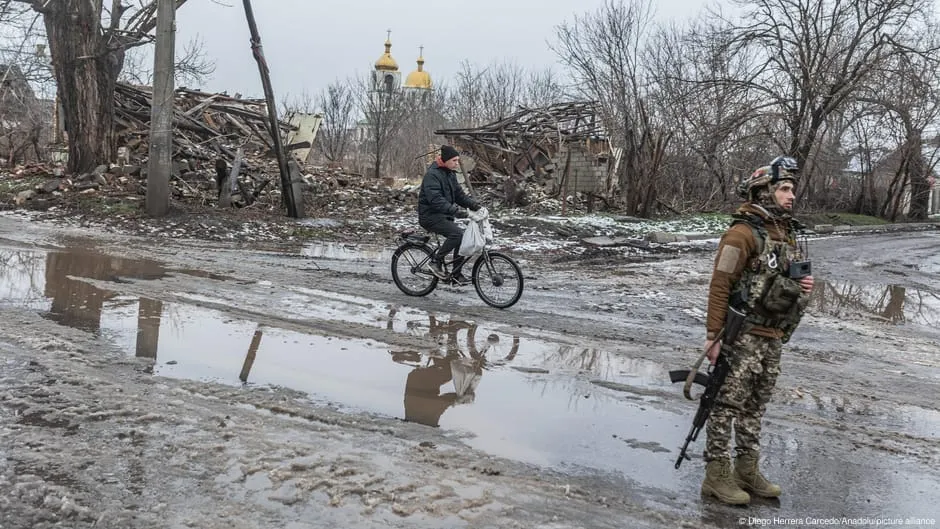
Kostiantynivka humanitarian mission: Putin's military trap?
The Kostiantynivka humanitarian mission proposed by Russian President Vladimir Putin has raised significant alarms among military and human rights experts. Putin suggests evacuating the remaining 340 civilians from the Donbas city, claiming Russia controls the area and needs five days to clear access roads. However, Ukrainian officials and analysts warn this move may be a tactical maneuver to facilitate a full military occupation. The proposal follows recent discussions between the Russian government and US representatives regarding the ongoing war and potential ceasefire frameworks.
November 21, 2026
4 min read
Source: ASHENVOW
Strategic implications of the proposed evacuation
The Kostiantynivka humanitarian mission is viewed by many analysts as a potential pretext for Russian military advancement rather than a genuine effort to protect civilians. While Vladimir Putin has proposed involving human rights organizations and foreign press to oversee the evacuation, Ukrainian President Volodymyr Zelenskyy has dismissed the initiative as a tactical ruse. Zelenskyy stated that the goal is to force Ukrainian forces to leave the city so that Russia can move in and occupy the entire area.
The city occupies a critical position within the Donbas defense architecture. Kostiantynivka serves as the southernmost point of the so-called Donetsk "fortress belt," a defensive line that also includes Druzhkivka, Kramatorsk, and Sloviansk. If Russian forces successfully secure Kostiantynivka, they would gain a direct path toward Druzhkivka and the larger urban conurbation of Sloviansk and Kramatorsk.
The defensive significance of the Donbas belt
Military experts emphasize that Kostiantynivka functions as a vital anchor for Ukrainian territorial integrity in the region. Oleksandr Kovalenko, a military expert at the Dmytro Tymchuk Center for Security Studies, noted that the city's strategic role is comparable to that of Bakhmut, Avdiivka, or Chasiv Yar. These locations have historically served as defensive bastions that allowed the Ukrainian military to stall Russian advances for extended periods through fortified installations.
The humanitarian crisis and civilian reality
The humanitarian situation in Kostiantynivka is described by local authorities as catastrophic, with the remaining population facing extreme deprivation. Before the full-scale Russian invasion, the city had approximately 70,000 residents; today, only about 340 civilians remain under Ukrainian control. These residents are surviving without central water, electricity, or gas supplies, and public transportation has ceased to function.
Evacuation efforts have become increasingly dangerous and difficult due to the intensity of the conflict. Since the spring of 2026, the only viable way for civilians to leave the city has been on foot. Military analyst Denys Popovych highlighted the logistical impossibility of a unilateral Ukrainian evacuation, noting that Russian troops have occupied the road between Kostiantynivka and Druzhkivka, while drone activity remains constant throughout the region.
| Metric | Status/Data |
|---|---|
| Pre-invasion population | ~70,000 |
| Current remaining civilians | ~340 |
| Infrastructure status | No central water, electricity, or gas |
| Primary evacuation method | On foot (since Spring 2026) |
| Key transit obstacle | Russian occupation of Druzhkivka road |
Risks of ceasefire manipulation and the Oleshky precedent
Experts warn that Russia may be using the humanitarian proposal to gain tactical advantages under the guise of peace negotiations. There is significant concern that any ceasefire granted for an evacuation could be exploited to rotate troops or move heavy weaponry into position. This fear is rooted in the recent experience in Oleshky, where a ceasefire was implemented from October 27 to November 1, 2026.
According to the Ukrainian General Staff, the Russian military utilized the Oleshky ceasefire window to rotate their troops, entrench their positions, reinforce drone-repelling measures, and bring in additional ammunition. Oleksandr Kovalenko suggests that the current proposal might be driven by the fact that the Russian army is losing ground in Kostiantynivka and requires a pause to bring in reinforcements that are currently blocked by active fighting.
The calculation behind humanitarian leverage
The proposal places Kyiv in a difficult diplomatic position, particularly because US intermediaries are also pushing for a mission. Denys Popovych explained that if Ukraine rejects the proposal, Russia and its supporters may frame Kyiv as being uncooperative or indifferent to the lives of its own citizens. This creates a scenario where a humanitarian gesture is used as political leverage to undermine Ukrainian resistance and complicate international negotiations.
Potential responses and counter-proposals for Kyiv
To mitigate the risks of a military trap, Ukrainian experts suggest that any engagement with the proposal must be strictly conditional. Rather than a simple acceptance or rejection, analysts propose a strategy of demanding verified safeguards. Denys Popovych suggests that if a ceasefire is ever granted, it must include a strict mandate that soldiers currently at their posts must not move or change positions.
Other experts advocate for a formal counter-proposal that shifts the burden of proof and security onto the international community. Oleksandr Pavlichenko of the Ukrainian Helsinki Human Rights Union argues that a genuine mission must involve the withdrawal of Russian troops from the city to allow for the unimpeded departure of civilians. He emphasized that a proposal originating solely from Russia lacks the necessary credibility for a safe operation.
Requirements for a legitimate humanitarian mission
For an evacuation to be considered safe and neutral, the involvement of a strong third party is essential. Pavlichenko identified the International Committee of the Red Cross (ICRC) as the only organization with the specific mandate and perceived neutrality required to supervise such a mission and ensure safe passage. Without such oversight, the humanitarian mission remains a high-risk endeavor that could lead to the rapid fall of the city's defensive lines.



