
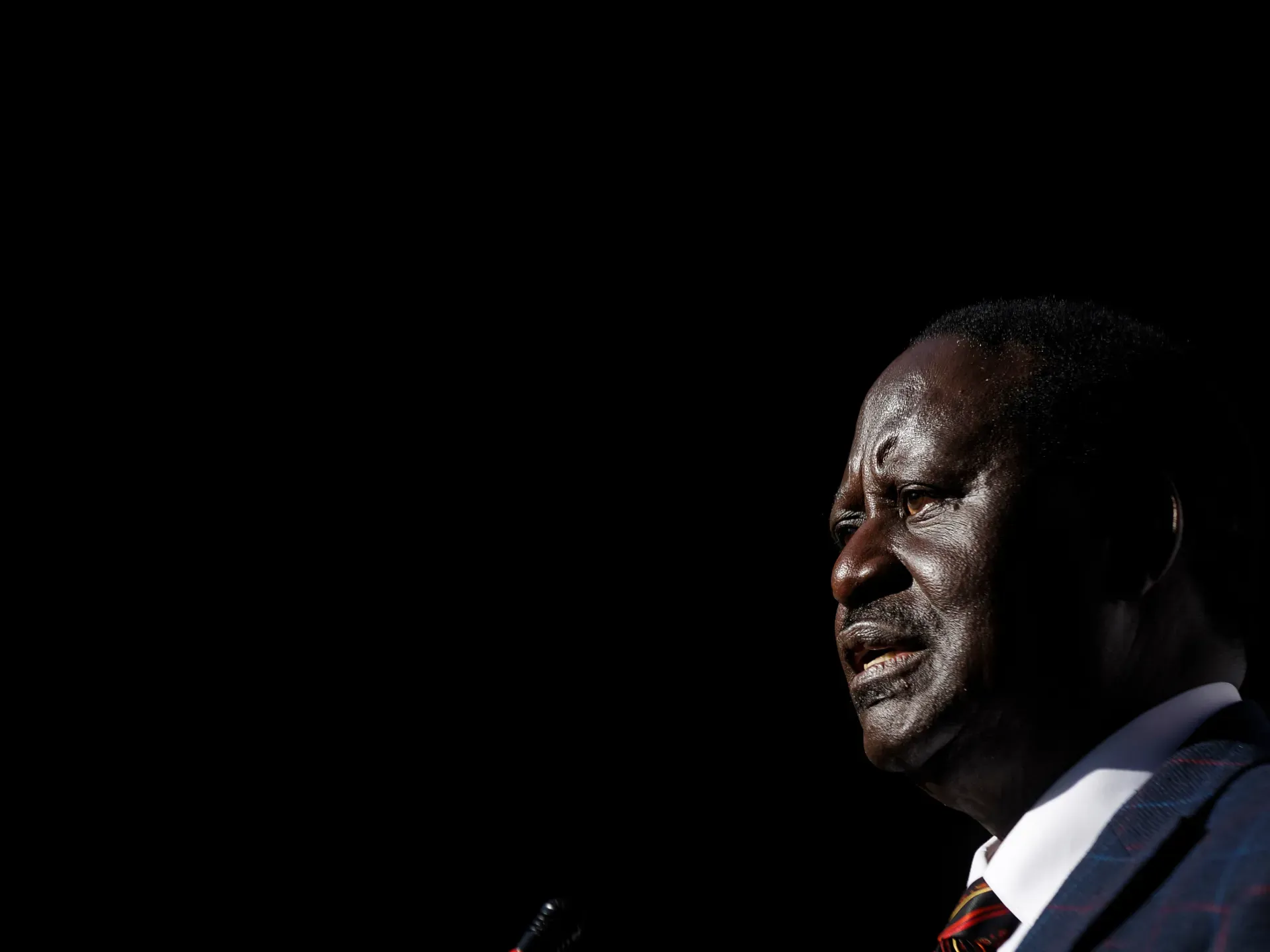
Kenya's opposition: Navigating the void left by Raila Odinga
Kenya's opposition is struggling to maintain its cohesion and identity one year after the death of Raila Odinga. The Orange Democratic Movement (ODM) is currently facing intense internal friction regarding its strategic alliance with President William Ruto's administration. While Odinga's legacy of fighting for multiparty democracy remains a cornerstone of Kenyan political history, his passing has left a leadership vacuum that threatens the party's autonomy. This article examines the internal disputes within ODM, the controversial decision to cooperate with the government, and the growing disconnect between traditional political structures and the younger generation of Kenyan voters.
October 27, 2026
6 min read
Source: ASHENVOW
How has the death of Raila Odinga impacted Kenya's opposition?
The passing of Raila Odinga has left a significant leadership vacuum that the country's primary opposition movement has yet to fill. For decades, Odinga served as the central figure in Kenya's reformist movements, acting as a unifying force for various political interests and a symbol of resistance against established power structures. His ability to negotiate complex alliances and maintain party discipline was largely tied to his personal authority and extensive political networks.
Political analyst Professor Herman Manyora suggests that the opposition is currently in a state of disarray because it lacks a figure capable of commanding the same level of respect and unity. According to Manyora, the movement has struggled to transition from a leader-centric organization to a more institutionalized political force. The challenge for the opposition is not merely finding a new spokesperson, but establishing a collective leadership that can build trust and organize effectively without relying on a single, dominant personality.
The challenge of institutionalizing charisma
One of the most difficult transitions in politics is moving from a movement built around a charismatic individual to a structured political party. Odinga's influence was so pervasive that many viewed his presence as a permanent fixture in Kenyan politics. Without his mediating influence, the competing interests within the opposition have become more visible and harder to reconcile, leading to a fragmented political landscape.
Why is the ODM facing an internal crisis over President Ruto?
The Orange Democratic Movement (ODM) is currently embroiled in a bitter dispute concerning its relationship with President William Ruto's administration. This conflict has moved beyond mere policy disagreements, evolving into a fundamental struggle over the party's identity and its willingness to maintain independence from the government. The tension reached a flashpoint with the removal of Secretary-General Edwin Sifuna, who had been a vocal opponent of closer cooperation with the presidency.
The debate centers on a critical question: Can a party remain an effective opposition while simultaneously participating in or cooperating with the government? For some members, working with Ruto is a pragmatic necessity to influence policy from within. For others, it represents a surrender of the party's core mission to challenge the status quo. This division has exposed deep-seated fractures regarding how the party should exercise power and whether it can still hold the administration accountable while maintaining a working relationship with it.
What role did the 2024 alliance play in shaping this crisis?
The decision by Raila Odinga to enter into a cooperative arrangement with President Ruto in 2024 served as a turning point that continues to haunt the opposition's credibility. This move occurred in the wake of widespread nationwide protests driven by concerns over taxation, governance, and political accountability. While the alliance was framed by some as a way to stabilize the country, it was viewed by many others as a tactical retreat that weakened the opposition's stance.
Professor Manyora noted the impact of this decision, stating that Odinga's intervention effectively rescued President Ruto's administration at a time when the government faced significant instability. This assessment highlights the controversial nature of the alliance: a leader synonymous with opposition politics became a partner to the very administration that many citizens were actively protesting against. This shift has created a lasting tension between the pragmatic needs of political stability and the ideological demands of the electorate.
The perception of betrayal among younger voters
The alliance with the Ruto administration has been particularly damaging to the relationship between traditional political parties and the younger generation of Kenyans. The Gen Z-led protests were characterized by a rejection of traditional political elites and a demand for direct accountability. For many in this demographic, the move toward cooperation felt like a dismissal of the very struggles that had historically defined Odinga's career.
Joshua Okayo, a human rights activist and lawyer representing the Gen Z perspective, expressed a sense of betrayal. While acknowledging Odinga's historical contributions to social justice and constitutionalism, Okayo noted that the decision to align with the government felt like a abandonment of the generation's fight for reform. This sentiment reflects a broader trend where younger voters are increasingly looking outside established political structures for leadership.
How is ODM attempting to redefine its identity?
In the absence of Odinga's mediating presence, ODM leadership is attempting to justify its current direction through formal agreements rather than personal loyalty. Catherine Omanyo, a Member of Parliament and the party's new secretary-general, argues that the party's cooperation with the president must be measured by its adherence to specific commitments. She maintains that the party's identity is rooted in principles such as devolution, social justice, and the rights of ordinary Kenyans, rather than its position in Parliament.
According to Omanyo, the basis of the current cooperation is a 10-point agreement signed between Odinga and President Ruto. She suggests that the party should be judged by the implementation of these points rather than the symbolism of the alliance itself. This approach seeks to transform the relationship from one of personal political convenience to one based on a structured, policy-driven partnership that can theoretically be held to account.
However, the success of this strategy remains uncertain. For ODM to regain the trust of its supporters, it must demonstrate that these commitments result in tangible benefits for the Kenyan people. If the party fails to show that it can effectively oppose the government when the 10-point agreement is breached, it risks being viewed as a mere appendage of the ruling administration, further alienating its core constituency.
Frequently asked questions
What caused the rift within the ODM party?
The rift stems from a fundamental disagreement over how much the ODM should cooperate with President William Ruto's government. This dispute led to the removal of Secretary-General Edwin Sifuna, who opposed closer ties with the presidency, highlighting a split between those favoring pragmatism and those demanding total independence.
How did Raila Odinga's death affect Kenyan politics?
Raila Odinga's death created a significant leadership vacuum in Kenya's opposition. Because the opposition's unity was heavily dependent on his personal authority and negotiating skills, his absence has led to increased fragmentation and difficulty in forming a cohesive front against the current administration.
Why are young Kenyans critical of the ODM-Ruto alliance?
Younger Kenyans, particularly the Gen Z generation, view the alliance as a betrayal of the political struggle for accountability. Having led protests against government policies, many young people feel that traditional politicians are prioritizing power-sharing agreements over the genuine demands for reform and social justice.
What is the basis of the ODM's cooperation with the government?
The cooperation is officially based on a 10-point agreement signed between Raila Odinga and President William Ruto. ODM leadership, including Catherine Omanyo, argues that the party's actions should be evaluated based on the fulfillment of these specific commitments rather than the political optics of the alliance.
Can the opposition remain credible without a single leader?
The credibility of the opposition depends on its ability to move beyond individual leadership and establish a common, institutionalized agenda. To remain a force, the movement must build trust and demonstrate a capacity to organize around shared principles rather than the authority of a single dominant figure.
Key takeaways
- The death of Raila Odinga has left a leadership vacuum that the Kenyan opposition is struggling to fill.
- Internal disputes in the ODM regarding cooperation with President Ruto have caused significant party fragmentation.
- The 2024 alliance between Odinga and Ruto remains a point of contention for many voters.
- Younger generations feel a sense of betrayal regarding the opposition's shift toward government cooperation.
- ODM is attempting to move toward a policy-based partnership governed by a 10-point agreement.
Conclusion
The political landscape in Kenya is undergoing a profound transformation as the era of Raila Odinga draws to a close. The Orange Democratic Movement stands at a crossroads, forced to decide whether it will evolve into a principled institutional force or risk becoming a secondary partner to the ruling administration. The tension between pragmatic governance and the demand for radical reform continues to define the national discourse. Ultimately, the strength of Kenya's opposition will be determined by its ability to bridge the gap between traditional political maneuvering and the urgent calls for accountability from a new generation of citizens.



